France · IV Corps Commander
Jean-de-Dieu Soult
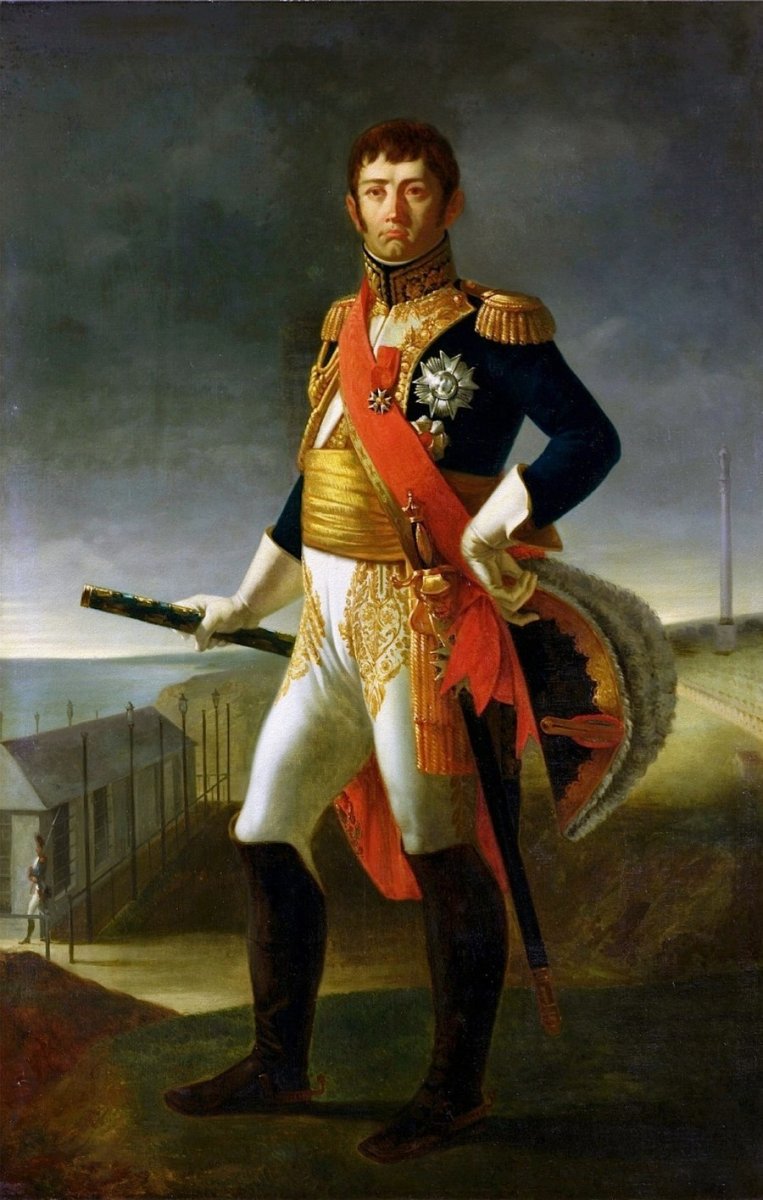
The corps commander who executed the central breakthrough at Austerlitz, fought a long war in the Peninsula, and served as chief of staff in 1815. He is one of the men who carried the longest and heaviest duties under Napoleon. What he demonstrates is the simple and easily missed fact that the same man produces different results depending on the post he is put in.
What he actually did: execute the plan
On 2 December 1805 it was Soult's IV Corps that carried out the central breakthrough at Austerlitz. Waiting in the fog for the Pratzen heights to empty, then going up the slope the moment it did. Both the waiting and the ending of the waiting were executed as ordered.
The design of that battle assumes the enemy will come down off the heights. Do not move until the premise becomes fact, then move with everything - the quality of a conception becomes the result only when this kind of executant exists. The subtlety of the inducement is what gets discussed, but the design depended on the precision of the execution.
Another war: the Peninsula
From 1808 Soult carried a long war in the Iberian peninsula. Assessments here divide. There are wins, and there are withdrawals and retreats. But this theatre was different in kind. The enemy could not be finished off in a decisive battle; it was a war in which occupation did not end resistance.
The pattern that becomes explicit in the Russian campaign - winning on the field without the other side losing - had appeared earlier in the Peninsula. Soult's career is also the record of that long attrition.
The fighting there was a kind of attrition unfamiliar to an army designed for short decisive wars. At Oporto in May 1809 he was surprised by Wellesley, later Wellington, who forced the crossing; Soult abandoned his guns and baggage and withdrew through the mountains[3]. Toulouse, on 10 April 1814, was the last battle in that theatre.
Years of fighting the same opponent is rare on the French side. What the theatre exposed was that an army skilled at designing short decisive wars had almost no practice in conducting long ones.
The decisive moment: a post that did not fit
In 1815, during the Hundred Days, Soult was appointed chief of staff, Berthier having died on 1 June. The ability to lead a corps and the ability to distribute orders accurately are different things.
On 16 June some 20,000 men of d'Erlon's I Corps marched back and forth between an order from the Emperor and a counter-order from Ney, and finished the day having joined neither Quatre Bras nor Ligny[2]. Ordering the chain of command is the chief of staff's job, and this appointment put a man unsuited to that job in it.
What deserves blame is the placement, not the man. The assumption that an empty seat is filled by putting an able person into it was itself wrong.
Limits, or how it ended
The length of his life after the army is also characteristic. He was minister of war under the Restoration and the July Monarchy, and three times prime minister under Louis-Philippe (1832-34, 1839-40, 1840-47)[1]. He died in 1851 at the age of 82.
Given that most marshals of his generation ended on a battlefield or in front of a firing squad, that length is itself a statement of a quality.
Sources
- Encyclopaedia Britannica, Nicolas-Jean de Dieu Soult, duke de Dalmatie.
- The Napoleon Series, The Key to Victory: General d'Erlon's I Corps, 16 June 1815.
- J. Rickard, Marshal Nicholas Jean de Dieu Soult, duc de Dalmatie, History of War.
Aparece en las batallas
-
1806-10-14
La doble batalla de Jena-Auerstedt (1806) — La batalla decisiva fue aquella en la que Napoleón no estuvoRol: IV Corps (right at Jena)
-
1807-02-08
La batalla de Eylau (1807) — El día en que el método de Napoleón no logró producir una decisiónRol: IV Corps (held the centre)
-
1815-06-18
Batalla de Waterloo (1815) — El día en que un sistema de un solo hombre se vino abajo por falta de redundanciaRol: Chief of staff (Berthier's successor; vague orders)