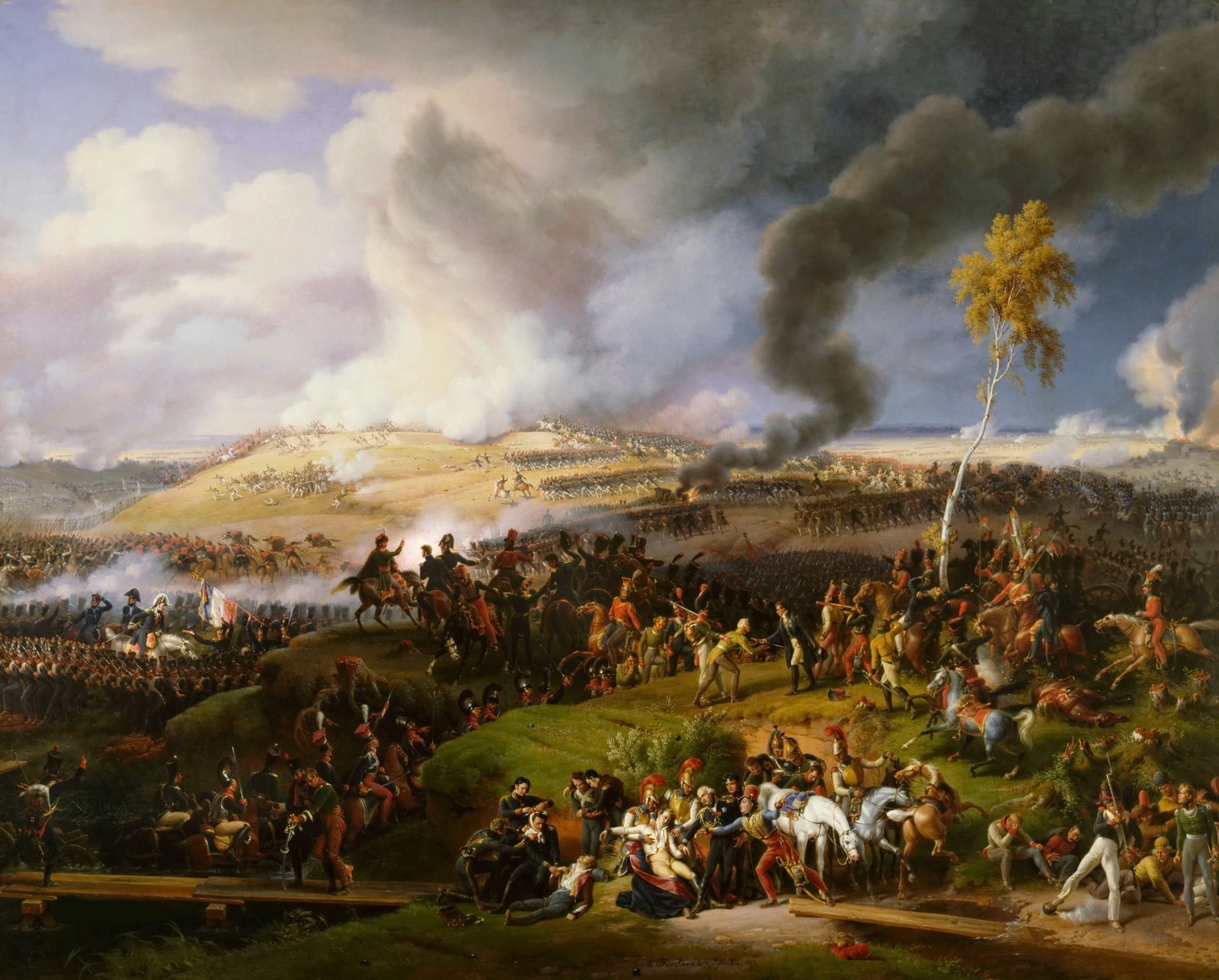
On 7 September 1812 the French held the field at Borodino. A week later they were in Moscow. Tactically the campaign kept winning, and the Empire collapsed anyway. The reason is not the cold and not the supply lines; it sits earlier than either — the moment the enemy chose to fight a war about preserving his army, winning battles lost the power to end the war.
1. What was actually at stake
Tilsit had made Russia an ally, but the condition attached to it — the Continental System — kept damaging the Russian economy. Defection was a matter of time, and the campaign of 1812 begins as an attempt to prevent it by force.
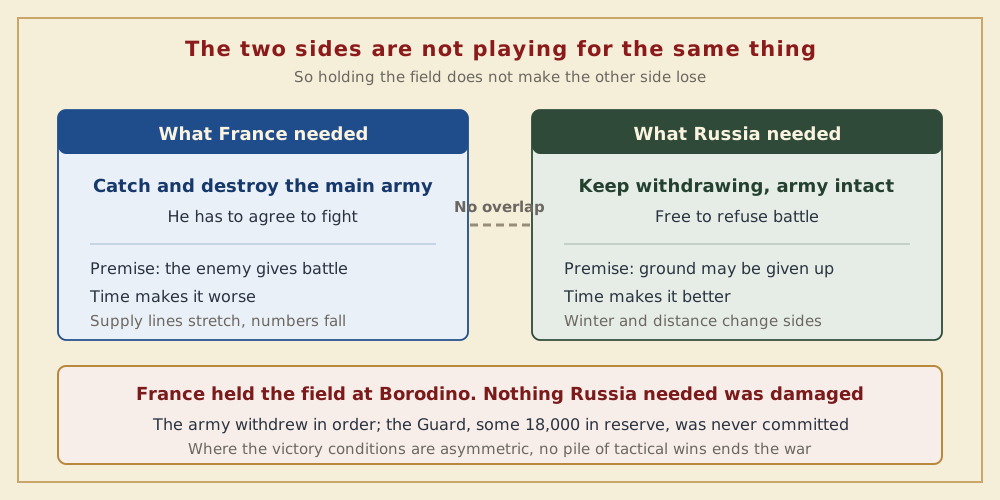
The French victory condition was clear: catch the Russian main army, destroy it in a decisive battle, and compel a peace. Since the Third Coalition this had worked repeatedly — at Ulm without fighting, at Austerlitz by inducement.
But the method carried an unstated premise: that the enemy agrees to the decisive battle[1]. The Russians removed it. They kept withdrawing, declined battle, and let the supply lines lengthen.
2. Victory conditions that do not meet
The side seeking battle
-
Commander
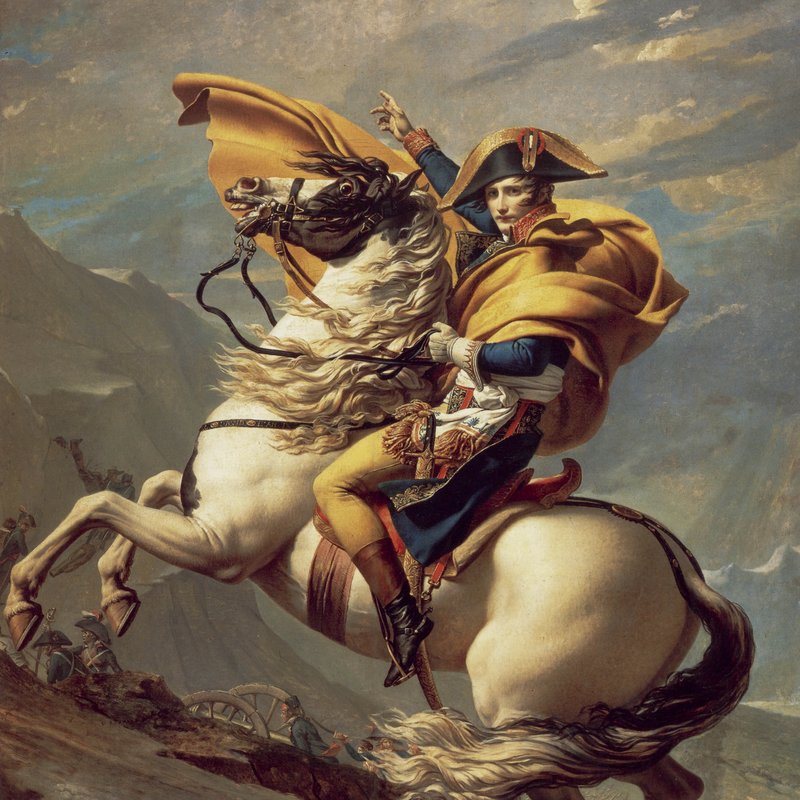 Napoleon (Emperor, 43)
-
I Corps
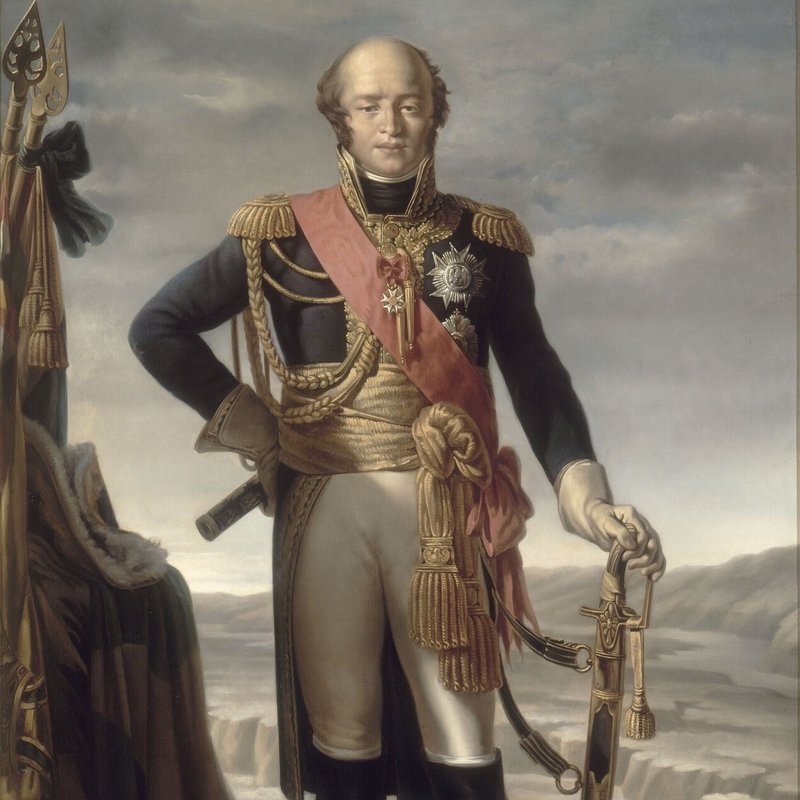 Davout (proposed the flanking move; overruled)
The side avoiding battle
-
First half
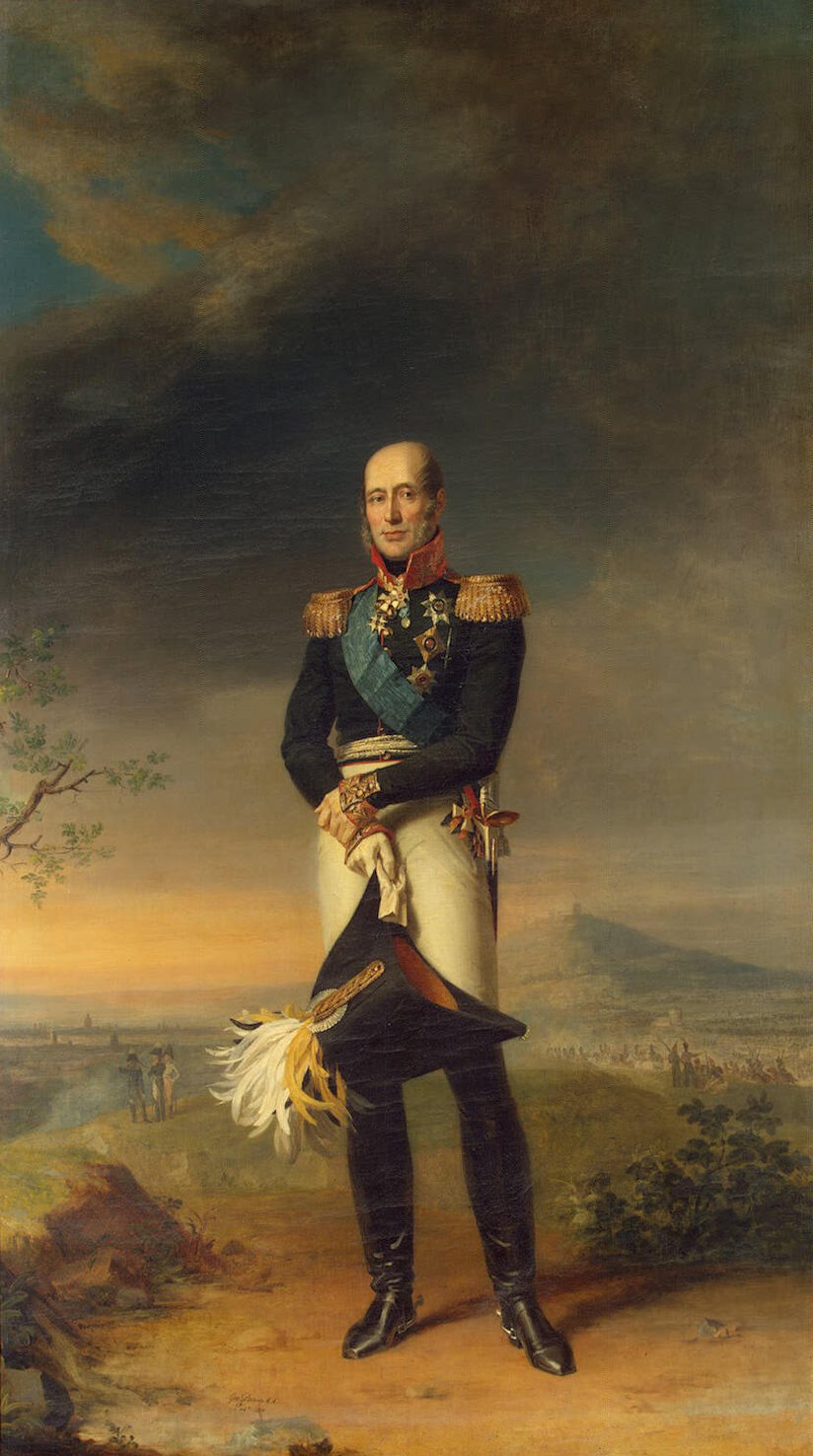 Barclay de Tolly (began the strategy of withdrawal)
-
Second half
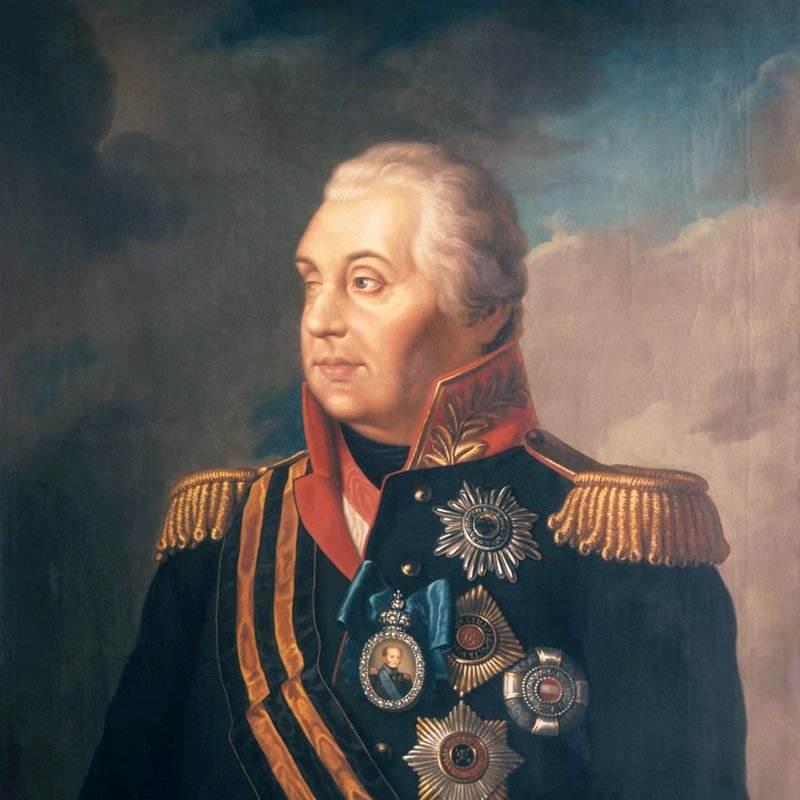 Kutuzov (continued the same line)
France needed the enemy to stand and be destroyed; Russia needed only to keep withdrawing with the army intact. Nothing France could win on a battlefield damaged what Russia needed. Time worked against one side and for the other.
3. An enemy who cannot be caught
Borodino, on 7 September, is the day the deadlock finally broke. With Moscow close, the Russians at last fought. But the way they fought had not changed: this was a battle to withdraw with the army intact, not to hold a position.
Strength (regular field armies)
FR roughly equal
Losses (one day, dead and wounded)
FR somewhat fewer
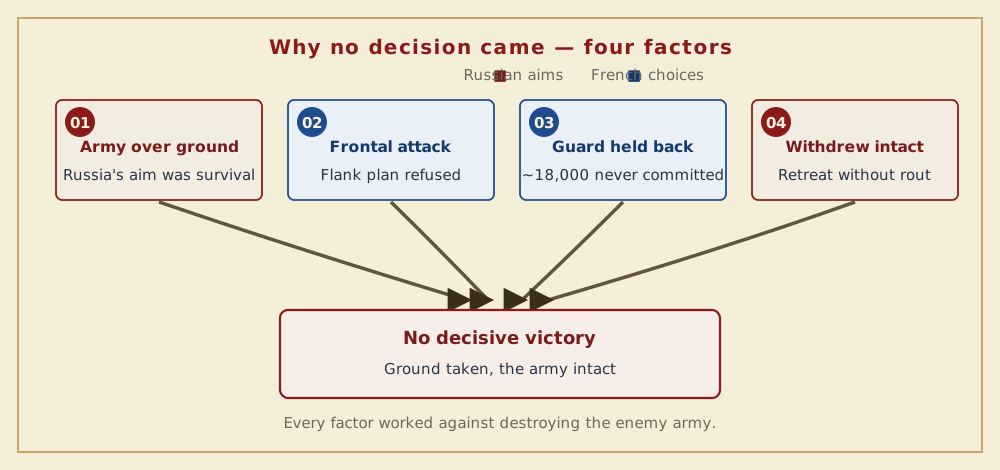
The French took the line of earthworks and stayed on the field. The Russian centre did not rout: it withdrew in order[3]. The last reserve, the Guard of some 18,000, was never committed[6]. You can take the position and still not catch the army.
4. The chain from capital to peace was broken
A week later Moscow was in French hands. No envoy came[2].
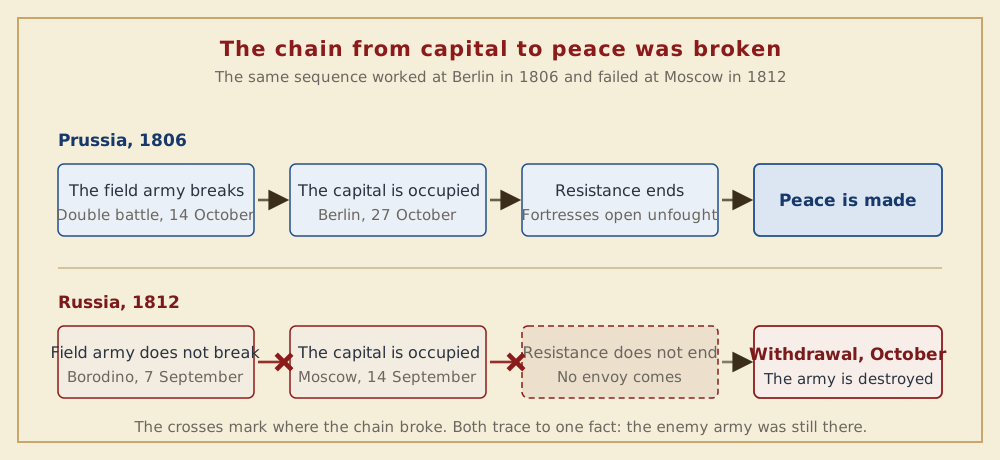
In Prussia, during the Fourth Coalition, the chain worked. The field army broke, Berlin fell thirteen days later, fortresses opened one after another and resistance ended. But that happened because the first step — actually breaking the enemy field army — had been carried out.
In 1812 that first step never took place. With the army intact, giving up the capital remained an option. Occupation is a victory only when the other side believes that being occupied means losing.
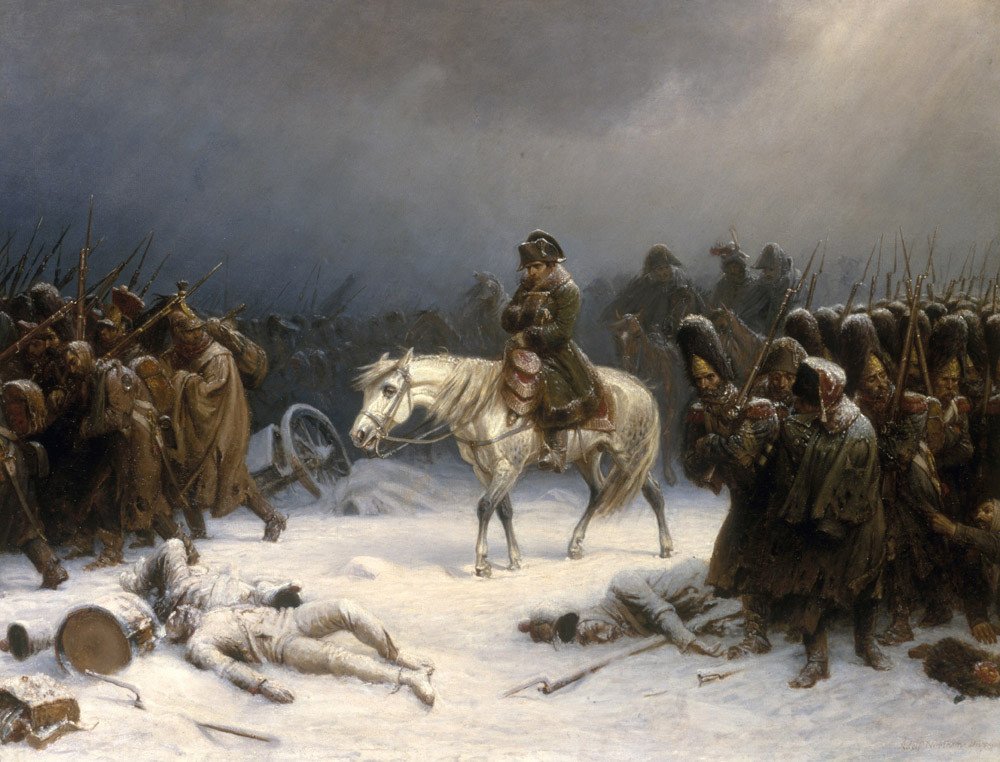
5. The army was not lost in battle
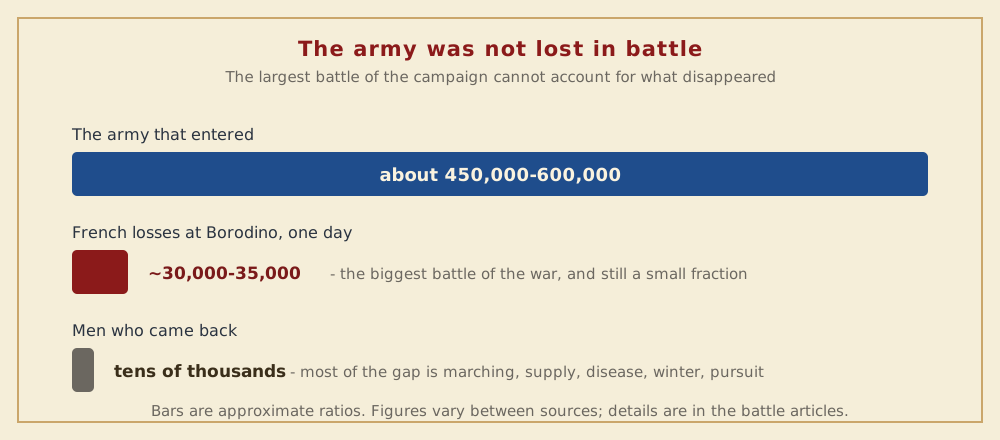
Of the 450,000 to 600,000 men who entered Russia, only tens of thousands came back[4]. French losses at Borodino, the largest battle of the campaign, were about 30,000 to 35,000 in a day.
Most of the difference went to something other than battle — marching, broken supply, disease, winter, and the pursuit during the retreat. That fact names the character of the campaign: advancing in search of a decisive battle was itself dissolving the army for reasons unconnected to any battle. Chasing an enemy who will not fight costs more than fighting him.
6. Four things that decided the campaign
What was defended was the army, not the ground
Russia's object was to keep the army alive, not to hold positions: withdraw before you are broken, and you cannot be caught decisively. An enemy defending something else cannot be beaten by taking ground.
The policy outlived the change of commander
Barclay began the strategy of withdrawal and Kutuzov continued it[5]. Because it was state policy rather than one man's preference, waiting for a change at the top improved nothing.
A frontal attack was chosen at Borodino
Davout's proposal for a wide move round the left was rejected in favour of attacking the earthworks head-on[1]. That made it a battle of pushing back rather than cutting off, so the enemy was never shaped into destruction.
Distance itself was the enemy
Across 900 km the army shrank without fighting. The length of a supply line is part of the battlefield the enemy has stretched. The withdrawal was not flight but an active move to maximise exactly this[4].
7. If Russia had given battle
What follows is a thought experiment based on the sources. The outcomes cannot be demonstrated; the point is to make the dependencies visible.
| Condition changed | Immediate effect | Effect on the campaign |
|---|---|---|
| A: the Russians give battle near the frontier | Short supply lines and undiminished numbers make it the kind of battle France wants | An Austerlitz-style decision becomes likely. But that is precisely what Russia most wanted to avoid, so there is no reason to choose it |
| B: Davout's flanking plan is adopted at Borodino | The line of retreat is threatened and a rout becomes possible | A wide move takes time. If the enemy withdraws first it closes on nothing, so it still depends on his agreeing to stay |
| C: no wintering in Moscow; withdrawal begins early | Losses during the retreat are smaller | The campaign still fails. The cause is not the timing of the retreat but the asymmetry of the victory conditions |
All three return to the same place. Unless the enemy agrees to a decisive battle, this method has no path to victory — that was the structure of the campaign.
8. What it suggests today
(1) When your victory condition differs from theirs, your points are not their losses. France won battles, took the capital and advanced on the map, and none of it damaged what Russia needed. Unless you write down what counts as winning for the other side before you start, you can win your way to defeat.
(2) Chasing can cost more than fighting. Most of what disappeared went to movement and maintenance, not to battle. Where pursuing a decision is itself the drain, every delay in deciding to stop accelerates the loss. And the asymmetry is something the other side can create deliberately.
9. Closing
Tactical victory and strategic ruin sat inside the same campaign. The trait that had begun to show at Wagram in 1809 — winning while the enemy army survives — is enlarged here to its limit.
And the destruction of the invading army changed how Europe read him. In the Sixth Coalition the following year, the allies adopted a strategy of never fighting Napoleon in person. Nobody would offer him the decisive battle he was best at. What 1812 exposed was not a weakness in the army but the fact that the method required the enemy's consent.
Before this: the War of the Fifth Coalition. After it: Leipzig and the war of 1813.
Sources
- David G. Chandler, The Campaigns of Napoleon, Macmillan, 1966.
- Encyclopædia Britannica, French invasion of Russia.
- Alexander Mikaberidze, The Battle of Borodino: Napoleon Against Kutuzov, Pen & Sword, 2007.
- Adam Zamoyski, 1812: Napoleon's Fatal March on Moscow, HarperCollins, 2004.
- Encyclopædia Britannica, Mikhail Illarionovich, Prince Kutuzov.
- Harrison W. Mark, Battle of Borodino, World History Encyclopedia, 2023.