In May 1809, at Aspern-Essling, Napoleon lost a pitched battle for the first time. Six weeks later he won it back at Wagram, from the same stretch of the same river. But the way of winning had changed. From this year onwards, a war fought by making the enemy move turns into a war of fire and numbers pushing at each other.
1. What was actually at stake
Austria had recovered from the defeat of 1805 and rebuilt its army. With the bulk of the French forces tied down in Spain, there was an opening — that is the calculation behind opening the war in 1809[2].
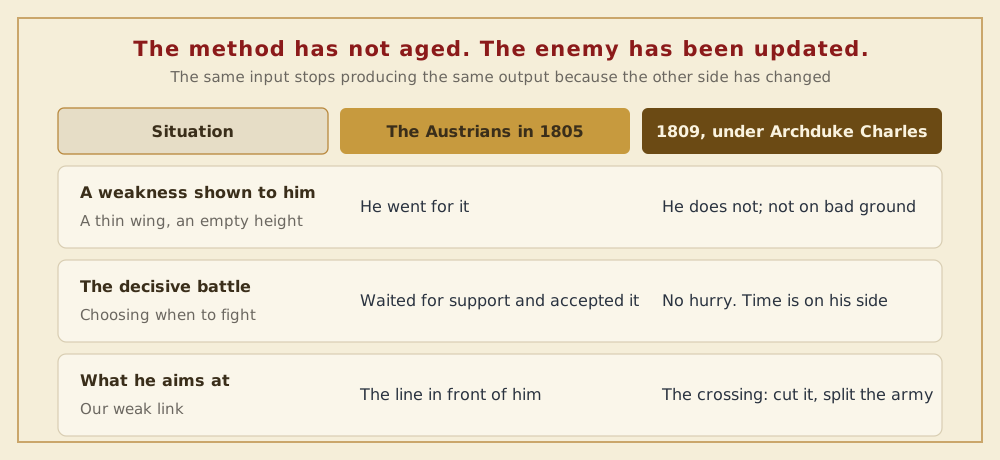
What was at stake was obvious and easy to miss: the enemy learns too. The Austrians who walked into the inducement in the War of the Third Coalition would not take the same bait twice. The method had not aged; the ground on which the method worked had changed.
2. The enemy learns too
French side
-
Commander
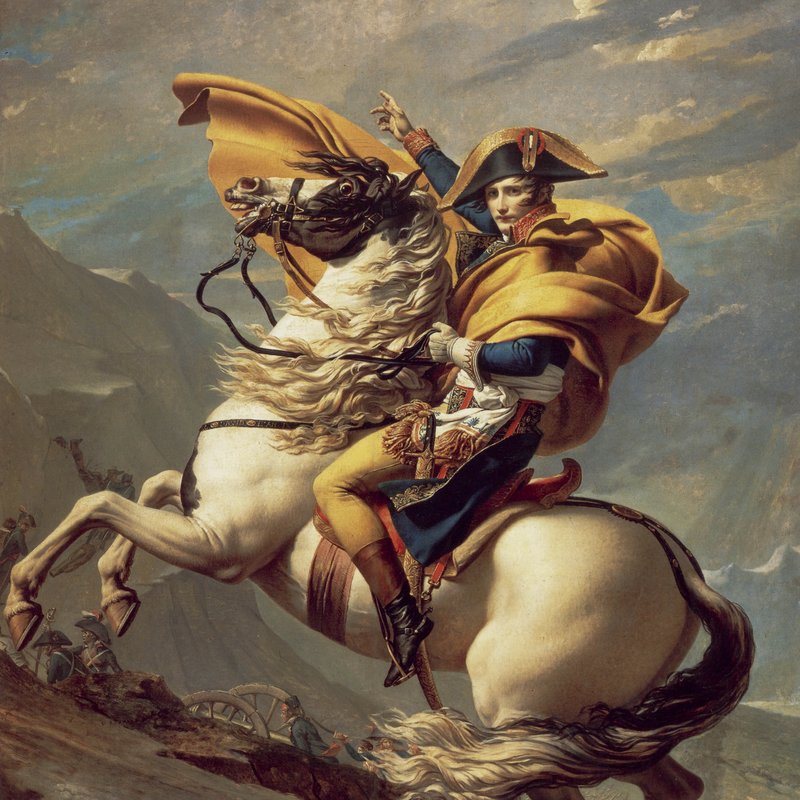 Napoleon (Emperor, 39)
-
II Corps
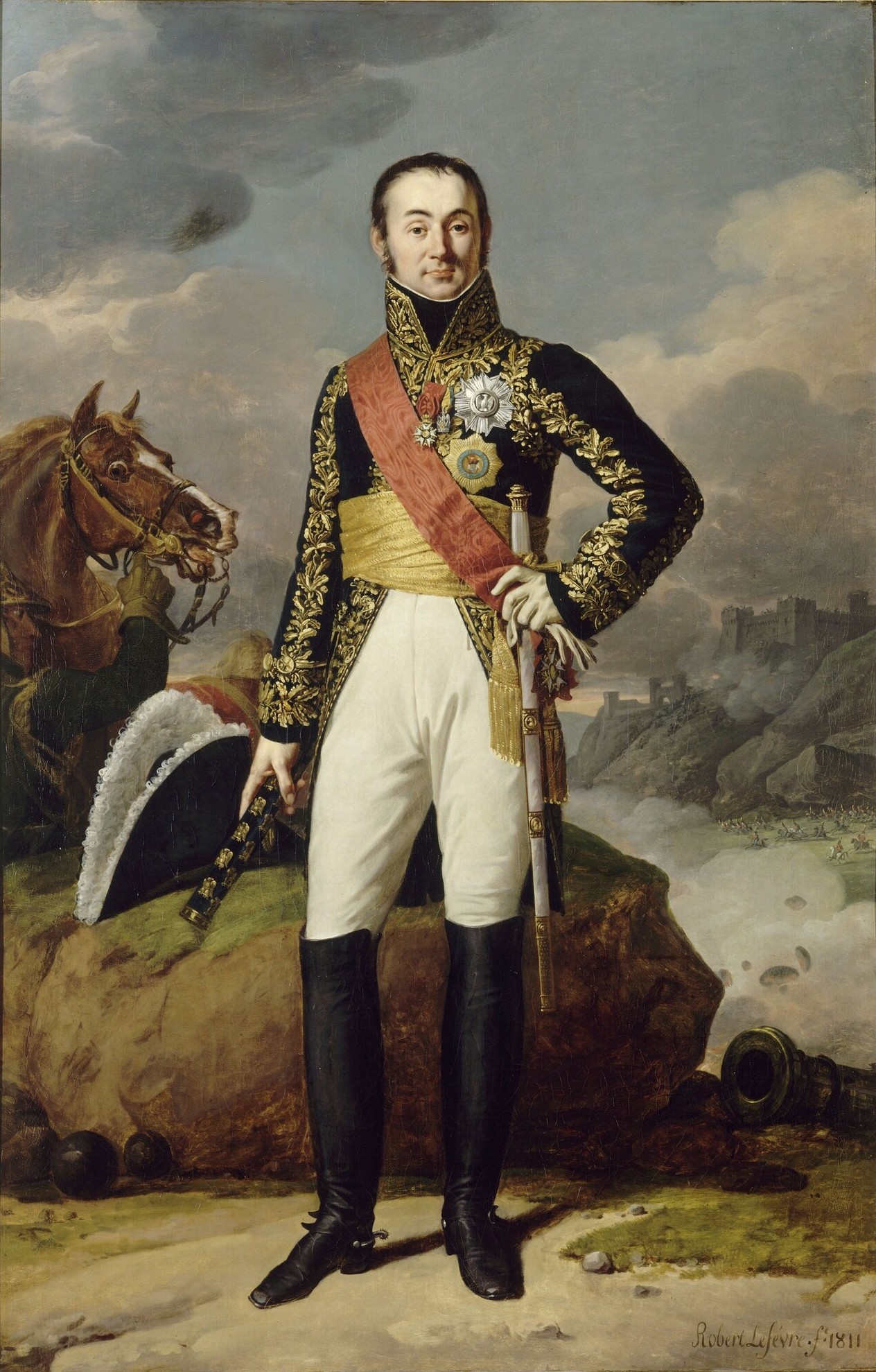 Oudinot (took the corps after Lannes was killed)
Austrian side
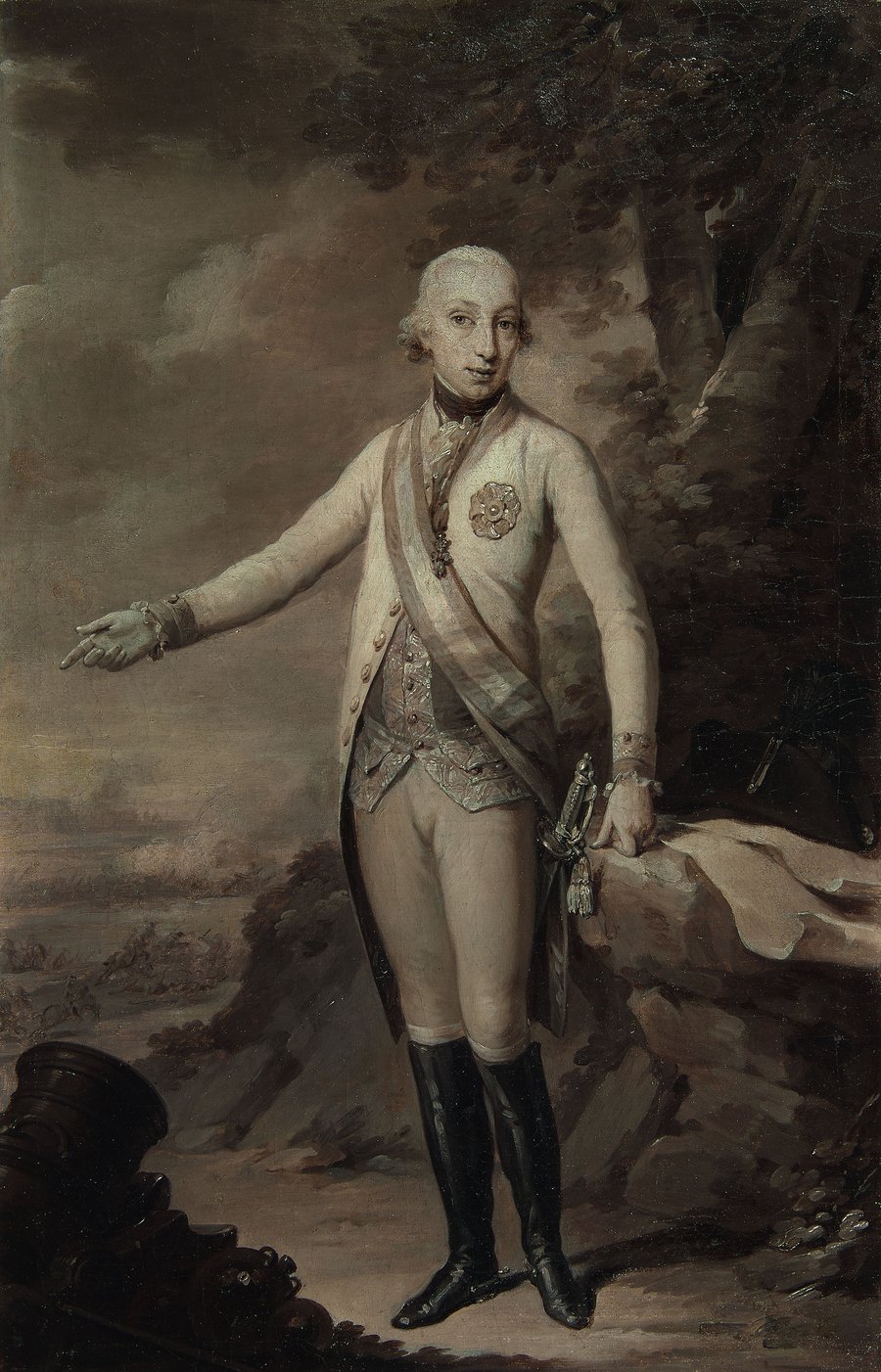
Archduke Charles was in no hurry for a decisive battle, would not fight on unfavourable ground, and began aiming at the weak link, the river crossing[4]. Inducement depends on the enemy being active. Against an opponent who stops and thinks before moving, the bait does not work.
Lannes is not at this battle
Accounts of Wagram often blur this, but Lannes was not there. He had been mortally wounded six weeks earlier at Aspern-Essling[1]. 1809 was the year in which not only the method but the men who executed it began to be missing. That absence takes its decisive form six years later, in 1815.
3. Crossing the same river twice
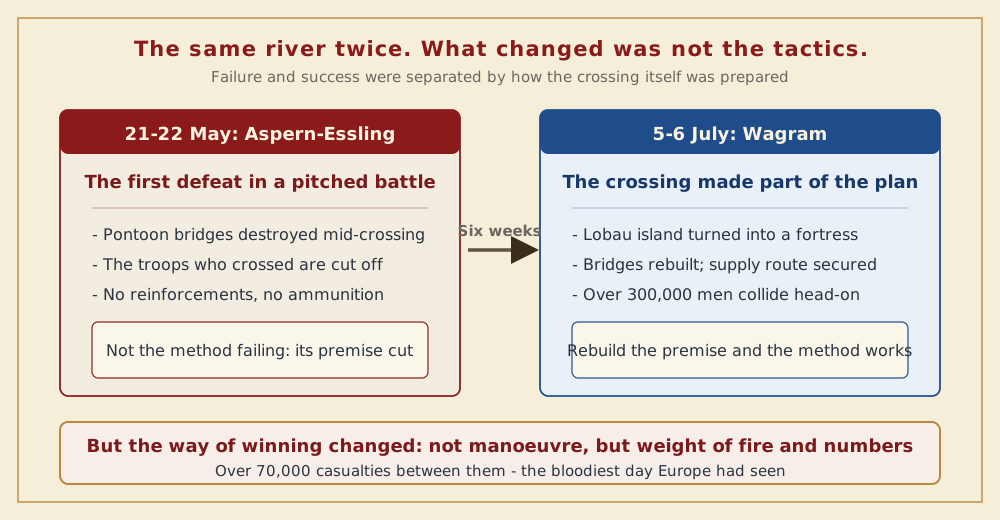
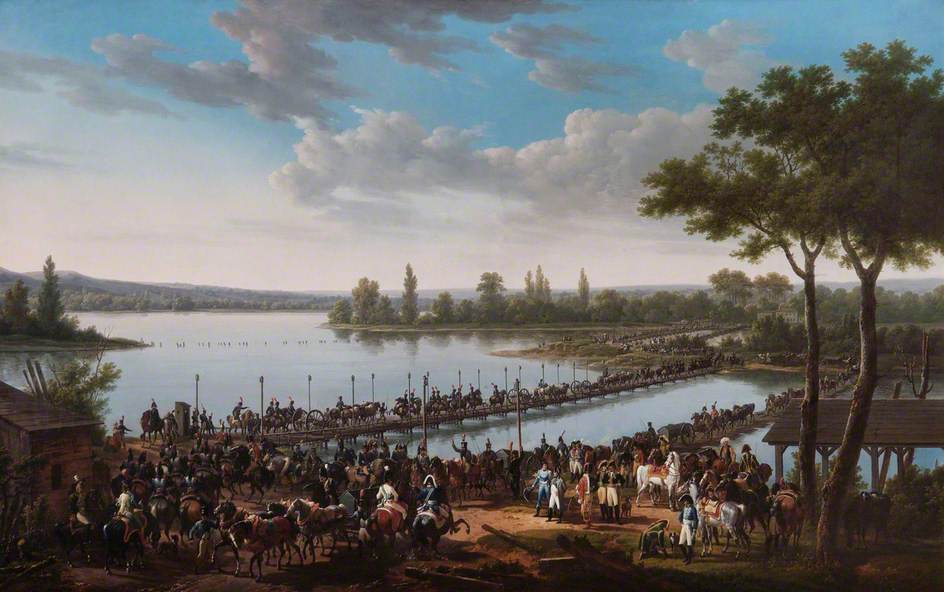
The May defeat happened because the pontoon bridges were destroyed during the crossing of the Danube. Reinforcements and ammunition could not get over and the troops who had crossed were isolated. This is not the method failing; it is the method's premise — that forces can be concentrated — being cut[3].
At Wagram in July that premise was rebuilt. The island of Lobau was turned into a fortress, the bridges were built again to hold, and the crossing itself was designed as part of the operation[5]. Same river, same enemy, same method. Only the conditions changed — and the result inverted.
4. The kind of victory changed
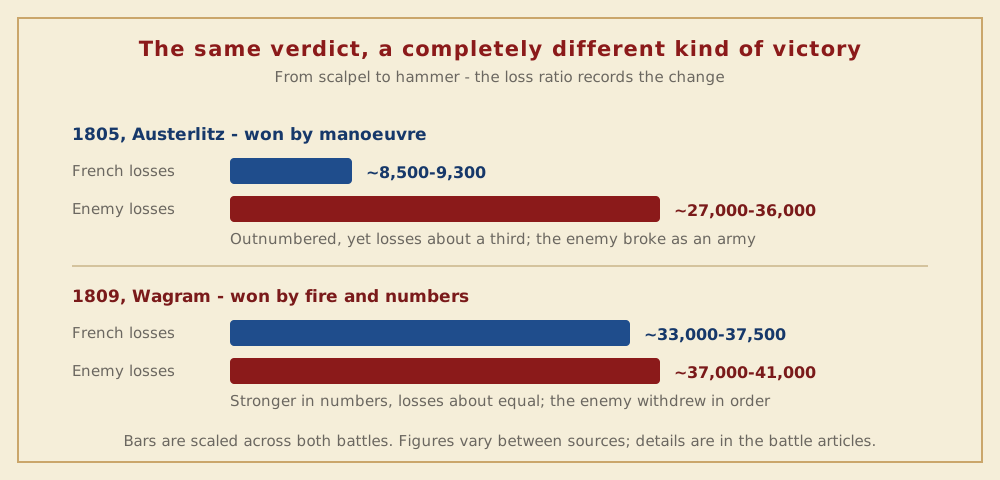
Strength (committed by noon on day two)
FR about 1.25×
Losses (dead, wounded, prisoners)
Both roughly equal
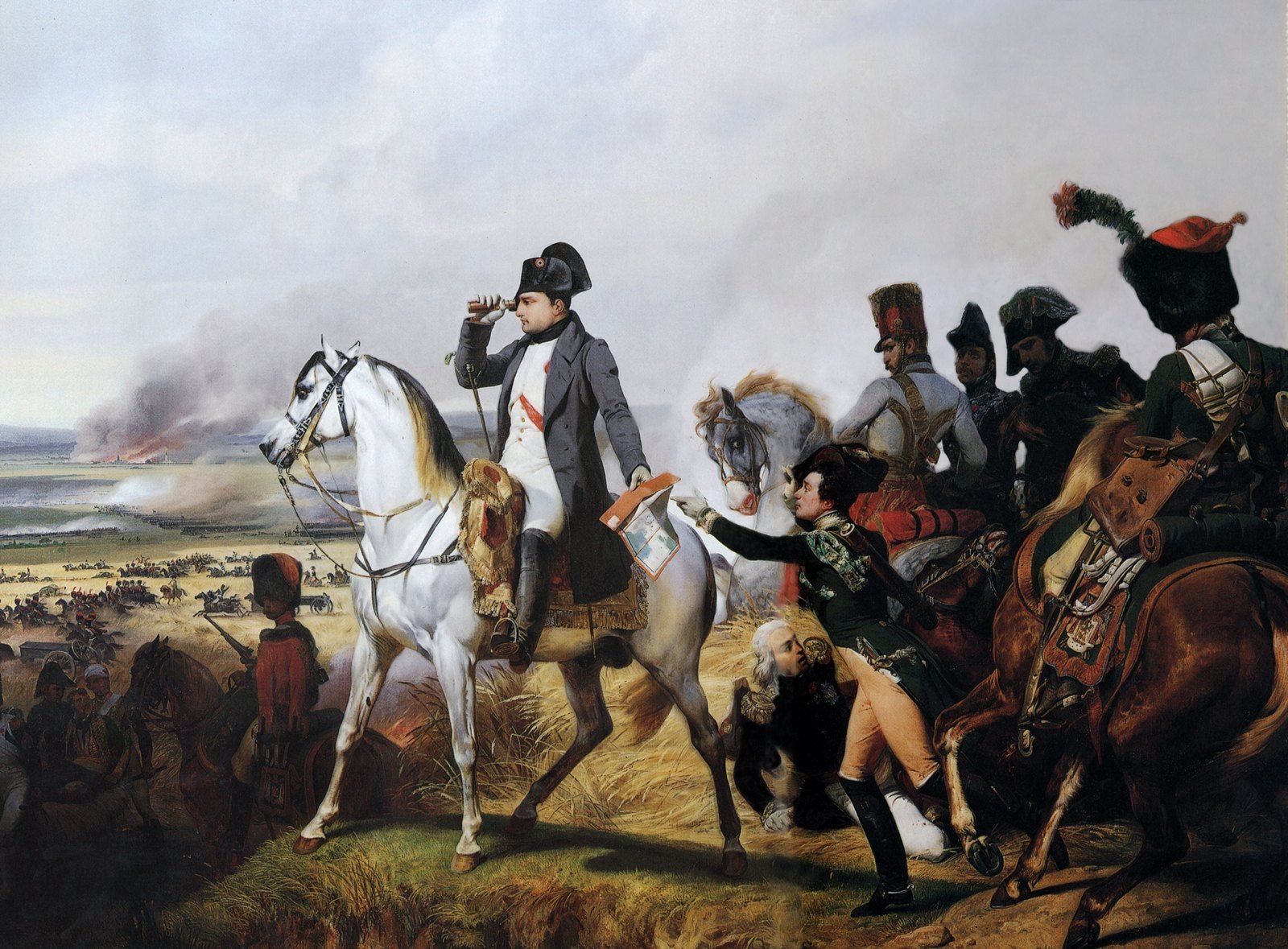
If Austerlitz was a scalpel, Wagram was a hammer. What decided it was not clever movement but about 112 guns massed in the centre and a push that accepted the losses[1]. And the Austrian main body was not destroyed: it withdrew in good order.
5. Four things that decided the turn
The enemy stopped taking the bait
An opponent who will not lunge at a shown weakness and will not fight on bad ground cannot be arranged into position[4]. Inducement is a technique that depends on the enemy being active.
The battlefield grew too large
With more than 300,000 men engaged, breaking one point no longer collapses the whole. Scale itself blunts a delicate design.
Artillery goes from support to decision
Massing about 112 guns in the centre finishes with fire what movement had opened[1]. It works — but the enemy can do the same thing, so the advantage is only temporary.
The executors start going missing
Lannes was not at this battle; he had been killed six weeks earlier[1]. A thinning layer of men who can execute the method matters as much as any decay in the method itself.
6. If the May crossing had held
What follows is a thought experiment based on the sources. The outcomes cannot be demonstrated; the point is to make the dependencies visible.
| Condition changed | Immediate effect | Effect on the war |
|---|---|---|
| A: the bridges hold in May and the crossing completes | No isolation, and no record of a first defeat in a pitched battle | But the opponent is still Archduke Charles, still avoiding a decisive battle. A quick decision was not guaranteed |
| B: Archduke John's corps reaches the field | Austria adds 12,000–13,000 men | The loss ratio worsens further and the "won but unable to end it" character becomes sharper |
| C: Lannes is alive and leading II Corps | The quality of execution improves | But the enemy still refuses the bait. The turn towards attrition is not a problem of personnel |
None of the three stops the turn itself. What set the shelf life of the method was not on the French side of the table.
7. Consequence: won, but unable to end it
At Schönbrunn on 14 October Austria submitted again and the Fifth Coalition was over[2]. Wagram would later be called the Emperor's last victory.
The quality that appears here — winning without being able to destroy the enemy army — takes its decisive form three years later in Russia, where holding the field settled nothing at all. 1809 is the trailer for it.
8. What it suggests today
(1) A method that works has a shelf life, and the other party sets it. Inducement stopped working not because it was done worse but because the opponent observed, learned and adapted. The more successful a technique, the faster it is read — so its shelf life shortens in inverse proportion to how well it worked.
(2) Rebuild the preconditions before you rebuild the tactics. The difference between May and July was not in how the battle was fought but in how the crossing was prepared. When something fails, it is faster to ask which of the conditions the procedure assumed had broken than to refine the procedure. Improvements made on a broken premise get more precise without getting closer.
9. Closing
Counted by results, 1809 is a year of victory. Look at how the victory was composed and something has been swapped out. From being outnumbered and holding losses to a third, to having the numbers and paying an equal price.
Once the enemy had finished learning, what was left was material weight. And France was not a country that could renew that weight every year. That single fact sets up the encirclement by roughly twice its numbers in the War of the Sixth Coalition.
Before this: the War of the Fourth Coalition. After it: Russia, 1812.
Sources
- David G. Chandler, The Campaigns of Napoleon, Macmillan, 1966.
- Encyclopædia Britannica, Battle of Wagram.
- Harrison W. Mark, Battle of Wagram, World History Encyclopedia, 2023.
- Gunther E. Rothenberg, The Emperor's Last Victory: Napoleon and the Battle of Wagram, Weidenfeld & Nicolson, 2004.
- J. Rickard, Battle of Wagram, 5-6 July 1809, History of War, 2009.
- Wikipedia contributors, Battle of Wagram.