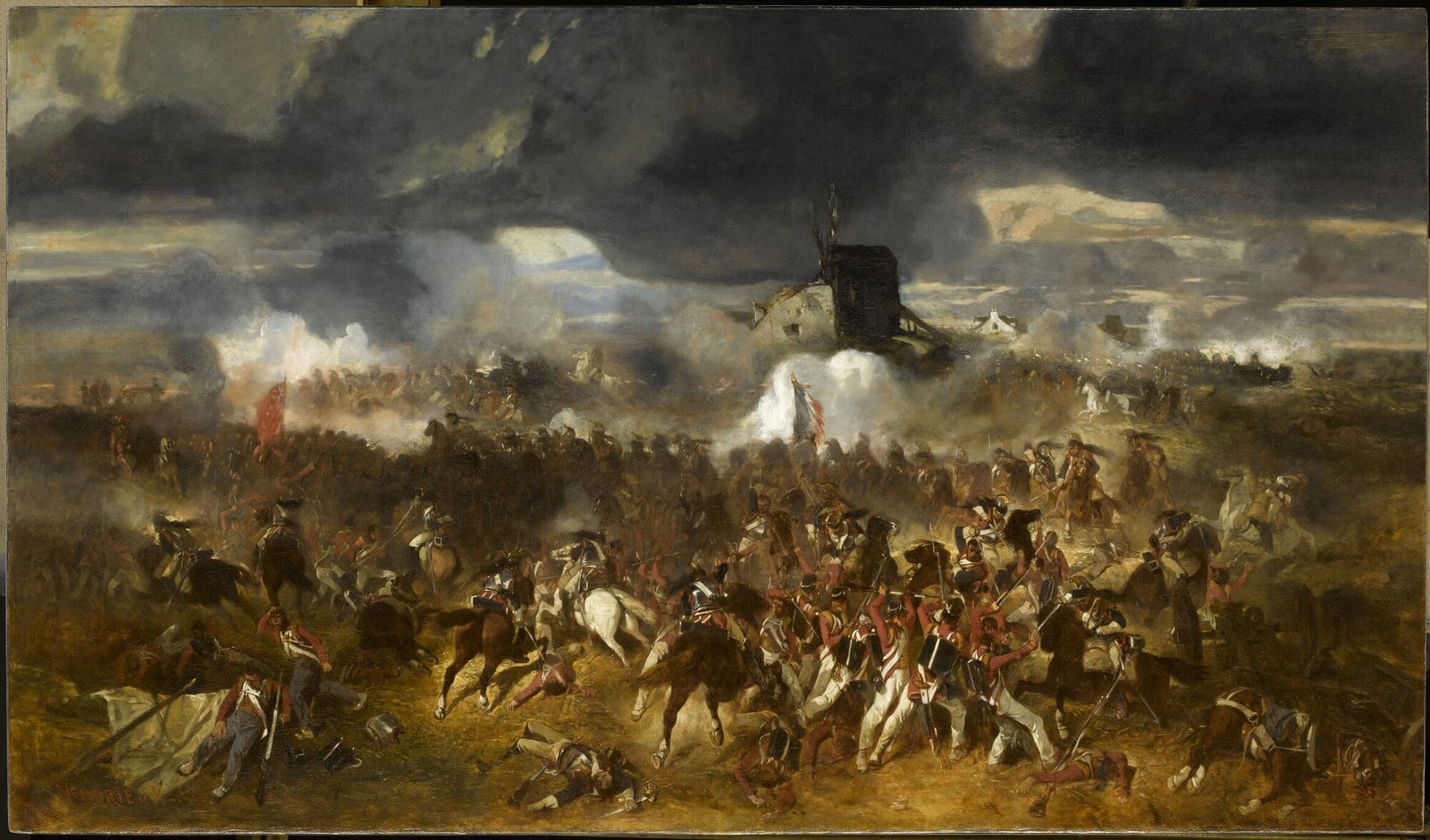
Napoleon's final gamble after returning from Elba was the maneuver that had become his signature: the central position. As at Austerlitz, the idea was to prise Wellington and Blücher apart and beat each in turn before they could unite—and the design was sound. At Ligny he did, for a moment, split the two. But everything came apart at the stage of execution, where the split had to be turned into victory. Grouchy failed in the pursuit, Ney threw away the cavalry for want of combined-arms coordination, and after Berthier's death the staff's orders were vague. Napoleon's method depended on the omnipresence of one man, the Emperor. Waterloo was the day it was exposed that this system of genius had no redundancy.
1. Key Facts
- Date
- 18 June 1815The Hundred Days
- Location
- Mont-Saint-JeanSouth of Waterloo, present-day Belgium
- Belligerents
- France vs. Anglo-allied + PrussiaSeventh Coalition
- Outcome
- Decisive Coalition victory→ second abdication; St Helena
Note: in this article the French are shown in blue, Wellington's Anglo-allied army in red, and Blücher's Prussians in steel blue.
Manpower
Even in the morning → roughly 1.6× Coalition total by evening
Guns (against Wellington)
Fr. advantage
Casualties (killed, wounded, captured)
Over 50,000 on both sides in a single day
| Role | France | Coalition |
|---|---|---|
| Commander-in-chief | 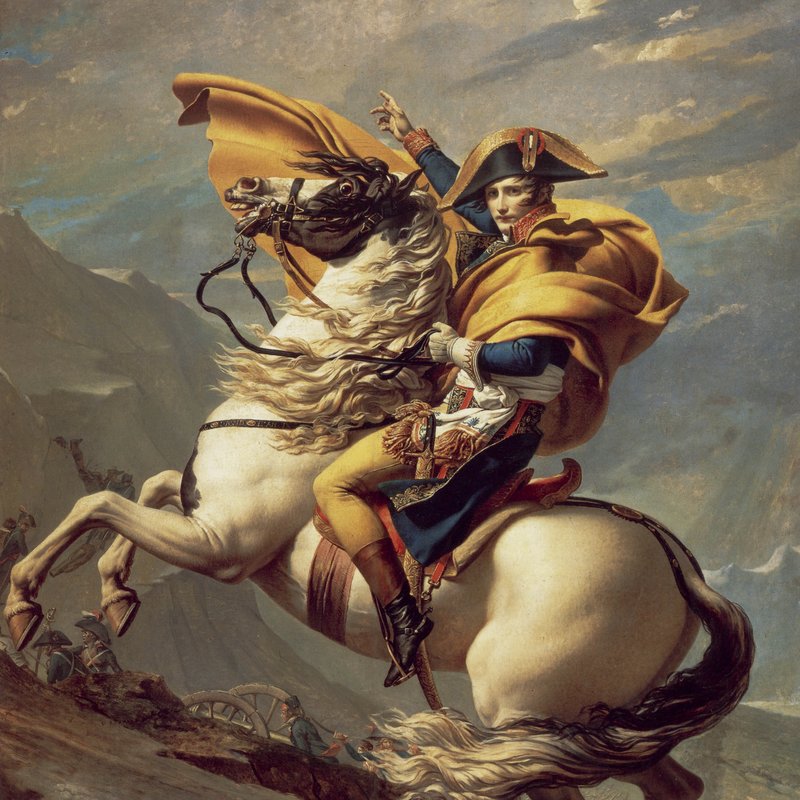 NapoleonEmperor, 45 NapoleonEmperor, 45 |
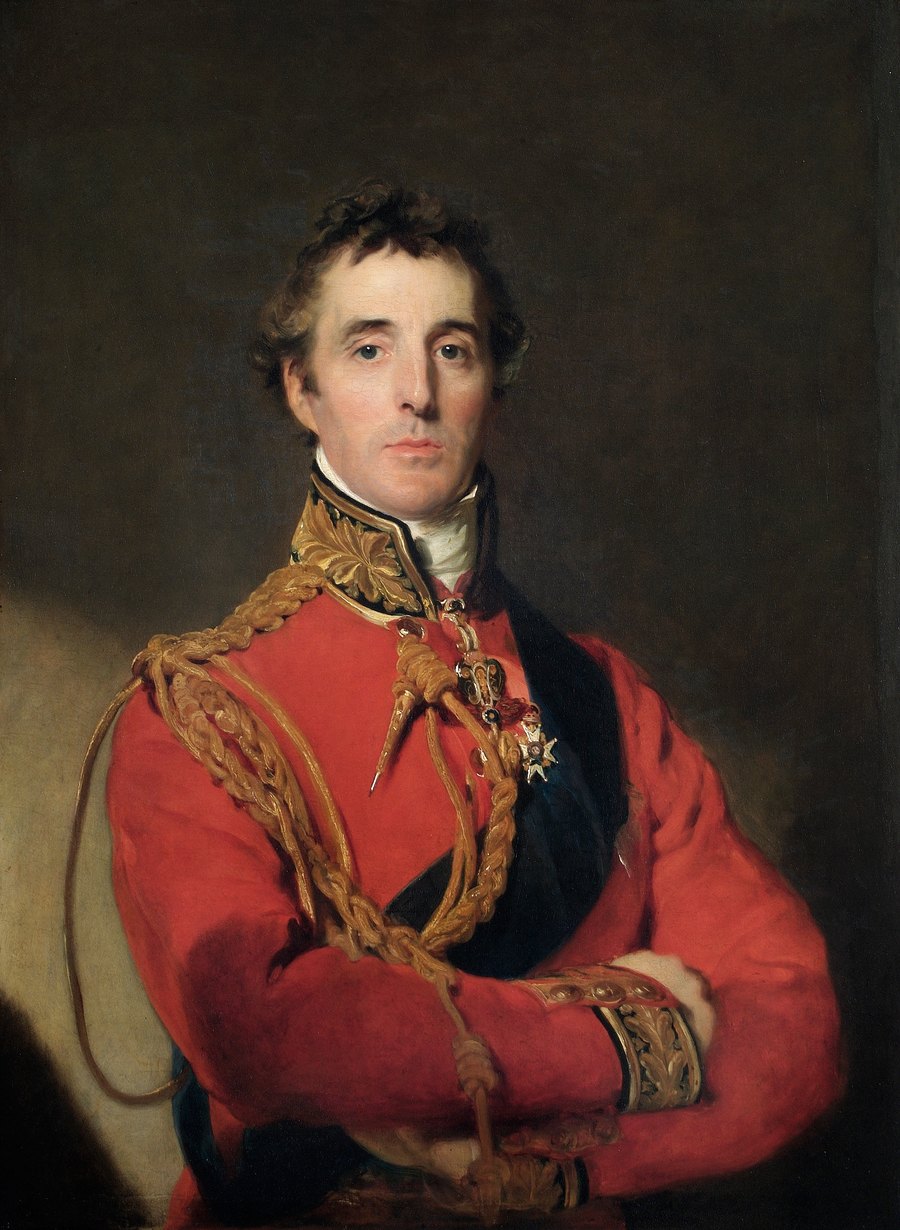 WellingtonAnglo-allied C-in-C, 46 WellingtonAnglo-allied C-in-C, 46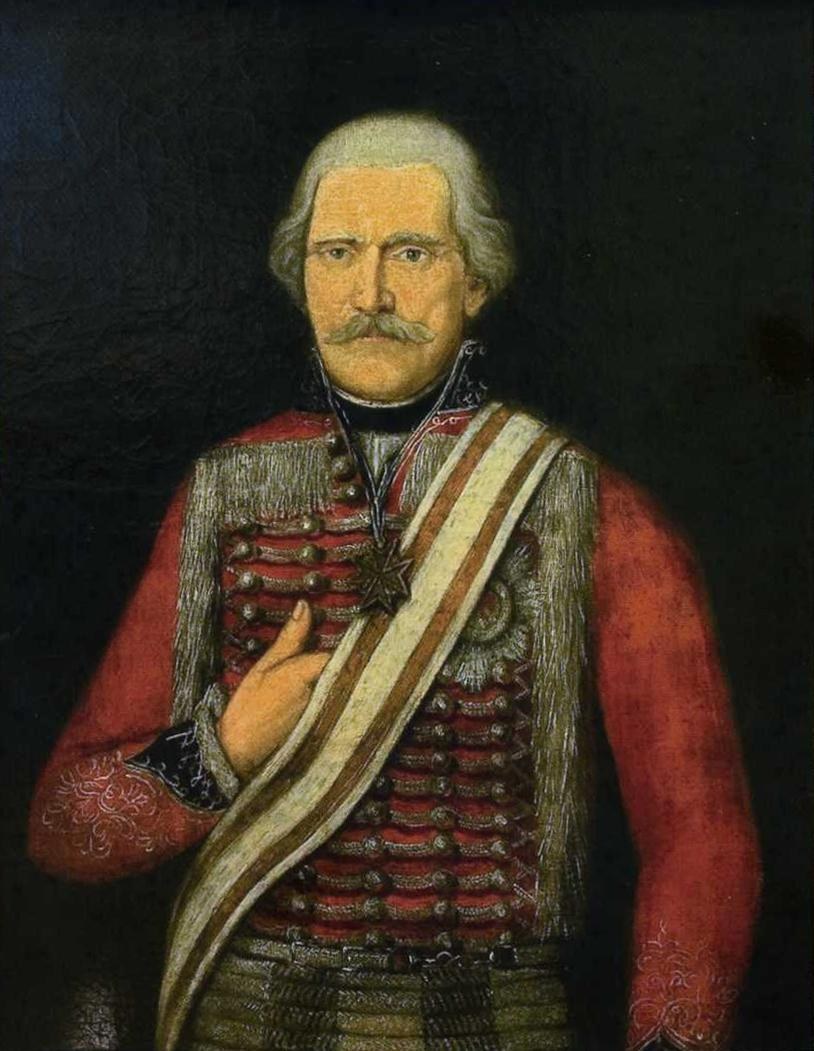 BlücherPrussian C-in-C, 72 BlücherPrussian C-in-C, 72 |
Note: for the corps-level chain of command, see §3, The Two Armies. Berthier, Napoleon's chief of staff of many years, had died before the battle (on 1 June) and was absent.
2. Strategic Background: The Last Central-Position Design
In March 1815 Napoleon escaped from Elba and reclaimed his throne (the Hundred Days). But he was ringed by the armies of the Coalition. He chose to strike first, aiming to beat in detail—before they could unite—the two enemies deployed in Belgium: Wellington's Anglo-allied army and Blücher's Prussians, who together outnumbered his own force.
This was the very maneuver that had become his signature: the central position (interior lines). On 15 June he invaded Belgium and drove a wedge between the two enemy armies. On the 16th Napoleon beat Blücher at Ligny, while Ney held Wellington at Quatre Bras. The same design as at Austerlitz had, so far, worked.
But the flaw lay in the quality of the victory. Blücher was beaten at Ligny, but his army was not destroyed. Worse, the defeated Prussians fell back not eastward along their line of retreat but north, toward Wavre—a position from which they could keep contact with Wellington[6]. Treating them as spent, Napoleon wasted the morning of the 17th, and only in the afternoon did he finally give Grouchy some 33,000 men and order him to "pursue." The detachment went out late, and its objective was vague. The design to split the two enemies had succeeded—but the execution that was supposed to keep them split was already slack from the very first move.
3. The Two Armies and the Mont-Saint-Jean Ridge
French Army
-
Commander-in-chief
Napoleon (Emperor, 45)
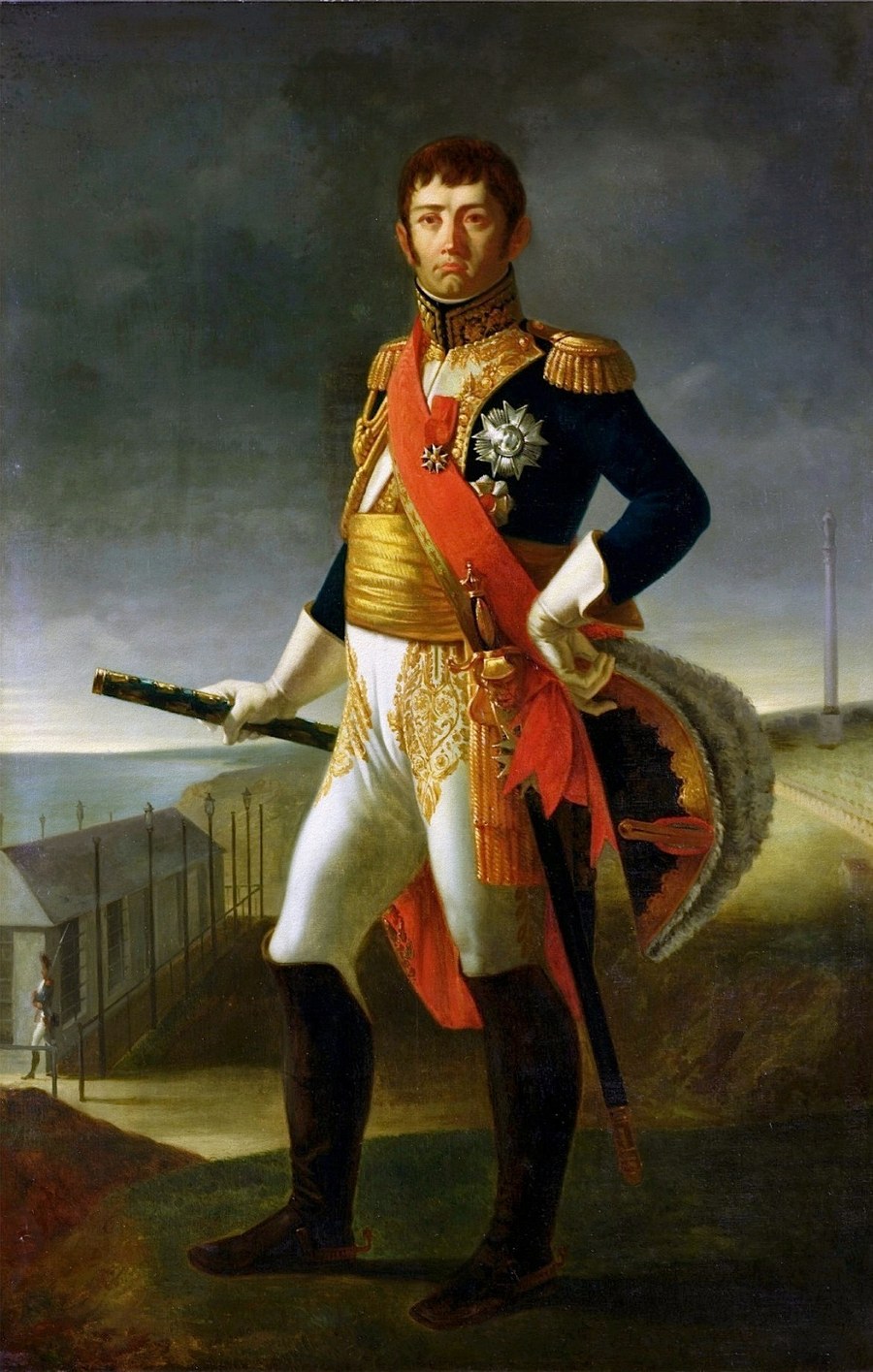 Soult (Chief of staff, 46 / vague orders)
-
Tactical command, corps
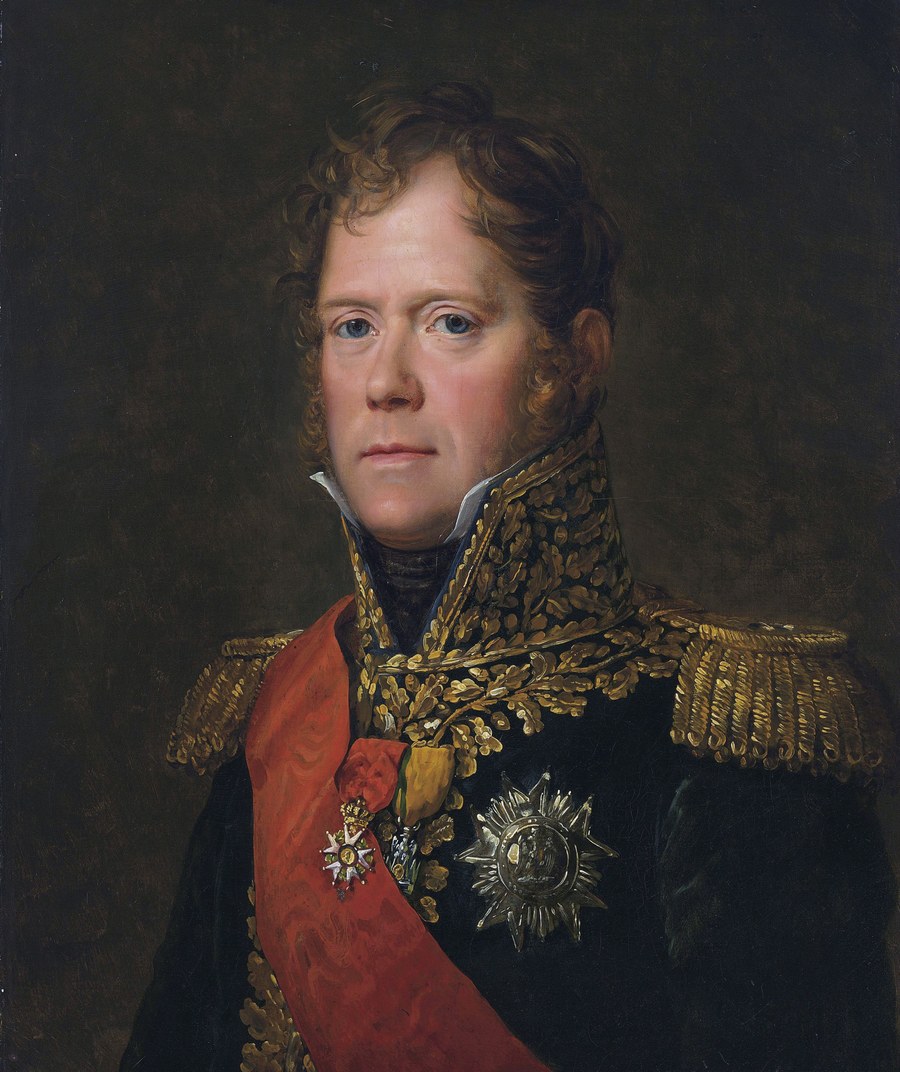 Ney (Tactical command, 46 / uncoordinated cavalry charges)
 d'Erlon (I Corps, 49)
-
Right wing (sent in pursuit / absent)
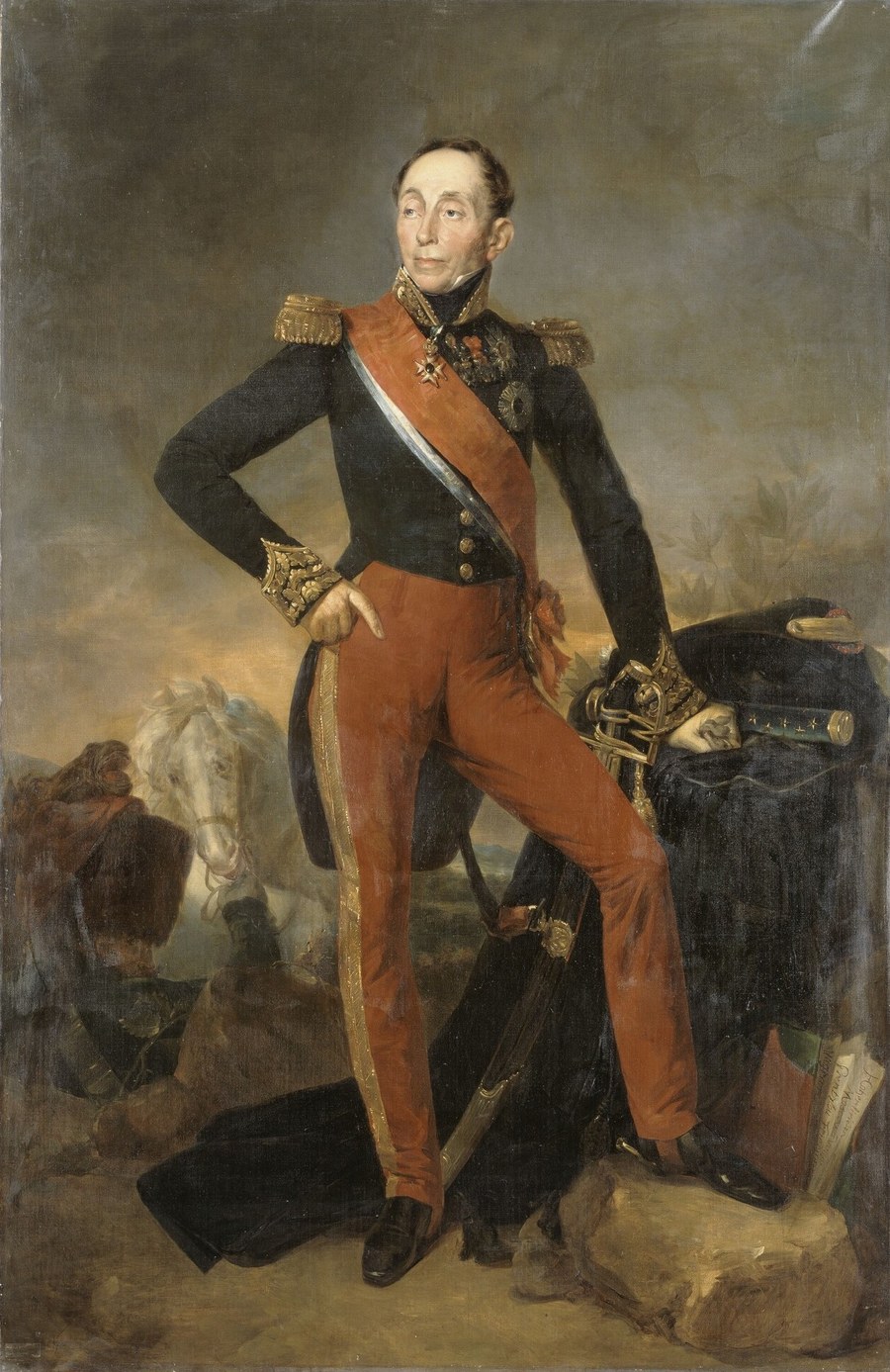 Grouchy (roughly 33,000, 48 / never reached the field)
Anglo-allied Army
-
Commander-in-chief (reverse-slope defense)
Wellington (C-in-C, 46)
-
Cavalry, division
Uxbridge (Cavalry, 47)
Picton (5th Division, 56 / killed in action)
Prussian Army
-
Commander-in-chief (relief force)
Blücher (C-in-C, 72)
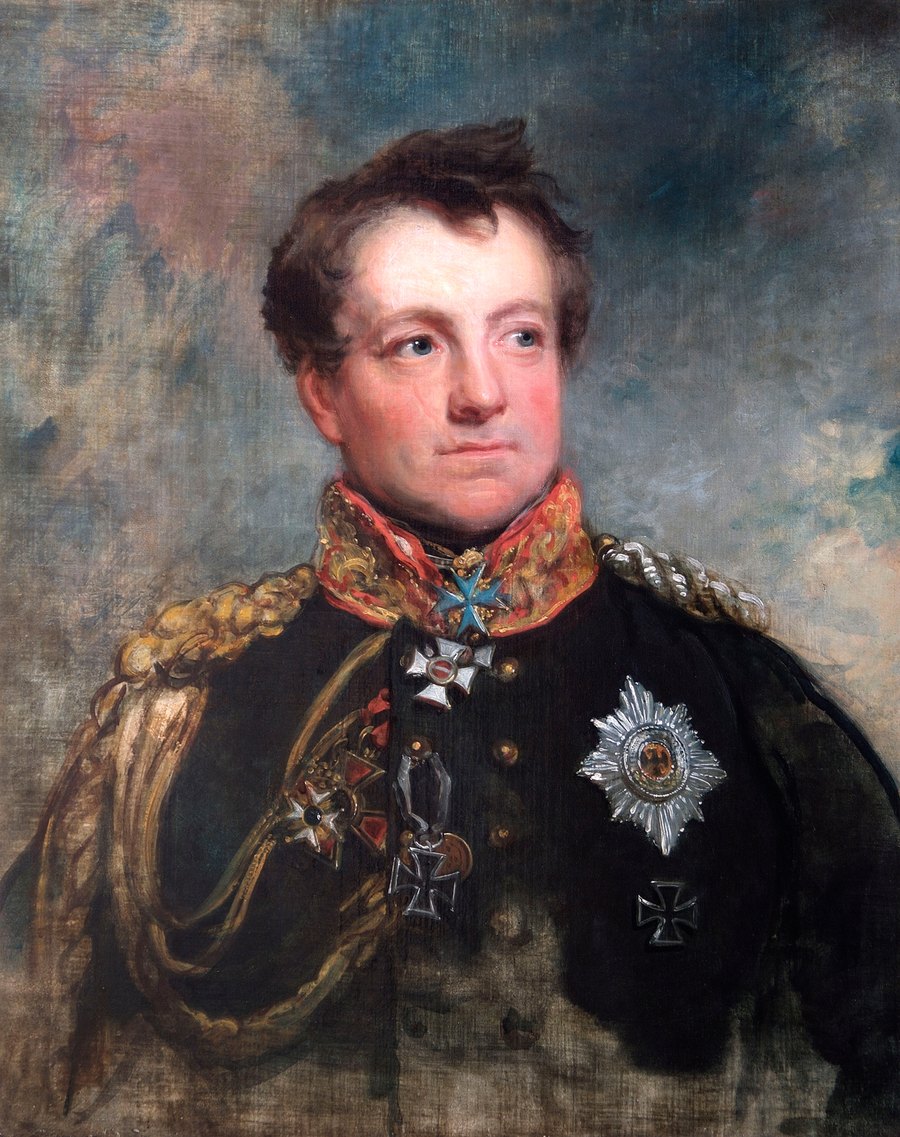 Gneisenau (Chief of staff, 54 / designed the march)
-
First to arrive
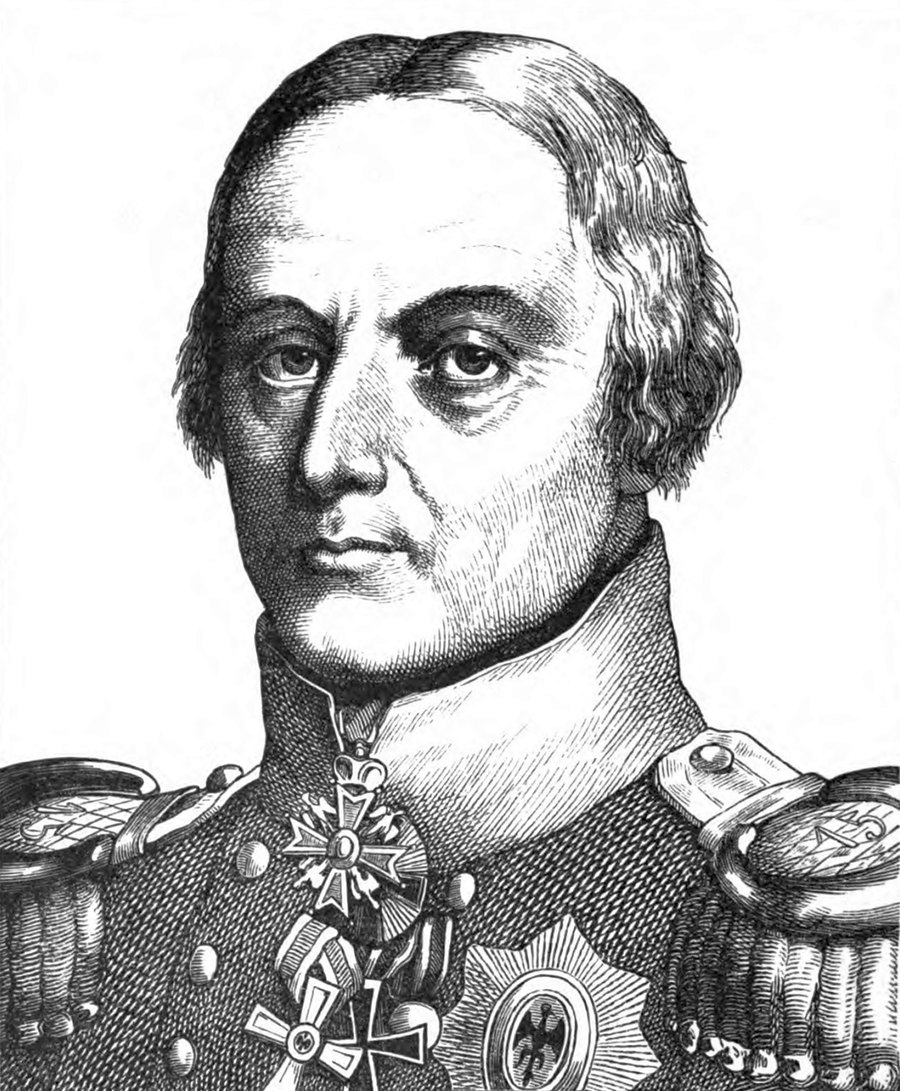 Bülow (IV Corps, 60 / Plancenoit)
Wellington chose the ridge at Mont-Saint-Jean and laid out a reverse-slope defense. He kept his troops hidden behind the crest, sheltered from the French artillery, and delivered a point-blank volley the moment an enemy column came over the ridge. Forward of the crest, three strongpoints jutted out and served as breakwaters: the château of Hougoumont on the right, the farm of La Haye Sainte in the center, and Papelotte on the left[3]. Behind the French right lay the village of Plancenoit. In time the Prussians would appear here, coming from the east.
4. The Course of the Battle: A Single Day, 18 June
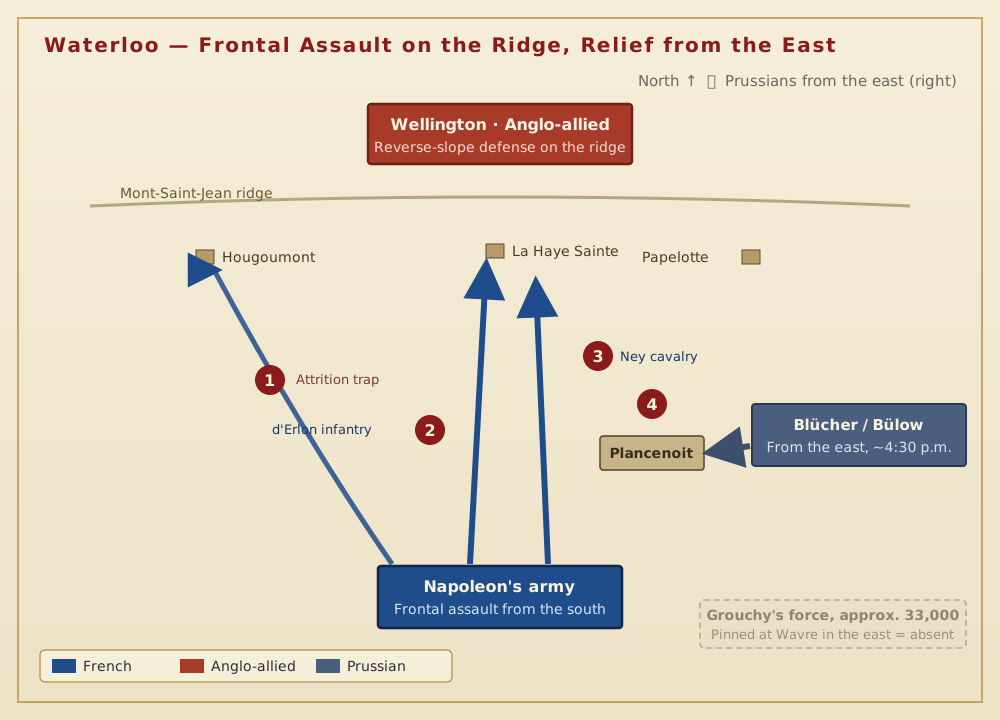
11:30 a.m.: a late start. Heavy rain the night before had turned the ground to mud, and the wait for it to dry enough to move artillery and cavalry pushed the start of the attack to about 11:30 a.m.[3]. The few hours that Napoleon at his peak could have absorbed became, on this day, a fatal delay.
Hougoumont: the attrition trap. The attack on the château of Hougoumont, on Wellington's right, was meant to be a feint to draw off attention. But his brother Jérôme fixated on it and poured in men, turning it into an all-day battle of attrition. A small garrison tied down as many as roughly 15,000 French troops. The diversion bled the side that was attacking[3].
1:30 p.m.: d'Erlon's assault, and a self-destroying counterstroke. d'Erlon's I Corps attacked the center in dense formation but was checked by the volleys of Picton's division (Picton fell). Uxbridge's British heavy cavalry then countercharged, smashed the corps, and seized an eagle. But the cavalry pressed too far, ran into the French cavalry's counterstroke, was broken, and was of no further use. The charge that saved the line threw away the very weapon that had delivered it.
4:00 p.m.: Ney's cavalry charge. Mistaking the Coalition's rearward movement for a "retreat," Ney launched some 9,000–10,000 cavalry—without infantry or artillery—against the unbroken British squares. More than a dozen charges all shattered on the squares, and the French cavalry was worn away under musket and cannon fire. This was the consequence of having no commander on the field to combine the arms[6].
From 4:30 p.m.: the Prussians arrive, the reserves melt away. Bülow's IV Corps struck at Plancenoit, behind the French right. Napoleon was forced to peel off his most precious reserve—first the Young Guard, then part of the Old Guard—to meet it. Around 6 p.m. La Haye Sainte in the center finally fell, opening a fleeting opportunity. But the reserve that should have exploited it had already been used up at Plancenoit.
7:30 p.m.: the Guard repulsed, and the rout. Napoleon staked his last throw on sending the Old Guard against the ridge. But the volleys of Maitland's Guards and the flanking fire of Colborne's 52nd Regiment threw the undefeated Guard back. The cry "the Guard is falling back" (La Garde recule) broke French morale, and with the Prussians enveloping the right from the east, the army collapsed into a rout.
5. A System of Genius Without Redundancy
The defeat at Waterloo laid bare the essence of Napoleon's method.
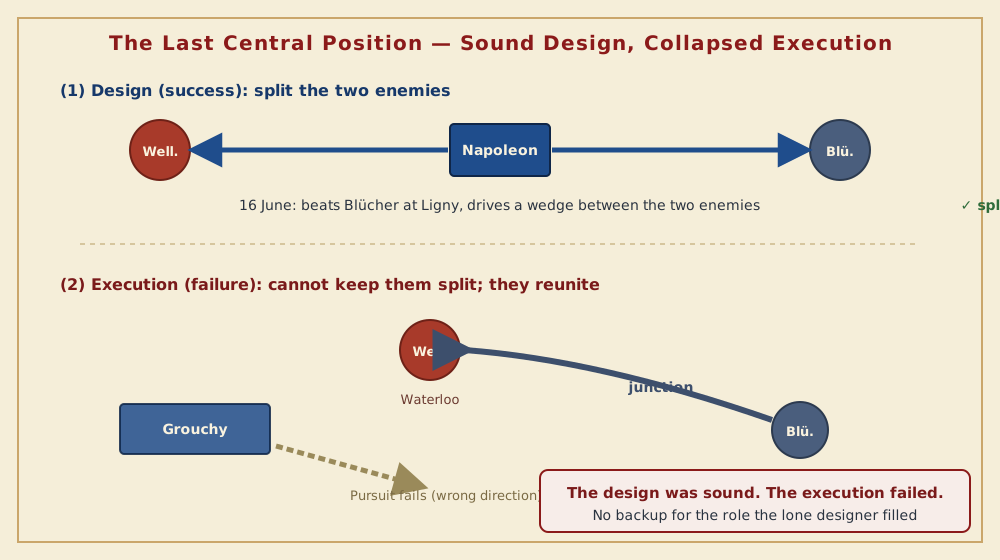
The central-position maneuver becomes a victory only when two things come together. First, the enemy must be split. Second, each part must be beaten in detail before they reunite. Napoleon brought off the first exactly as designed (Ligny). What collapsed was the second—its execution.
Why did the execution collapse? At his peak—at battles like Austerlitz—Napoleon himself was everywhere at the decisive moment, filling by himself whatever role was missing: a chief of staff, Berthier, who issued crisp orders; a pursuit that let no enemy escape; the coordination of the arms on the field. All of it was in place. In 1815 each of those things had become a single point of failure. Berthier was dead, and his successor Soult's orders were vague. Grouchy failed in the pursuit, and Ney fought without coordination. The method depended on the omnipresence of one man, the Emperor, and there was no reserve—no redundancy—to cover the gaps he could not fill himself. So each time a single point gave way, it became a mortal wound.
In fairness, it must be said that these were "failures of subordinates" and at the same time "choices Napoleon himself made"[4]. It was the Emperor who put Soult in as chief of staff, who chose Grouchy—ill-suited to independent command—and who handed tactical command to Ney. In other words, he built a system riddled with single points of failure and placed weak men at its critical nodes. "The subordinates failed" and "the Emperor failed" are not opposites; they are the two ends of one and the same chain.
6. Anatomy of Defeat: Four Failures of Execution
Grouchy's failed pursuit
With some 33,000 men under him he could not catch Blücher and could not prevent the junction. Urged to march to the sound of the guns, he refused, hiding behind his orders. The role of keeping the split intact went unfulfilled.
Ney's uncoordinated cavalry charges
He hurled cavalry alone, without infantry or artillery support, against the squares again and again, squandering the French horse. The command authority that binds the arms together did not function on the field.
A staff without Berthier
Berthier, who had translated the Emperor's conceptions into crisp orders, was dead. His successor Soult's instructions were vague, breeding the very ambiguity in the orders to Grouchy and Ney. The nervous system that carries the orders had no backup.
The lost margin
A late start because of the mud, the numerical disadvantage of being roughly 33,000 short, a young and green post-restoration army. There was no longer the slack to absorb the kind of error that once could have been absorbed.
All four are the absence of a function that, at his peak, Napoleon himself or his elite troops had filled. Had there been a backup for even one of them, it might not have been fatal. But in a system without redundancy, the simultaneous failure of single points of failure simply is the collapse.
7. Dismantling the Myths: Health, Weather, and "If Only Grouchy..."
Waterloo comes with three stock explanations for the defeat. Each one turns the eye away from the structure.
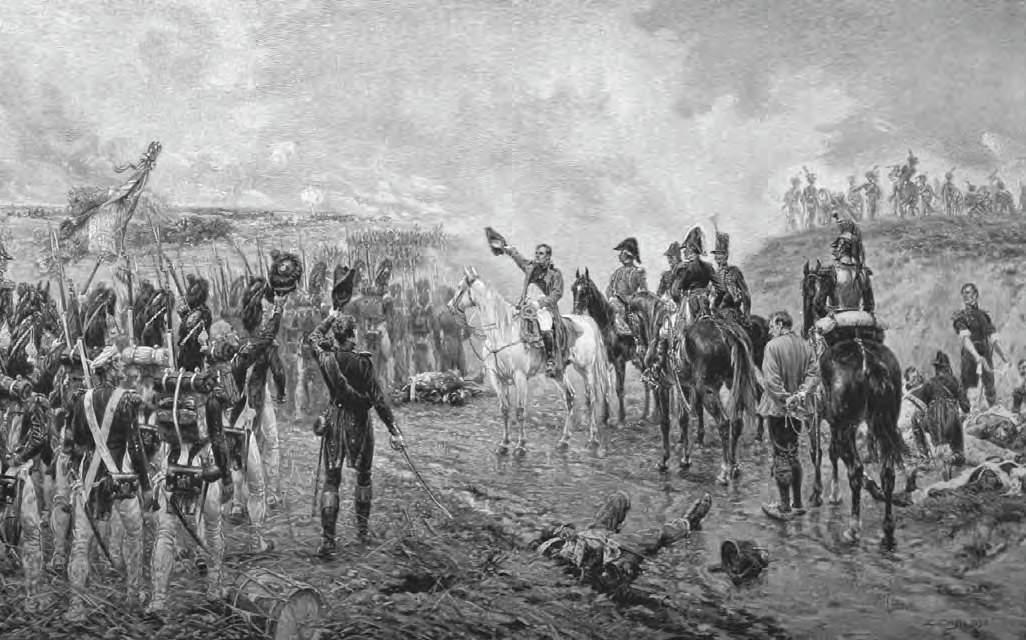
The repulse of the Guard was the "trigger" of the collapse, not its cause. The cause lay in the Prussians closing in from the east and in the reserve that had been bled away.
First, the health theory. It is true that Napoleon suffered from hemorrhoids and urinary trouble, but there is no solid proof that this brought about the defeat, and on the day itself he was in the saddle commanding by morning. Second, the weather theory. The mud delayed the start, but that was merely one factor that accelerated the defeat. Third, "if only Grouchy had marched to the sound of the guns." This is also the excuse Napoleon himself put about on St Helena. Cast Grouchy alone as the villain, and the responsibility of the Emperor—who designed the system and assigned its personnel—vanishes from view.
The popular tale that praises Ney's charge as "heroic" and recounts the repulse of the Guard as a tragic climax falls into the same trap. The courage was real, but what decided the outcome was command judgment and the brittleness of the system. The true face of this defeat was not a single villain or a stroke of bad luck, but a structure that lacked redundancy.
8. Counterfactual Simulation
What follows is a thought experiment grounded in the sources; the outcomes cannot be proved. It is offered to make visible the dependencies among the elements.
| Branch | Tactical outcome | Long-term effect |
|---|---|---|
| A: Grouchy marches to the sound of the guns | Had his roughly 33,000 joined the field, the French might have been able to break Wellington before evening. Or at least they could have pinned part of the Prussian force. | Had the role of keeping the split intact been fulfilled, the central-position design might have ripened into victory. But Blücher's relief was robust, so the result is not guaranteed. A branch that shows the weight of a single point of execution. |
| B: Berthier is still alive | Had crisp orders reached Grouchy and Ney, both the direction of the pursuit and the handling of the cavalry might have been different. Had the nervous system functioned, part of the execution failure could have been prevented. | A branch about whether the single point of failure had a "backup." That the absence of one staff officer told so heavily is itself proof of the "lack of redundancy." |
| C: Napoleon at his peak is in command | With the same plan and the same subordinates, had the Emperor himself been everywhere at the decisive moments, filling the gaps, the errors might have been absorbed (as Roberts notes). | The flip side of a method that depended on "the ability of one man, the Emperor." A branch that throws light on this article's central claim—that it was not a repeatable system but an individual brilliance tied to one person. |
What all three branches point to in common is that the defeat at Waterloo was not "an error of design" but "an absence of execution"—and that this execution depended on a structure without redundancy, propped up by the omnipresence of one man, Napoleon.
9. Strategic Consequences: St Helena and the End of an Era
The rout ran on to a merciless end.
- Night of 18 June: the Prussians under Gneisenau pursued through the night and destroyed the French army. Napoleon's carriage was captured at Genappe.
- 22 June: back in Paris, under pressure from the chambers, Napoleon abdicated for the second time (nominally in favor of his son, "Napoleon II")[2].
- 15 July: he surrendered aboard HMS Bellerophon. In October he was exiled to St Helena, an island in the mid-Atlantic, where he died on 5 May 1821.
- Afterward: Ney was shot for treason on 7 December. In France Louis XVIII was restored, and the Second Treaty of Paris in November imposed harsher terms than those of 1814.
Thus ended the twenty-three years of the French Revolutionary and Napoleonic Wars. "Waterloo" survives in English to this day as a byword for a decisive, final defeat—to meet one's Waterloo.
10. Lessons for Today
What Waterloo throws at us is this perspective: a system that depends on a single genius shines as long as that one person can fill every gap, but the instant the scale or the situation grows beyond his reach, the lack of redundancy becomes fatal.
- A strength tied to one person is brittle unless it is turned into a system. Napoleon's method was an individual brilliance dependent on the Emperor's own omnipresence—not a system anyone could run. In organizations too, a setup where every judgment converges on a single founder is strong while that person is there, but seizes up the moment they are gone. Apple drifted after ousting Steve Jobs in 1985 and was driven to within months of bankruptcy by 1997. It revived with Jobs's return (1997)—a textbook case of "an organization that cannot run without its genius."
- Design for succession and redundancy. When a one-of-a-kind person is gone, an organization with no replacement drifts. Disney, having lost Walt Disney in 1966, languished creatively for roughly eighteen years asking "what would Walt do?"—and even became a takeover target. Only with a new management team (Eisner and others) in 1984 did it recover. Can you prepare a "backup" to fill the absence of the central figure while times are still good?
- Keep a margin, and know when to leave the table. At his peak Napoleon had a margin of time and troops to absorb error. In an organization that has lost its margin, small failures chain together into collapse. The reserve of strength that lets you avoid a mortal wound is the hidden foundation of real strength.
The central position worked perfectly at Austerlitz because the Emperor could fill every gap. That he could produce no decisive victory at Borodino, was encircled at Leipzig, and saw it all collapse at Waterloo was because the method, in the end, could never rise above a single human being.
Conclusion: The Individual Brilliance That Never Became a System
Waterloo is the battle in which Napoleon's method ran up against its own limit. The central-position design was sound, and up to the point of splitting the enemy at Ligny it was no different from his peak. But the execution that turns a split into victory—the pursuit, the coordination, the carrying of orders—was a function that the Emperor alone had once filled by being everywhere. In 1815 each of those became a single point of failure, and with no backup they all gave way at once, and that was the collapse.
Napoleon's wars began with the design of a narrative at Lodi, ripened into the art of misdirection at Austerlitz, showed a conditional strength at Friedland, lost the power to produce a decisive victory at Borodino, were encircled by the Coalition at Leipzig, and ended at Waterloo by exposing that the method "was never a repeatable system." Two hundred years on, that method remains a textbook of strategy. But the greatest lesson Waterloo left is not tactical—it is that however exceptional an individual brilliance, unless it is translated into a system with redundancy to support it, it will one day collapse together with the limit of a single human being.
FAQ
Fought on 18 June 1815, it was the final defeat of Napoleon after his return from Elba, and it ended both the Napoleonic Wars and the Napoleonic era itself. Within days he abdicated for the second time, and he was exiled to St Helena, a remote island in the mid-Atlantic, where he died. 「Waterloo」 survives today as a byword for a decisive, final defeat — to meet one's Waterloo.
It was his signature maneuver, the central position (interior lines). He invaded Belgium and pushed between Wellington's Anglo-allied army and Blücher's Prussians, aiming to beat each in detail before they could unite. On 16 June he beat Blücher at Ligny (though without destroying him) while Ney held Wellington at Quatre Bras. The design to split them succeeded — but it collapsed at the stage of turning that split into victory.
On 17 June Napoleon gave Grouchy some 33,000 men and ordered him to pursue the Prussians, but the detachment went out late and Grouchy lost track of the enemy. On the morning of the 18th, hearing the guns at Walhain, his subordinate Gérard urged him to march toward the sound of the cannon, but Grouchy refused, citing his orders, and fought the Prussian rearguard at Wavre. Meanwhile Blücher's main body marched to Waterloo, and Soult's recall order did not arrive until after 6 p.m. Responsibility is still debated — the vague orders bear part of the blame.
Around 4 p.m. Ney mistook the coalition's rearward movement for a retreat and hurled some 9,000–10,000 cavalry, without infantry or artillery support, repeatedly against the unbroken British squares. The squares could not be broken by cavalry alone, and the French horse was worn away under musket and cannon fire. It is a textbook case of the role of combining the arms — a command Napoleon himself had once held — failing to function on the field.
It was decisive in the extreme. Pinned under his horse at Ligny, the 72-year-old Blücher nonetheless reorganised his army and marched. Around 4:30 p.m. Bülow's IV Corps struck Plancenoit behind the French right, forcing Napoleon to peel off his precious Guard (first the Young Guard, then part of the Old Guard) to meet it. The reserve that should have delivered the decisive blow vanished at the moment of crisis. Numbers even in the morning had widened by evening to roughly 118,000 coalition against about 73,000 French.
It is widely argued that it did. Berthier, who had been Napoleon's chief of staff since 1796 and had turned the Emperor's conceptions into crisp orders, did not join the restoration and died falling from a window on 1 June, just before the battle (accounts differ — accident, suicide or murder). His successor Soult could write only vague orders, and the resulting ambiguity in the instructions to Grouchy and Ney is often noted. The anecdote that Berthier would have sent a hundred couriers captures the difference. There was no backup in the system to fill the absence of one man.
It is true that he suffered from haemorrhoids and urinary trouble, but the claim that this caused the defeat lacks solid proof and remains a secondary, contested factor. On the day itself he was up and commanding in the saddle by morning. Some note that putting health at the center is an apologia meant to protect the myth of his invincibility. This article treats health as a footnote-level factor and does not rest the explanation of the outcome on it.
The Prussians under Gneisenau pursued the routed French through the night and destroyed them. Napoleon returned to Paris and abdicated for the second time on 22 June. On 15 July he surrendered aboard HMS Bellerophon, in October he was exiled to the remote island of St Helena, and he died there on 5 May 1821. Ney was shot for treason on 7 December. In France Louis XVIII was restored, and the Second Treaty of Paris in November imposed harsher terms than those of 1814.
Claims and Sources
- David G. Chandler(1966). The Campaigns of Napoleon, Macmillan.
- Encyclopædia Britannica. Battle of Waterloo, Encyclopædia Britannica. [link]
- Harrison W. Mark(2023). Battle of Waterloo, World History Encyclopedia. [link]
- Andrew Roberts(2014). Napoleon: A Life, Allen Lane / Penguin.
- Fondation Napoléon. How did Napoleon manage to lose the Battle of Waterloo?, napoleon.org (Fondation Napoléon). [link]
- Wikipedia contributors. Battle of Waterloo, Wikipedia. [link]