Prussia · Prussian Cavalry Commander
Gebhard Leberecht von Blücher
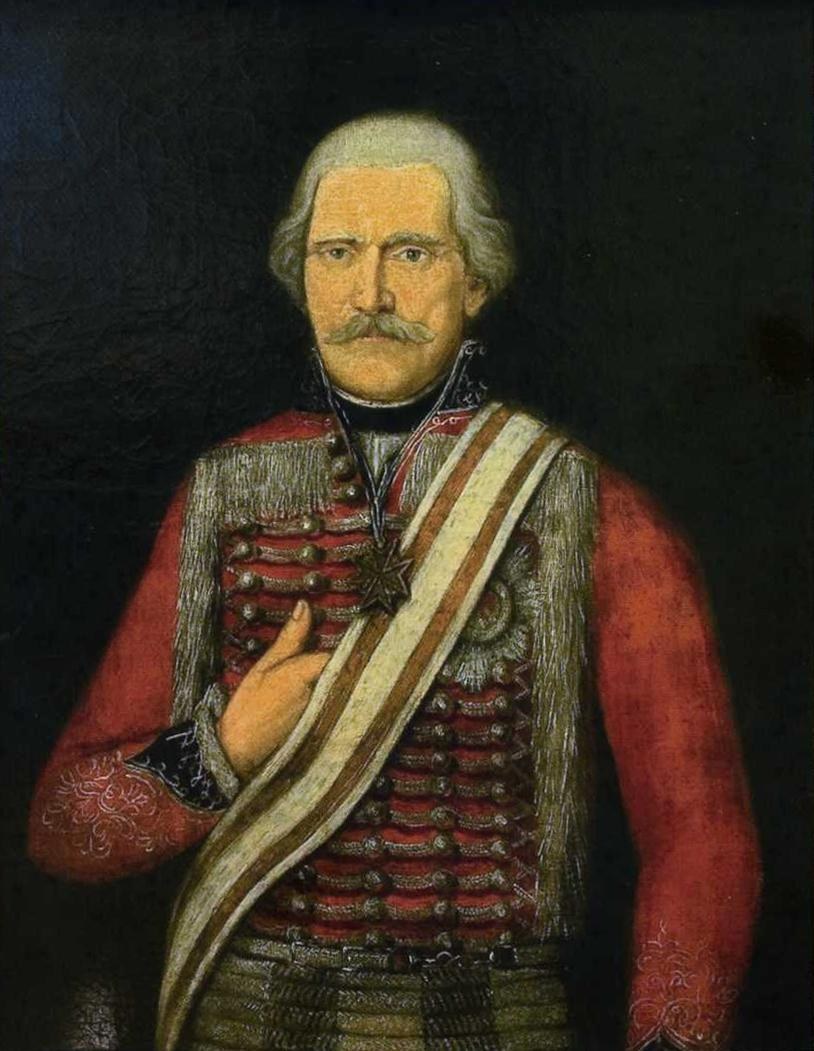
The Prussian field commander they called Marschall Vorwarts - Marshal Forwards. He is not rated highly as a tactician, but the war ended because he appeared on the field on 18 June 1815. Keeping a promise, repeatedly, is itself a strategy - Blucher is the working example.
Starting from the first defeat
In 1806, after Jena-Auerstedt, Blucher withdrew north, was surrounded by three pursuing corps and capitulated at Ratekau on 7 November. He insisted that the instrument of surrender state that it was for want of ammunition and provisions[1].
That experience shaped his later conduct. From 1807 the Prussian army rebuilt itself and made the staff officer an institution rather than a person. In aiming at command that does not depend on individual quality it learned in the opposite direction from the French.
What he actually did: not stopping
In 1813 Blucher led the Army of Silesia and became the executant of the Trachenberg Plan. He beat Macdonald on the Katzbach on 26 August and, at Leipzig in October, took Mockern from the north and tightened the ring[2].
His role was the hardest part of the rule. Never fight the army he leads in person; strike the marshals' armies without hesitation - tell apart the opponent to avoid and the opponent to hit, and do not falter against the second. Too cautious and the ring never closes; too eager and you collide with the main body.
In the campaign in France in 1814 he was hit repeatedly by Napoleon in person, and each time reassembled his force and resumed the advance. An enemy who loses and comes back the following week was, in itself, the hardest thing for France to deal with.
The decisive moment: withdrawing to Wavre
At Ligny on 16 June 1815 Blucher, aged 72, charged at the head of his cavalry, was unhorsed and lay pinned under the fallen animal for some hours[3]. Gneisenau, his chief of staff, took over and directed the retreat not east on Liege but north on Wavre - the direction that kept the army in touch with Wellington[3].
That choice settled the outcome of the Hundred Days. The separation had succeeded in form but was not maintained. Recovered from his fall, Blucher held to the policy of joining, and on the afternoon of 18 June some 48,000 to 50,000 Prussians reached the field of Waterloo.
Two days after being beaten, arriving at another battlefield as promised. Not military subtlety; this was the deciding factor.
Nor did he stop on arrival. When the line broke at Waterloo, it was the Prussians who took on the pursuit. Following through the night turned the French retreat from an orderly withdrawal into a dissolution. That day, the work of turning a victory into a decision was done by the other side.
Limits, or how it ended
His reputation as a tactician has never been high, and the roughness of his judgement is often noted. He was nonetheless indispensable to the coalition, because most of what breaks a coalition is an ally failing to do what it said. From 1813 to 1815 he never once left a partner behind.
He died in 1819, aged 76. What stopped Napoleon's method was not a better method but an opponent who would not stop.
Sources
- Wikipedia contributors, Gebhard Leberecht von Blucher.
- J. Rickard, Trachenberg Plan, 12 July 1813, History of War.
- Wikipedia contributors, Waterloo campaign: Ligny through Wavre to Waterloo.
Appears in battles
-
1806-10-14
The Twin Battle of Jena–Auerstedt (1806) — The Decisive Battle Was the One Napoleon Wasn't AtRole: Cavalry (Auerstedt)
-
1813-10-18
Battle of Leipzig (1813) — The Battle of the Nations, Where the Master of the Center Was EnvelopedRole: Army of Silesia (north; won at Mockern)
-
1815-06-18
Battle of Waterloo (1815) — The Day a One-Man System Failed for Lack of RedundancyRole: Prussian commander-in-chief (arriving in support)