France · VI Corps Commander
Michel Ney
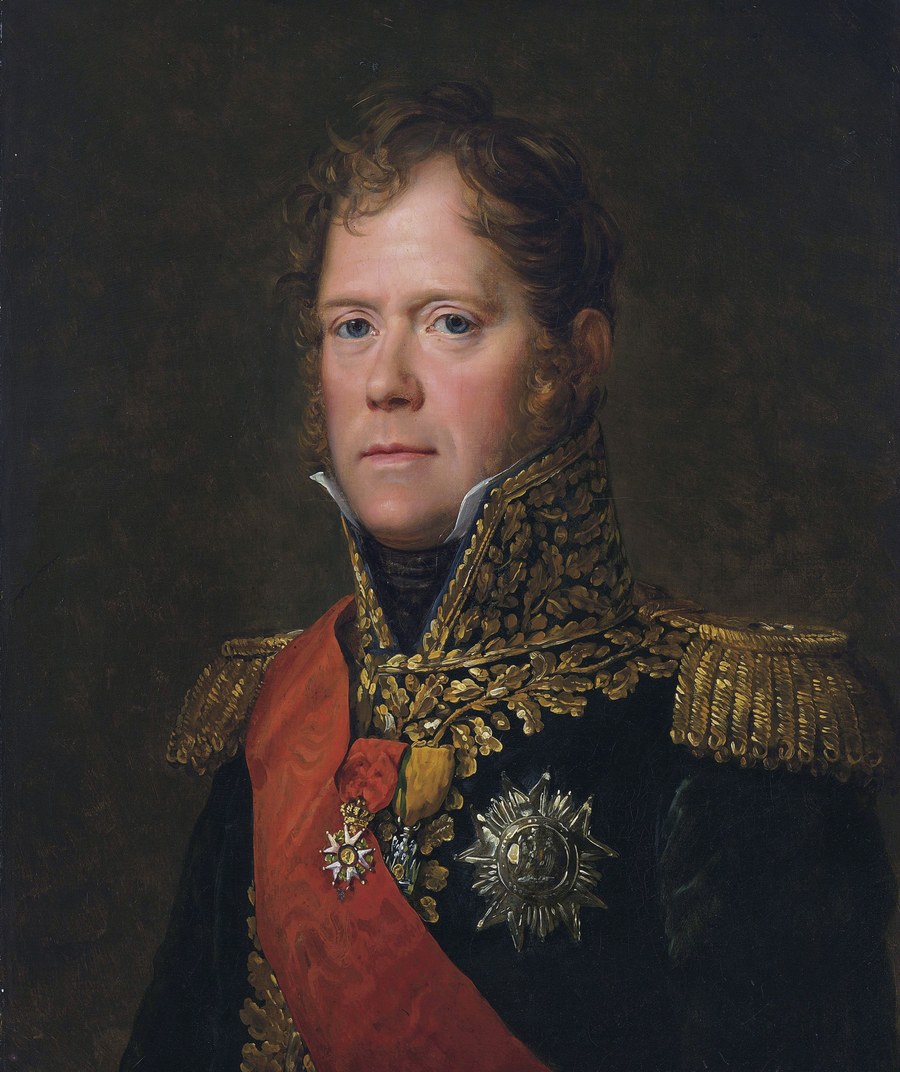
The marshal they called the bravest of the brave. His courage at the front is beyond question, and it was worth most in the hardest situation of all, a retreat. The same quality worked against him in independent command and in great battles. Ney is the man who shows that courage can be a strength and a weakness at once.
What he actually did: hold at the very back
An army breaks not while it is fighting but while it is withdrawing. The rearguard absorbs the pursuit so the main body can get away, which means repeating an unwinnable fight every day. What that takes is not imagination but the ability to keep standing in front of the men.
During the retreat from the Russian campaign in 1812 Ney carried that role to the end. Through weeks that included the crossing of the Berezina he held the rear against pursuit and cold, and he is said to have been the last French soldier to leave Russian soil[1]. The telling contains some exaggeration, but that the last formed body in a disintegrating army was under his command is not in doubt.
The reputation survived every later failure. Visible courage is remembered more strongly than invisible failure.
Strength in the role of going forward
The quality was not confined to retreats. On 14 October 1805 his storming of the Danube crossing at Elchingen secured the bridgehead and led directly to the Austrian surrender at Ulm. The title he was later given comes from that day[1].
At Friedland in 1807 he took the attack on the Russian left and shared in the decision. At Borodino in 1812 he and Davout together took on the hours of attrition around the southern fleches. In the role of pressing in frontally there was nobody better. The problem arose when he was put in a position to choose that role himself.
The decisive moment: collapsing in independent command
The same quality turns against him elsewhere. At Dennewitz on 6 September 1813 the army Ney commanded alone was beaten. That year the Emperor won nearly every battle he commanded in person and the marshals lost nearly every one they commanded alone - and the allied Trachenberg Plan was a rule for exploiting exactly that distribution[2].
At Quatre Bras on 16 June 1815 he failed to settle the action while he had the advantage, and evening came with no reinforcement. Two days later at Waterloo he repeated massive cavalry charges without infantry or artillery support and had them broken on the squares. Quick to decide to go forward, slow at the work of combining the arms: that was the consistent pattern in independent command.
The reversal of positions
In April 1814 it was Ney who led the marshals pressing for the abdication[3]. On 10 March 1815 he left Paris with 6,000 men, having promised Louis XVIII to bring the man back in an iron cage, and within a week he had gone over to the Emperor[3].
Reading that swing only as treachery misses the structure. He was consistently a man who responded with everything he had to the situation in front of him. On a battlefield that is a virtue; in political choice it is fatal.
Limits, or how it ended
Arrested on 3 August 1815, convicted by the Chamber of Peers on 6 December and shot on the 7th[1]. He is said to have refused the blindfold and given the order to fire himself.
Courage is easy to measure and judgement is not. What his career shows is the structure by which staffing on the easily measured quality leaves the hard-to-measure jobs empty. What was missing in the Hundred Days was not brave men.
Sources
- Encyclopaedia Britannica, Michel Ney.
- J. Rickard, Trachenberg Plan, 12 July 1813, History of War.
- Fondation Napoleon, Ney, Michel.
Appears in battles
- 1806-10-14
-
1807-02-08
Battle of Eylau (1807) — The Day Napoleon's Method Failed to Deliver a DecisionRole: VI Corps (arrived towards evening)
-
1807-06-14
Battle of Friedland (1807) — When the Conditions Returned, Napoleon's Method Came Back WholeRole: VI Corps (the decisive blow against Bagration's left)
-
1812-09-07
Battle of Borodino (1812) — Why the Bloodiest Day Produced No DecisionRole: III Corps (assault on the fleches)
-
1813-10-18
Battle of Leipzig (1813) — The Battle of the Nations, Where the Master of the Center Was EnvelopedRole: Northern wing (facing Blucher and Bernadotte)
-
1815-06-18
Battle of Waterloo (1815) — The Day a One-Man System Failed for Lack of RedundancyRole: Tactical command (uncoordinated cavalry charges)