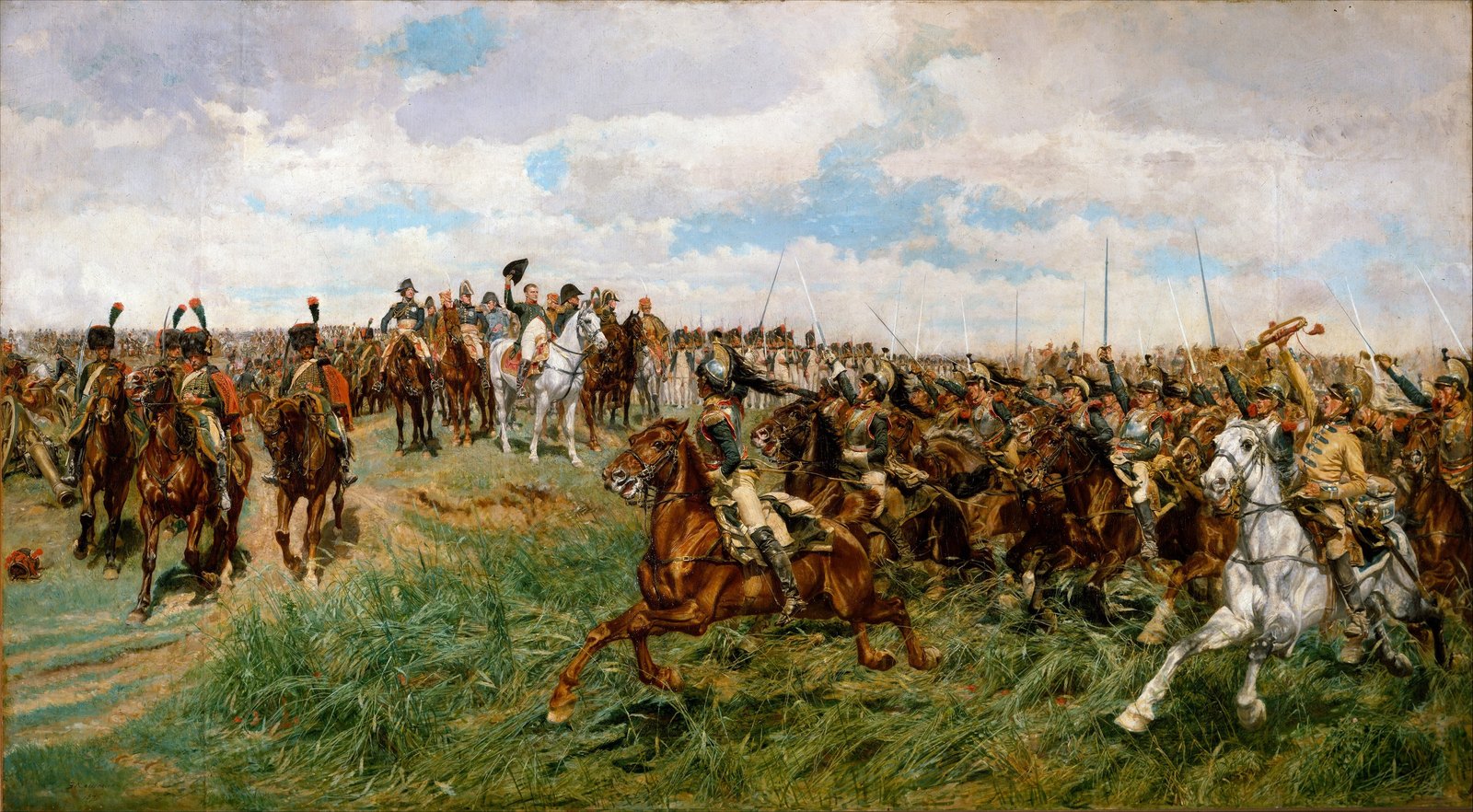
Four months earlier, in the blizzard at Eylau, Napoleon's method of "winning by making the enemy move" had spun in place. On 14 June 1807 — by coincidence the same date as Marengo — against that same enemy, Bennigsen, the method came back whole. The long summer day returned visibility and mobility, and above all Bennigsen committed the fatal blunder of half-crossing with the Alle river at his back. Napoleon read that deployment as a death trap and drove the enemy into the river. Friedland is the most vivid proof that the power of the method rested on conditions.
1. Key facts
- Date
- 14 June 1807Seven years after Marengo
- Place
- Friedland (the Alle)Now Pravdinsk, Russia
- Belligerents
- France vs RussiaWar of the Fourth Coalition
- Outcome
- Decisive French victory→ Treaties of Tilsit; the war ends
In this article the French are shown in blue and the Russians in red.
Strength (engaged, including reinforcements)
Fr superior
Guns
roughly even
Casualties (killed, wounded, captured)
Fr losses 2–3× lower
| Category | France | Russia |
|---|---|---|
| Supreme command | 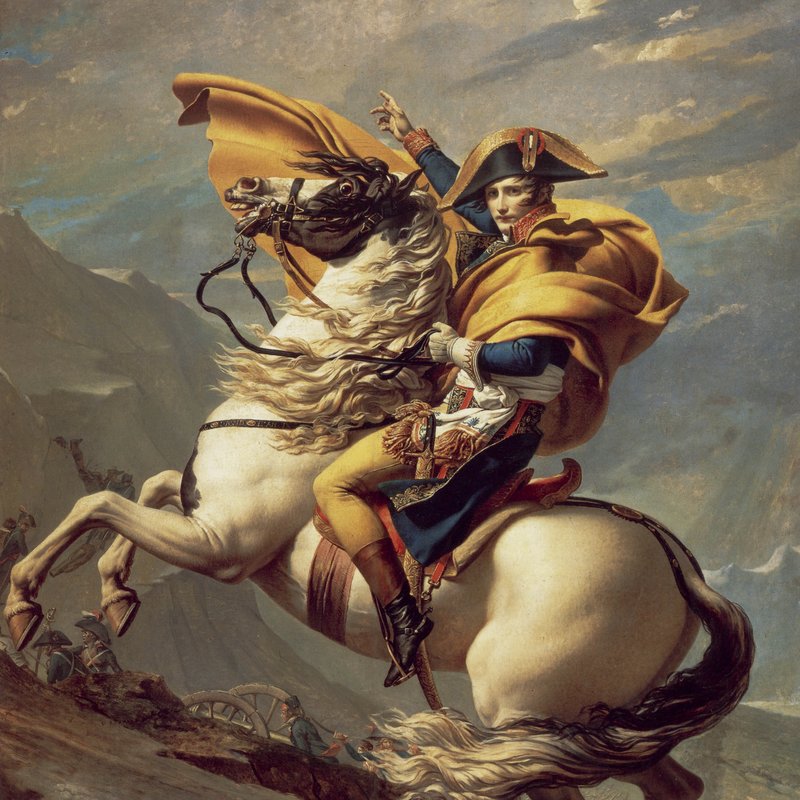 NapoleonEmperor, 37 NapoleonEmperor, 37 |
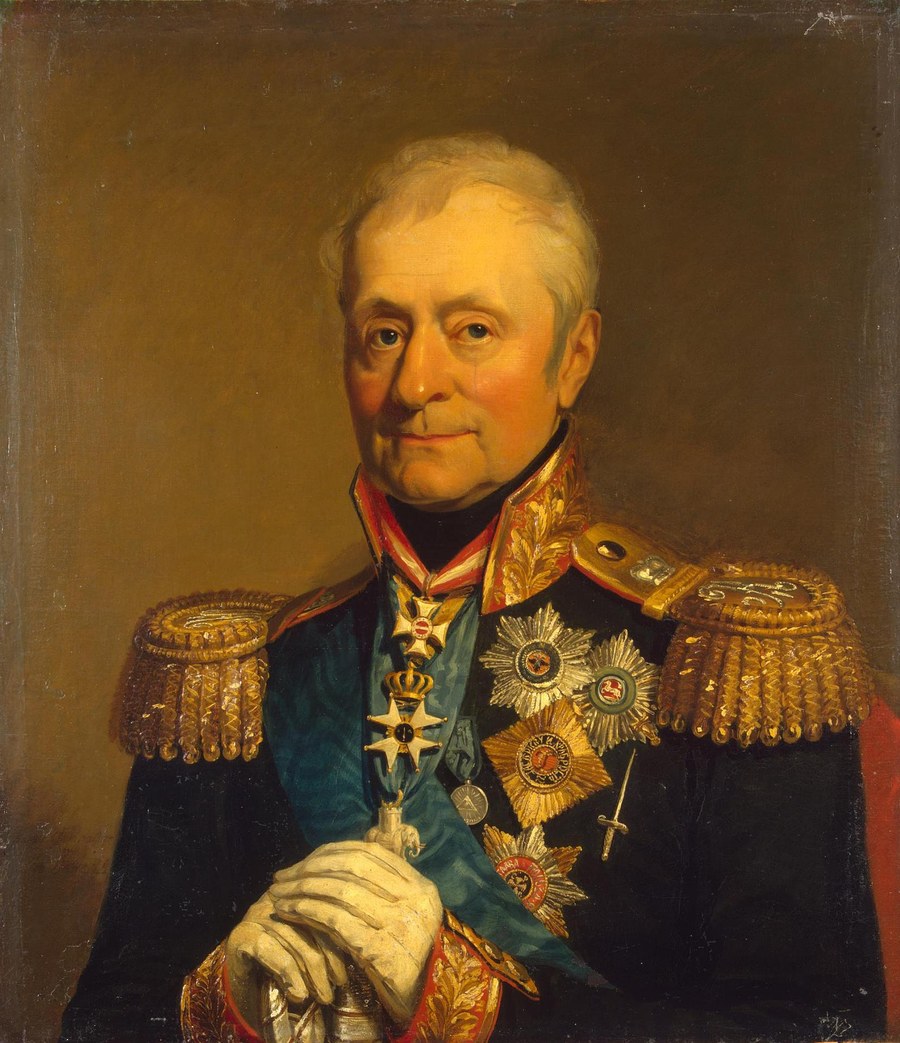 BennigsenRussian C-in-C, 62 BennigsenRussian C-in-C, 62 |
For the corps-level command structure, see §3 Forces. Note that the great cavalryman Murat was absent from this battle (detached to Königsberg in the north).
2. Strategic background: an enemy with his back to the Alle
After the inconclusive slaughter at Eylau, both armies spent some four months in winter quarters rebuilding. In June 1807 Bennigsen took the offensive, but suffered painful losses at Heilsberg (10 June) and fell back to the east bank of the Alle. His plan was to march north to Wehlau and recross the river there; he had no intention of fighting a decisive battle at Friedland[3].
On the night of 13 June, however, Bennigsen's vanguard judged that "all that stands before us is Lannes' isolated advance guard," and so crossed the Alle and deployed on the west bank at Friedland. They reckoned they could crush him. But he misjudged the speed of Napoleon's arrival. Before he knew it, his entire army was inside a sack — its back against the deep, fast-running Alle, its only line of retreat the town's narrow streets and a handful of pontoon bridges[3].
This day happened to be 14 June, the same date on which, seven years earlier, Napoleon had snatched victory at Marengo. The Emperor, who set great store by omens, is said to have walked about murmuring, "It is the day of Marengo. It is a day of victory."[3]
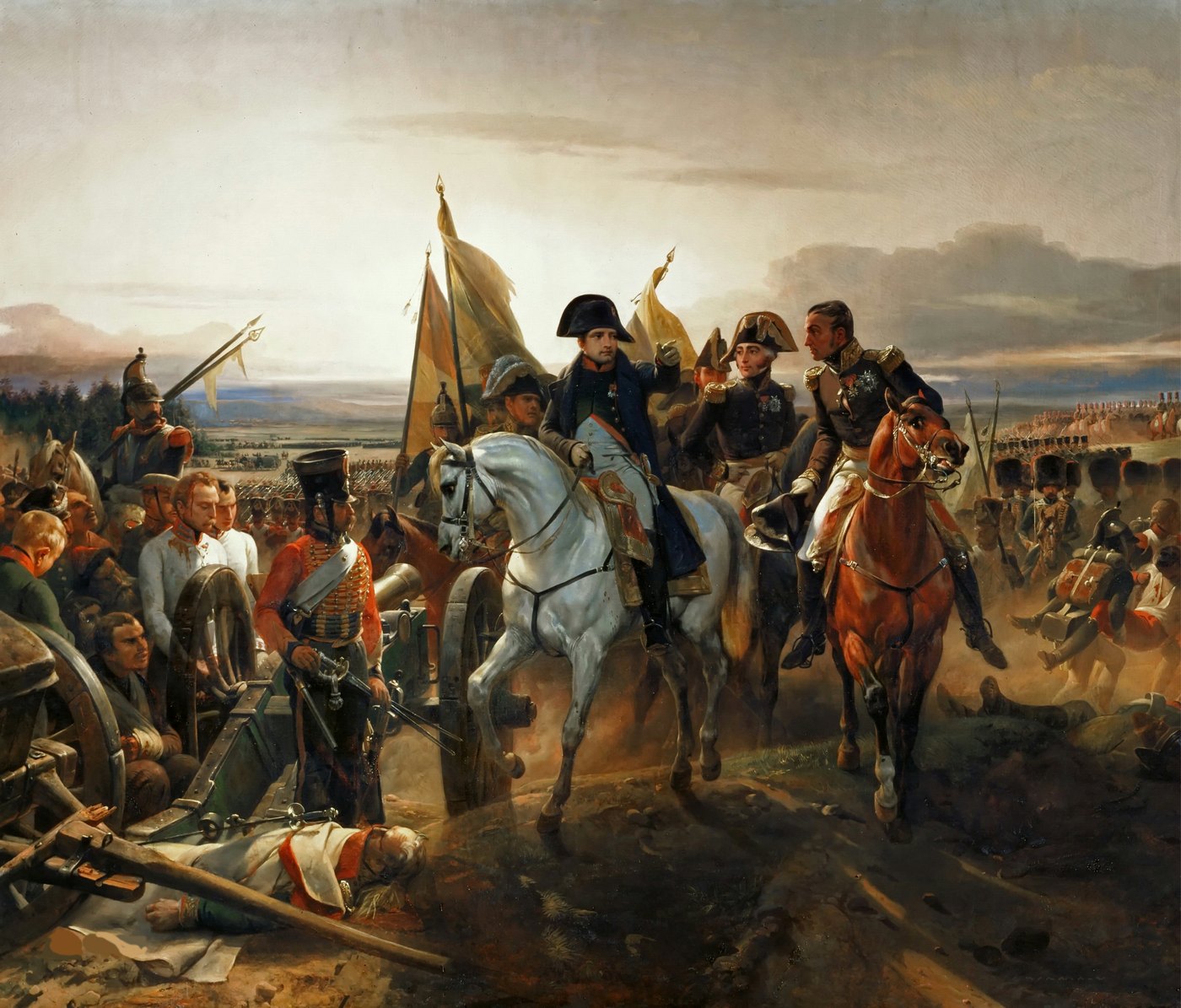
Arriving at noon, Napoleon saw at a glance that the enemy had walked into a trap of his own making.
3. Forces and the terrain of the "river trap"
French army
-
Supreme command (arrived at noon)
Napoleon (Emperor, 37)
-
Half-day fixing action
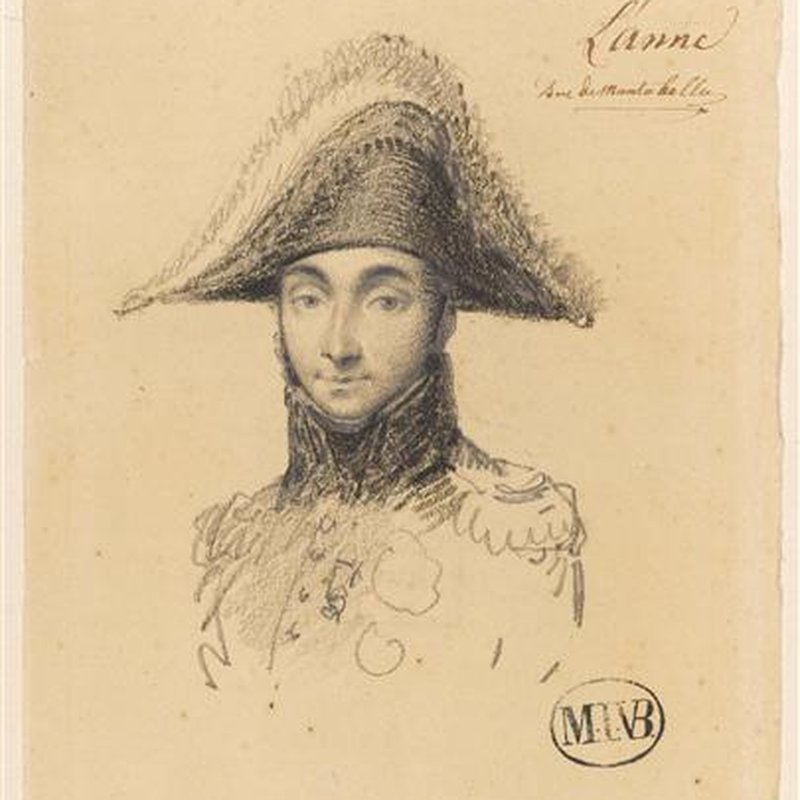 Lannes (advance guard, 38)
-
Decisive blow and firepower
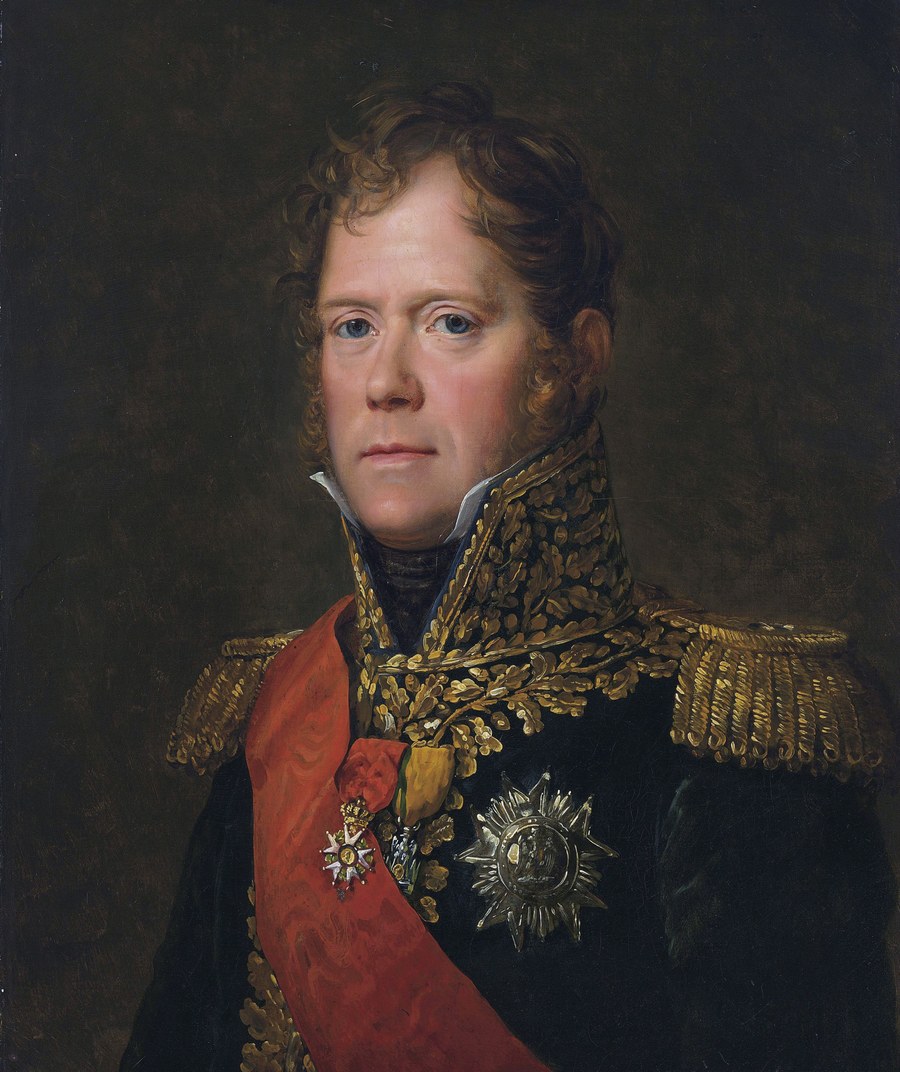 Ney (VI Corps, 38; shattered the enemy left)
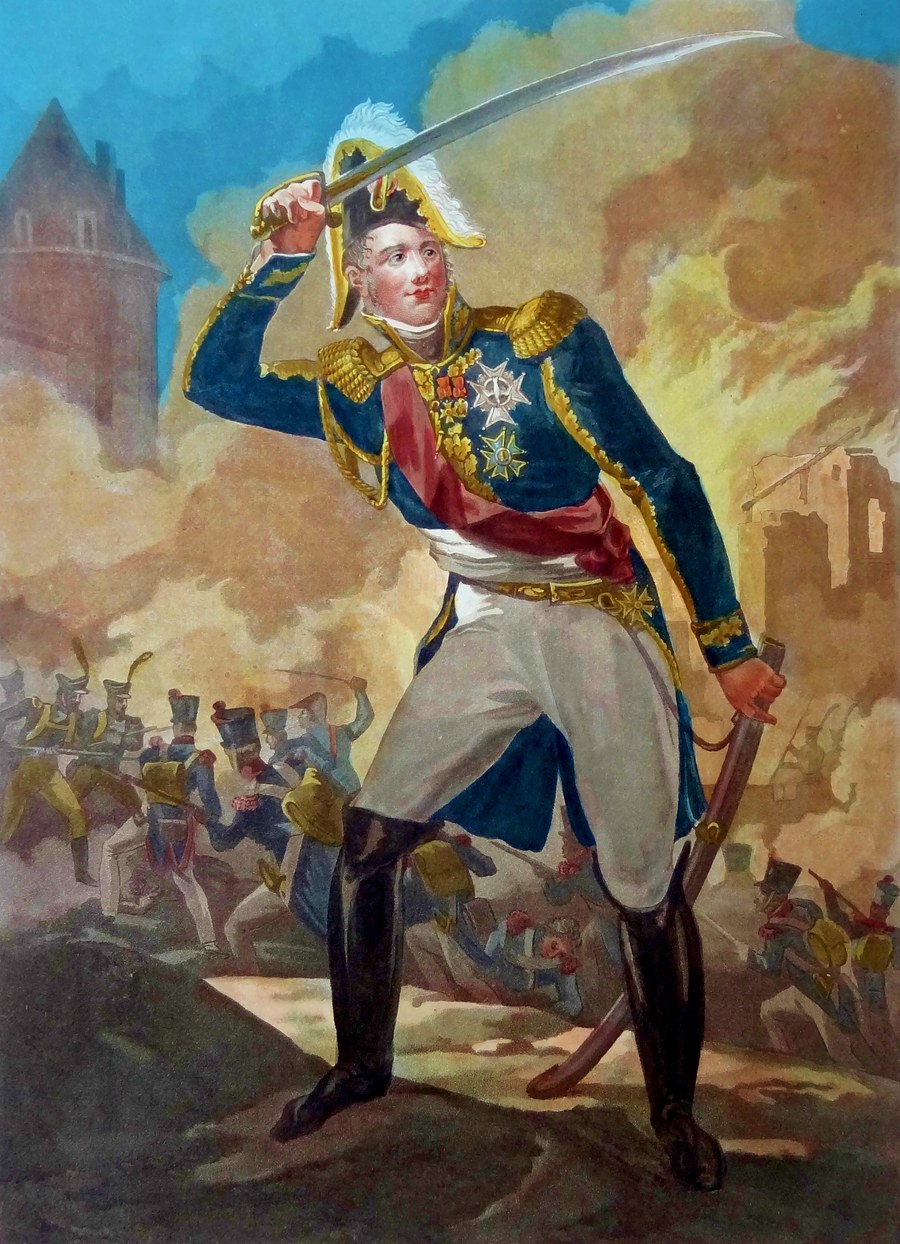 Victor (I Corps, 42)
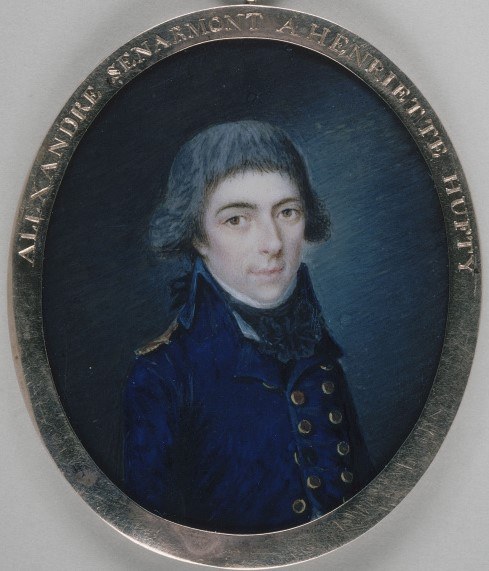 Sénarmont (artillery, 38; offensive bombardment)
-
Left wing and rear
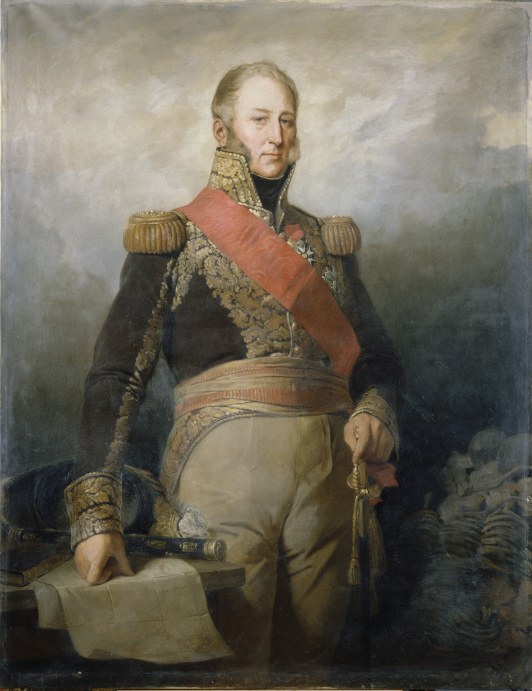 Mortier (VIII Corps, 39)
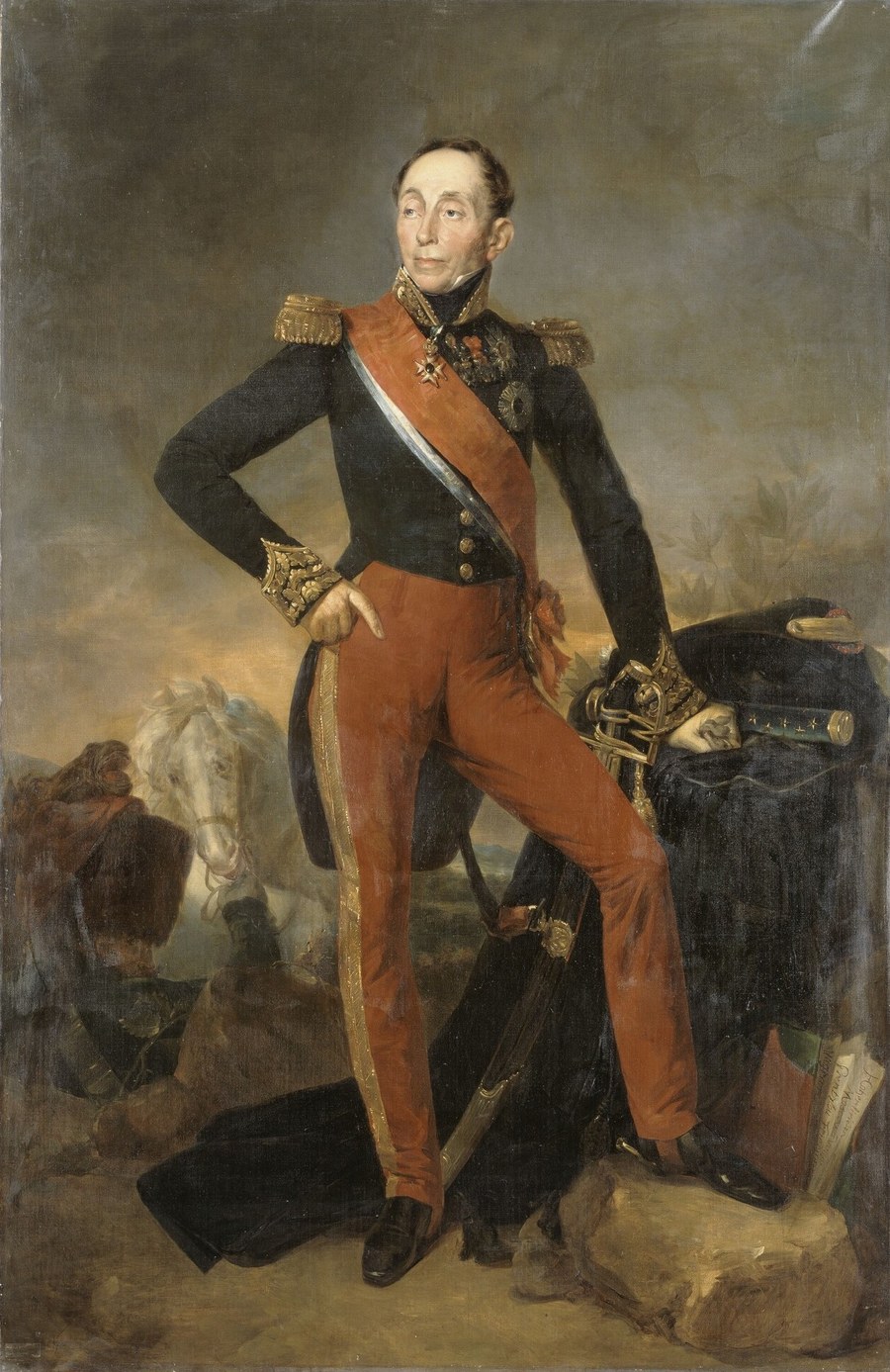 Grouchy (cavalry, 40)
Russian army
-
Commander-in-chief
Bennigsen (C-in-C, 62)
-
Left wing (south, the river bend)
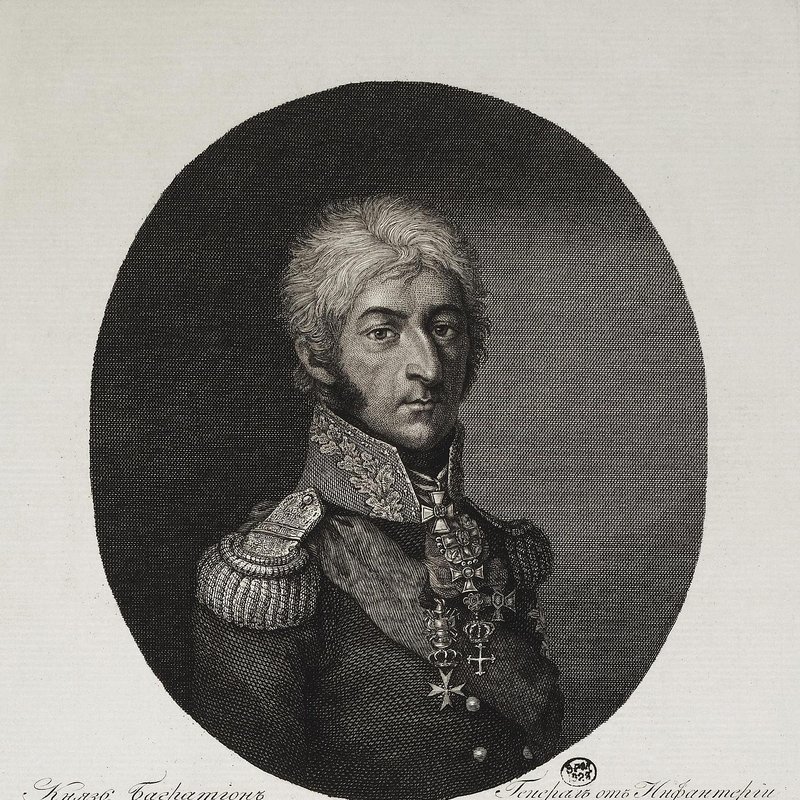 Bagration (left wing, 41; destroyed)
-
Right wing (north, beyond the Mill Stream)
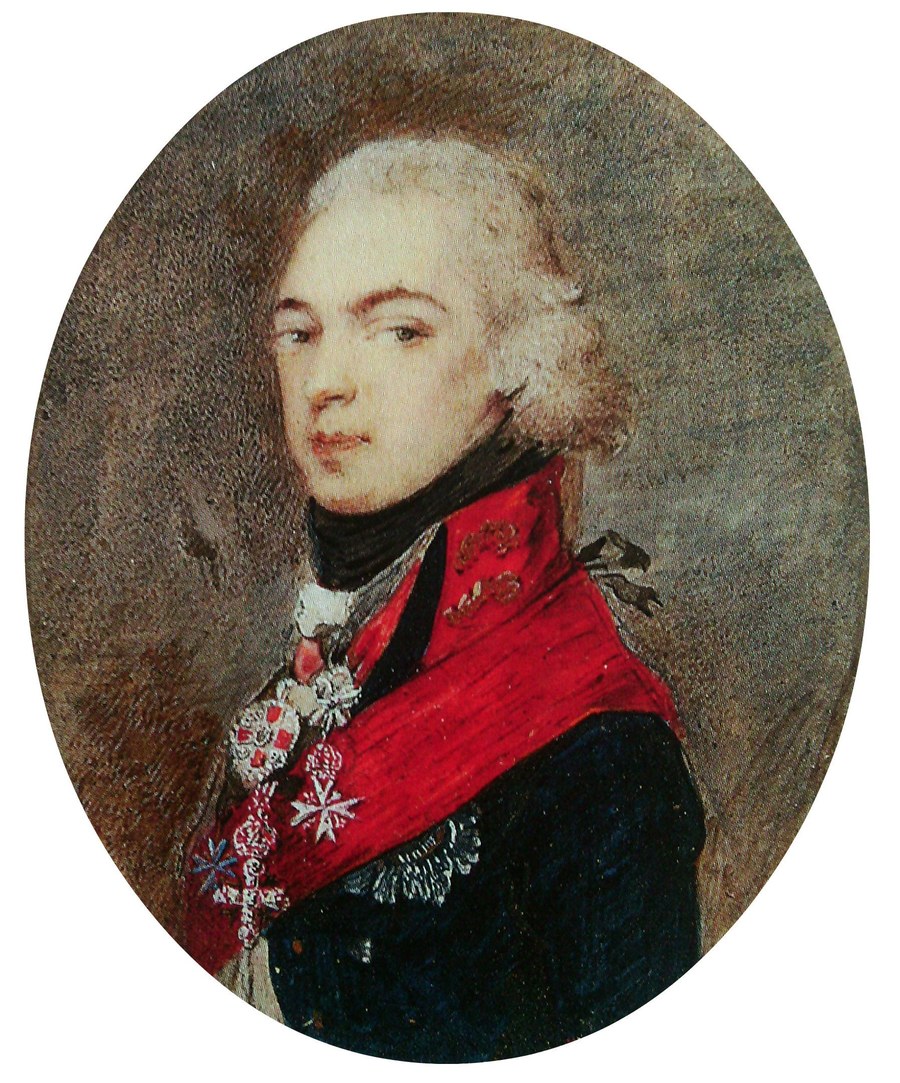 Gorchakov (right wing, about 28; escaped)
The terrain itself was the trap. The Alle curves around Friedland from the south and east in an arc, deep and fast-running. The west-bank battlefield was further split north and south by a tributary, the Mill Stream, so that Bagration's left wing in the south and Gorchakov's right wing in the north could hardly support one another[3]. The left wing in particular was jammed into the river bend with nowhere to go. Without hesitation, Napoleon concentrated his decisive blow on that cornered left wing.
4. The course of the battle: fix, arrive, strike
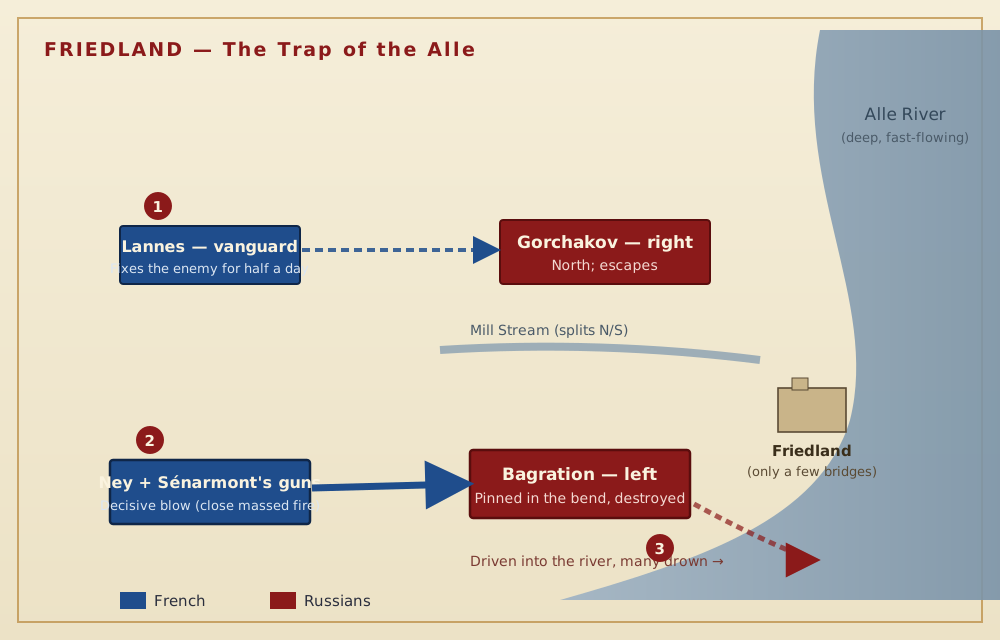
Early morning to noon: Lannes fixes the enemy. In the small hours of 14 June, Bennigsen kept throwing pontoon bridges across and feeding troops onto the west bank. Against them, Lannes — with barely 17,000 men (infantry and cavalry) — held the swelling Russian force (some 46,000–50,000 on the west bank) for half a day through skillful delaying action[3]. A small advance guard pinned an overwhelming enemy and bought time for the main body to assemble — a reprise of the corps system's resilience that Davout had shown at Auerstedt the year before.
Noon: Napoleon arrives and reads the trap. Around midday Napoleon reached the field with the Guard. He saw the situation at a glance: Bennigsen had packed his whole army into the river bend, with only a few bridges for a line of retreat, and the southern Bagration left wing in particular had nowhere to escape. The Emperor fixed his decisive blow on the southern left wing, and while he waited for the corps to assemble he let the line rest awhile.
About 5 p.m.: the decisive blow. At the signal of some twenty guns firing together, Ney's VI Corps charged the Russian left. They took the Sortlack wood and drove Bagration's lines back toward Friedland and the river. Here Sénarmont's artillery decided the battle (see §6). The Russian left, packed tight and pressed against the river, literally melted away under canister fired at point-blank range.
Evening: into the river. The beaten Russians surged toward the town of Friedland and the river. The pontoon bridges burned or jammed, the town went up in flames. Many men drowned in the deep Alle (the exact number is unrecorded). The northern Gorchakov right wing crossed and escaped in relatively good order, but the army was destroyed. Because Murat's cavalry was absent, the pursuit lacked thoroughness.
5. Contrast with Eylau: the day the conditions returned
The essence of Friedland is plain the moment you set it beside Eylau four months before. The enemy was the same Bennigsen. Only the conditions differed.
Visibility and mobility returned
At Eylau, the midwinter blizzard robbed both armies of sight and movement. Friedland was a long summer day. Napoleon could survey the field and strike the enemy's weak point — the cornered left wing — with precision. The "able to see, able to move" that the method presumes was restored.
The enemy walked into the trap
At Eylau the Russians did not break, and no decisive blow could be landed. At Friedland Bennigsen committed the fatal blunder of half-crossing with the river at his back. Napoleon's method — reading the enemy's self-destructive deployment and turning it into a trap — worked here to perfection.
The fixing action created the conditions for the decision
Because Lannes' vanguard pinned an overwhelming enemy for half a day, Napoleon was able to concentrate his forces and drive his decisive blow into a single point. At Eylau the reinforcements (Davout, Ney) did not arrive in time, and the corps were worn down piecemeal. The presence or absence of a unit that buys time made the difference between light and shadow.
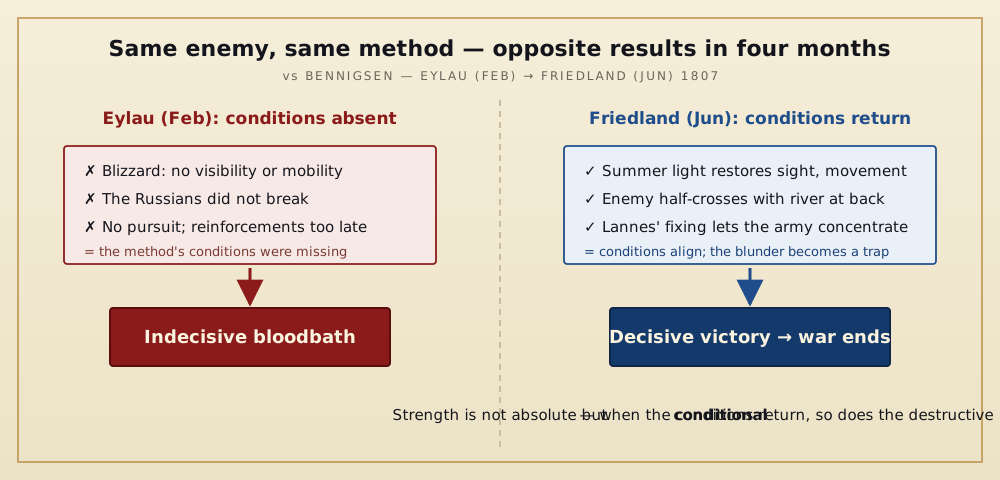
If Eylau showed that "the method has preconditions," Friedland showed that "when those conditions return, so does its power." Napoleon's strength was not absolute but conditional — yet when the conditions aligned, its destructive force was still without parallel.
6. Sénarmont's artillery: a tactical evolution
There is another reason Friedland holds a place in military history: Sénarmont's handling of the artillery. At the time, the accepted role of artillery was to support from the rear. But Sénarmont, the artillery commander of Victor's corps, broke that convention.
In the closing phase he massed roughly 30 guns and ran the batteries forward in stages toward the enemy columns — about 1,450 m, then about 550 m, then about 275 m, and finally to a point-blank roughly 55–110 m (60–120 paces), within musket range. From there he poured canister into Bagration's dense infantry[4]. In about twenty-five minutes several thousand Russians are said to have fallen. It was a reckless commitment in which roughly half his own gunners became casualties.
"Push the artillery forward as the leading actor of the attack" — this idea became a forerunner of the firepower-centered manner of fighting that runs on to Wagram (1809) and Borodino (1812). Ironically, the elegant method of "moving the enemy by maneuver" that had reached its perfection at Austerlitz here took its first step of evolution toward a method of "crushing by overwhelming firepower." It was also a sign that the style of war was beginning to shift its center of gravity from maneuver to firepower.
7. Counterfactual simulation
What follows is a thought experiment grounded in the sources; its outcomes cannot be proven. It is offered to make visible the dependencies among the factors.
| Branch | Tactical result | Long-term effect |
|---|---|---|
| A: Bennigsen never crosses the Alle | No decisive battle occurs. The Russians hold their posture on the east bank and the campaign drags on. Napoleon is denied his chance for a decisive blow. | The end of the Fourth Coalition is delayed, and the Tilsit settlement (Russia turned ally, Prussia dismembered) is pushed back. The branch that shows the victory depended on the enemy's blunder. |
| B: Lannes is broken in the early morning | The vanguard collapses before the main body assembles, and Napoleon cannot create the conditions for a decision. Beaten in detail, the battle might become a repeat of Eylau (an indecisive war of attrition). | If the "time-buying unit" fails, the river trap cannot be exploited. Lannes' half-day was the hinge that converted the terrain advantage into victory. |
| C: Murat's cavalry is present | The outcome of the battle itself is unchanged, but the pursuit of the fleeing Russians is thorough, and the Gorchakov right wing very likely is not allowed to escape. | The Russian field army is annihilated more completely, and the peace terms might be harsher still for Russia. The branch that governs the degree of victory. |
What the three branches show is that Friedland's decisiveness was the product of Napoleon's method, the enemy's blunder, the terrain, and the fixing force. Remove any one of them and the result would not have been so clean.
8. Strategic consequences: Tilsit and the empire at its zenith
The destruction of the Russian field army ended the war itself.
- 19 June: Tsar Alexander I requested an armistice (it took effect a few days later, around 23 June).
- 25 June: the two emperors met on a raft floated on the Niemen. Alexander is said to have remarked, "I hate the English as much as you do," to which Napoleon replied, "Then the peace is made."[3]
- 7 July: the Treaty of Tilsit between France and Russia. Russia abruptly became Napoleon's ally and joined the Continental Blockade.
- 9 July: the treaty between France and Prussia. Prussia lost about half its territory, and the Duchy of Warsaw was newly created in the Polish lands.
The myth of invincibility, shaken at Eylau, was restored at Friedland. The Fourth Coalition collapsed, and from here the Napoleonic Empire entered the zenith of its reach and prestige. Yet at the same time, the failure to force Russia fully into submission — settling instead for an ally — and the bitter resentment left in Prussia were distant foreshadowings of the catastrophes of 1812 and 1813 to come.
9. Lessons for today
What Friedland throws up is the view that "a strength returns once the conditions align — and an opponent's irreversible deployment is the greatest opportunity of all."
- Do not be driven into a no-retreat deployment — and drive others into one: Bennigsen's greatest mistake was to fight with the river at his back, in a place from which he could not turn around. In business too, an irreversible commitment (a huge fixed investment, an all-in bet that cannot be undone) becomes a mortal wound when the situation turns. Conversely, the moment a competitor cuts off their own retreat is the attacker's greatest opportunity.
- When the conditions return, so does the strength: the method that spun in place at Eylau worked to perfection at Friedland. A slump is not necessarily a loss of ability — sometimes the premises that support a strength have only been temporarily removed. Be ready to bring your true power to bear the instant the environment recovers.
- The value of the "buy time" role: Lannes' half-day fixing action created the conditions for the decisive blow. It is not only the spectacular finishing move but the unglamorous endurance that creates the conditions under which the finishing move can land that becomes the hinge of victory and defeat.
Eylau, where the favored ground was taken away, and Friedland, where the ground returned and the enemy destroyed himself. Only by setting these two side by side does it come into three-dimensional view just what Napoleon's strength rested on.
Closing: strength is conditional, once again
Friedland is the battle that showed what Napoleon could do when he had regained the conditions. When the summer light returned his sight, when Bennigsen took up a self-destructive deployment with the river at his back, when Lannes bought half a day, and when Sénarmont's guns spat fire at point-blank range, the method that had spun in place four months earlier came back whole.
If Eylau taught that "even a genius's method has preconditions," Friedland answered that "when those conditions align, the destructive power is without parallel." Strength is not absolute but conditional — yet those conditions Napoleon read faster than anyone, and exploited more mercilessly than anyone. Seven years after Marengo, on the same 14 June, he carved another decisive victory — not on a field of snow but on a riverbank.
FAQ
It is the battle in which Napoleon ended the Russo-French war — left undecided at Eylau in February 1807 — with a decisive victory just four months later. The Russian army was destroyed, Tsar Alexander I sued for an armistice within days, and after the famous meeting on a raft on the Niemen at the end of June, the Treaty of Tilsit in July ended the Fourth Coalition. It restored the myth of invincibility shaken at Eylau and led on to the zenith of the Napoleonic Empire.
The enemy was the same Bennigsen, but the conditions were the exact opposite. Eylau was a midwinter blizzard that robbed both sides of sight and movement; the enemy did not break, no pursuit was possible, and Napoleon's method of winning by making the enemy move spun in place. Friedland was a long summer day with sight and movement restored, and on top of that Bennigsen committed the fatal blunder of half-crossing with the Alle at his back. Napoleon read that deployment as a death trap and brought his method fully to bear — in short, it showed that the method has preconditions, and when they return, so does its power.
On the night of 13 June, Bennigsen's vanguard judged the only French force in front of them was Lannes' isolated advance guard, and so crossed the Alle and deployed on the west bank at Friedland. But this put the deep, fast-running Alle at their back, with only the town's narrow streets and a handful of pontoon bridges for a line of retreat. The west-bank battlefield was also split north and south by the Mill Stream, so that Bagration's left wing and Gorchakov's right could hardly support each other. Misjudging the speed of Napoleon's arrival, he packed his whole army into a sack with no way out.
Lannes' advance guard — some 17,000 men, infantry and cavalry combined — held the swelling Russian force (around 46,000–50,000 on the west bank) from early morning through half the day with skillful delaying action. This bought Napoleon the time to assemble his corps. A single small corps pinning an overwhelming enemy to create the conditions for a decisive battle was a reprise of the corps system's resilience that Davout had shown at Auerstädt the year before.
Normally artillery supported from the rear. But Sénarmont, the artillery commander of Victor's corps, massed roughly 30 guns in the closing phase, ran them forward in stages toward the enemy columns, and finally poured canister from point-blank range of about 55–110 m. Bagration's dense infantry is said to have lost several thousand men in about twenty-five minutes. This handling — pushing the artillery forward as the leading actor of the attack — became a forerunner of the firepower-centered fighting that runs on to Wagram and Borodino.
No. The great cavalryman Murat had been detached with the corps of Soult and Davout toward Königsberg in the north (that city fell on 16 June) and was absent from Friedland. As a result the pursuit of the fleeing Russians lacked thoroughness, and a considerable force, centered on Gorchakov's right wing, crossed the river and escaped. 「Murat could have annihilated them」 is a verdict often repeated by later writers, but his absence itself is a matter of historical fact.
With the Russian army destroyed, Tsar Alexander I sued for an armistice (requested on 19 June, effective around 23 June). On 25 June the two emperors met on a raft floated on the Niemen, and the Treaties of Tilsit were signed — between France and Russia on 7 July and between France and Prussia on 9 July. Russia abruptly became Napoleon's ally and joined the Continental Blockade, while Prussia lost about half its territory and the Duchy of Warsaw was created. The Fourth Coalition thus ended, and the empire entered its zenith.
Claims and Sources
- David G. Chandler(1966). The Campaigns of Napoleon, Macmillan.
- Encyclopædia Britannica. Battle of Friedland, Encyclopædia Britannica. [link]
- Harrison W. Mark(2024). Battle of Friedland, World History Encyclopedia. [link]
- The Napoleon Series. Sénarmont's Artillery at Friedland / OOB, The Napoleon Series. [link]
- Wikipedia contributors. Battle of Friedland, Wikipedia. [link]