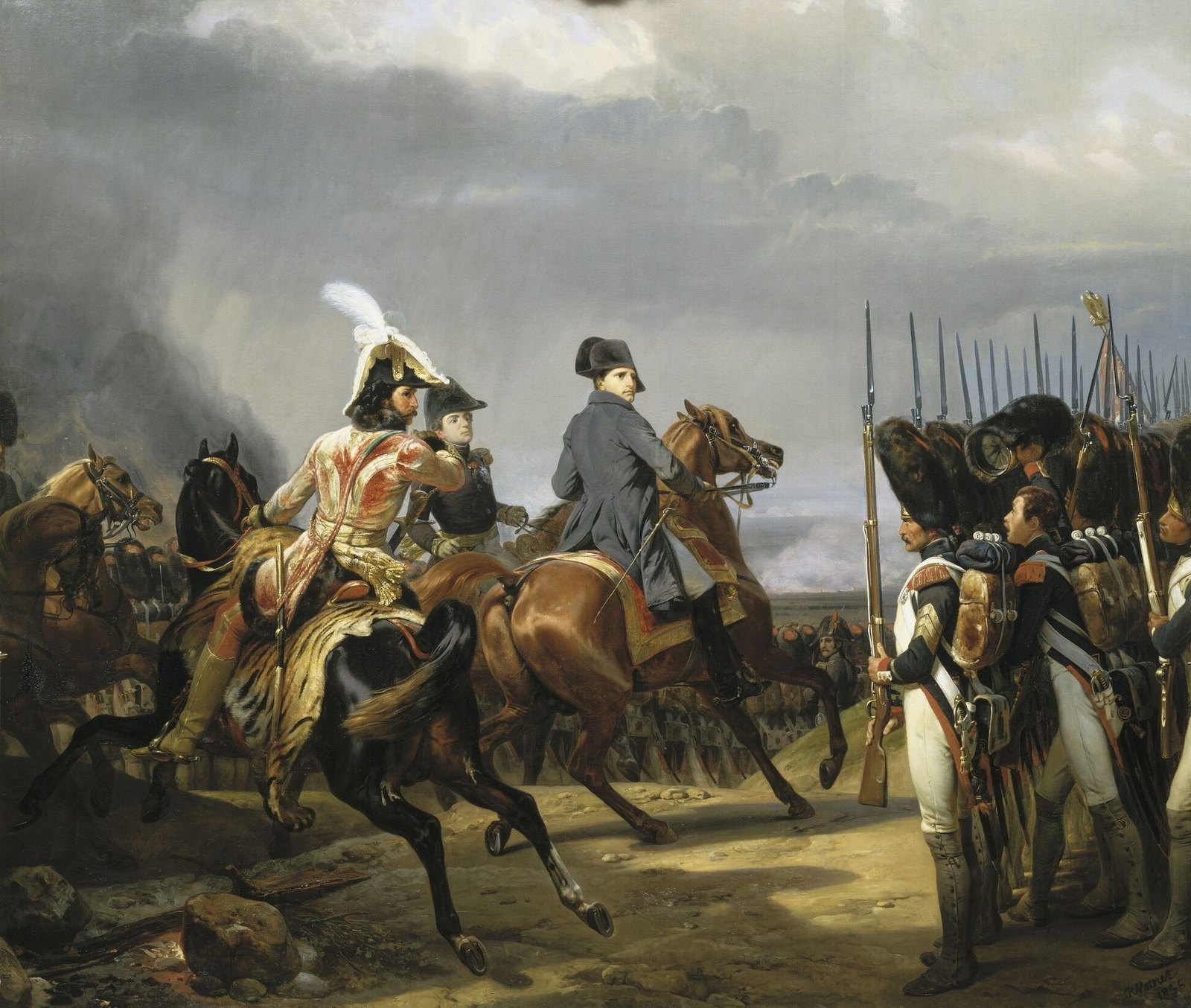
The Prussian army broke in a single day. Four months later the same French army fought a whole day in the snow of East Prussia and decided nothing. Four months after that it ended a war in a day again. What makes the War of the Fourth Coalition unusual on this site is that it is the only war in which the same army and the same method were tested three times with only the conditions changed. The nature of that strength is visible only when the three results are set side by side.
1. What was actually at stake
After Austria and Russia were beaten in 1805, Prussia was the one great power on the continent still untouched. It had the reputation of Frederick the Great's army and the reality of more than forty years without a serious war. That gap was settled all at once in October 1806.
What was at stake was not territory but which military system actually worked. Prussia had kept the single army and single headquarters of the old king's day. France was dispersed into corps, each with enough infantry, cavalry and artillery to fight independently for several days[1].
That difference is invisible while everything is going well. It becomes visible when something breaks. A single army stops the moment its headquarters is hit; a dispersed army keeps moving when part of it loses. On 14 October 1806 the distinction appeared in its cruellest form.
2. The three battles side by side
Jena–Auerstedt (14 Oct 1806)
FR about one third
Eylau (8 Feb 1807)
Both roughly equal
Friedland (14 Jun 1807)
FR about half
The three figures describe three states of one army. In the decisive victories French losses come out at a half to a third of the enemy's. Eylau alone is the exception, with the bleeding almost equal[6]. The loss ratio works as a thermometer for whether the method was functioning.
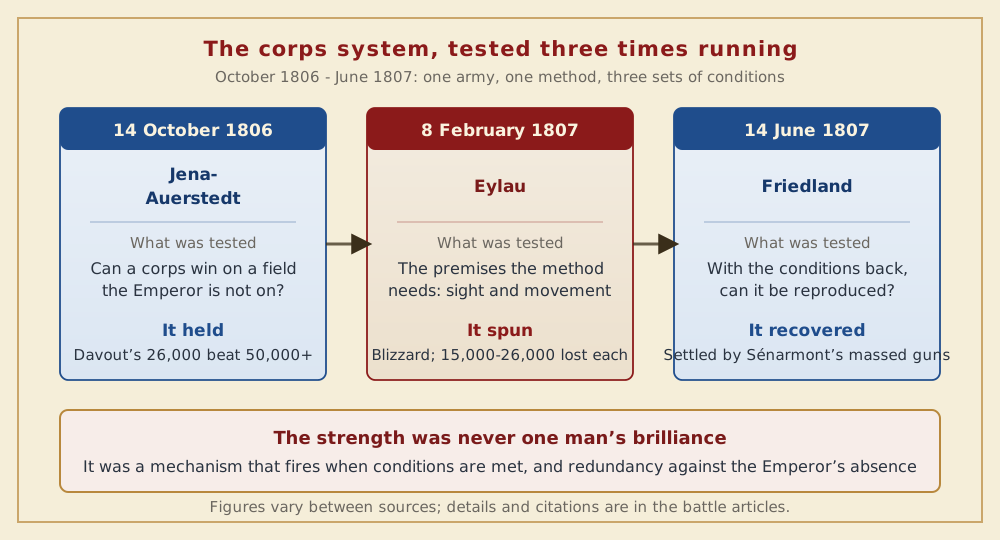
A corps won on a field the Emperor was not on
What happened at Jena–Auerstedt can be summarised in a line: two battles on the same day. What matters is the casting. The Emperor fought a detachment, not the enemy's main body; the real main body was beaten by a single corps that was heavily outnumbered.
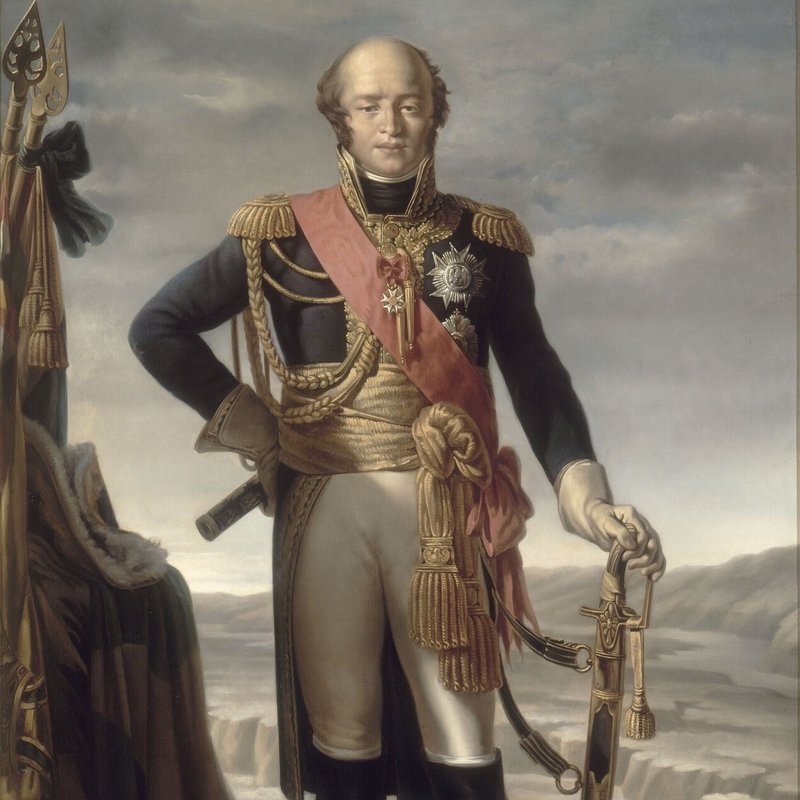
The French at Auerstedt
The Prussians facing him
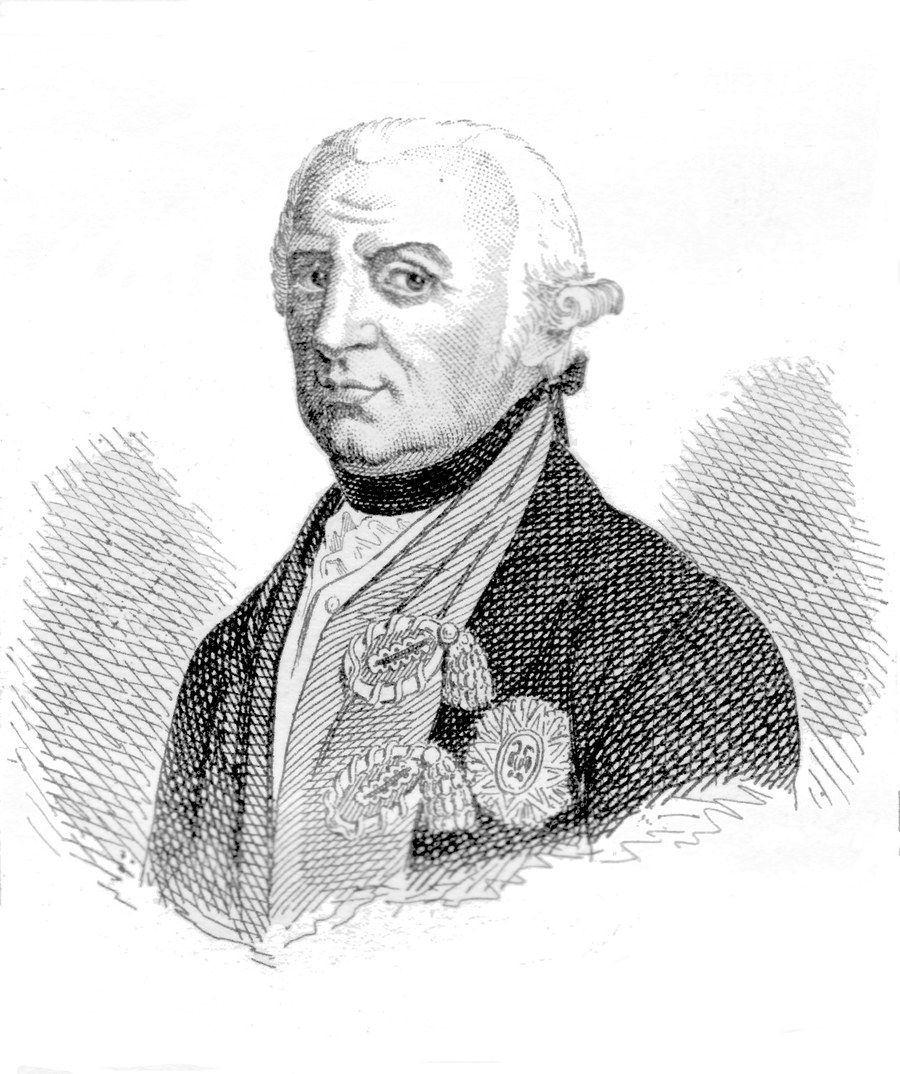
Some 26,000 beat more than 50,000. That number should be read not as a tale of valour but as proof of a design. Without the premise that a corps is a combined-arms body able to fight alone for days, the result is impossible[3]. Victory was possible on a field the Emperor's orders never reached — that was the first answer this war produced.
The corps that moved to neither battle
Between the two battlefields sat a corps that joined neither: 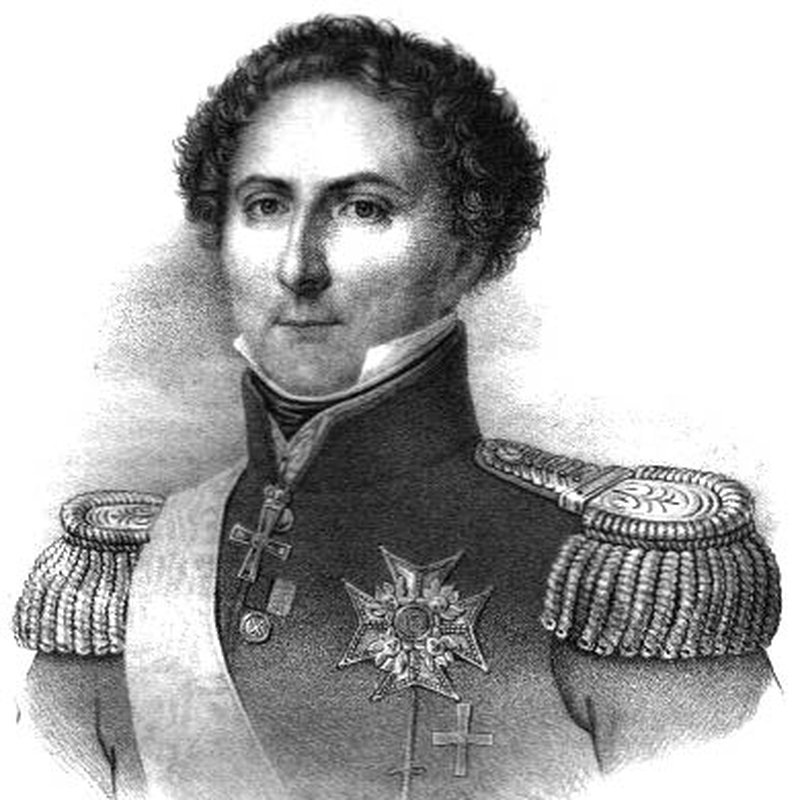 BernadotteI Corps. The argument over how the orders should have been read began at the time and a defence of him survives[4]. Structurally, though, the implication runs the other way — an entire corps could be missing and the day was still won. That is what redundancy means.
3. From one day's defeat to the end of a state's resistance
Winning a battle does not by itself end a war; 1812 would demonstrate that in the extreme. In Prussia in 1806, however, one day's defeat ran straight through to the end of national resistance.
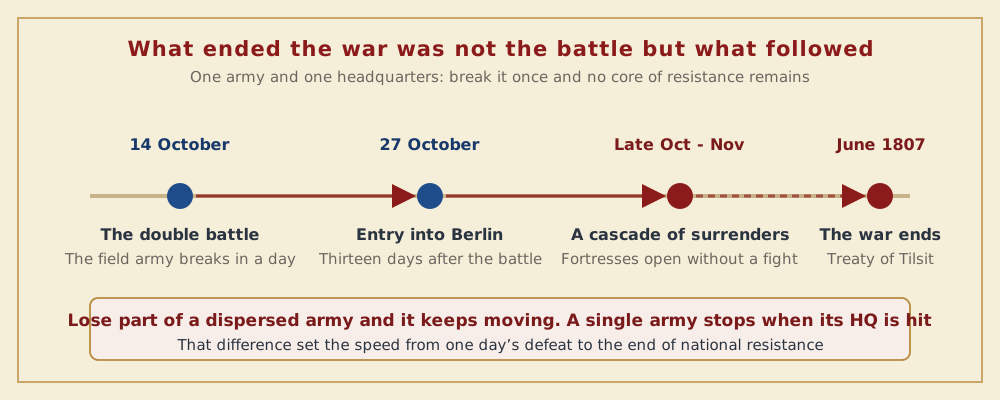
Battles at Jena and Auerstedt on the same day. The Prussian field army breaks in a day
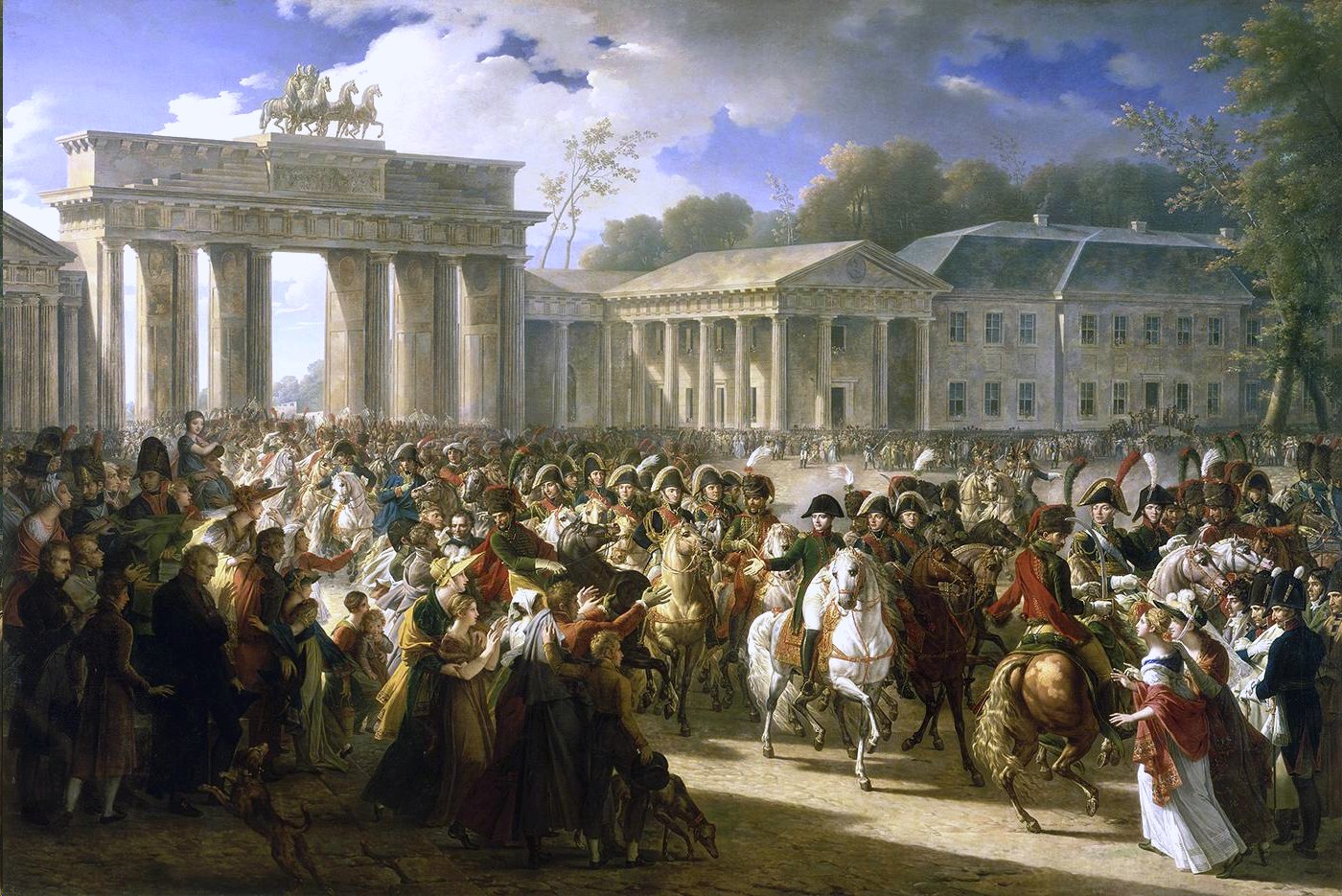
Napoleon enters Berlin — thirteen days after the double battle
After the capitulations at Prenzlau and Pasewalk, fortresses open their gates without fighting[5]
Eylau. Nothing is settled with the Russians and the war winters over
Friedland. The Russian army is decisively beaten
Treaty of Tilsit. Russia turns from enemy into ally
Worth noting here: the speed of the Prussian collapse cannot be explained by French strength alone. Resistance did not continue because there was no second core left once the field army broke. A dispersed army taking the same blow does not behave this way — and three months later, against the Russians, France would experience exactly that.
4. A method has operating conditions
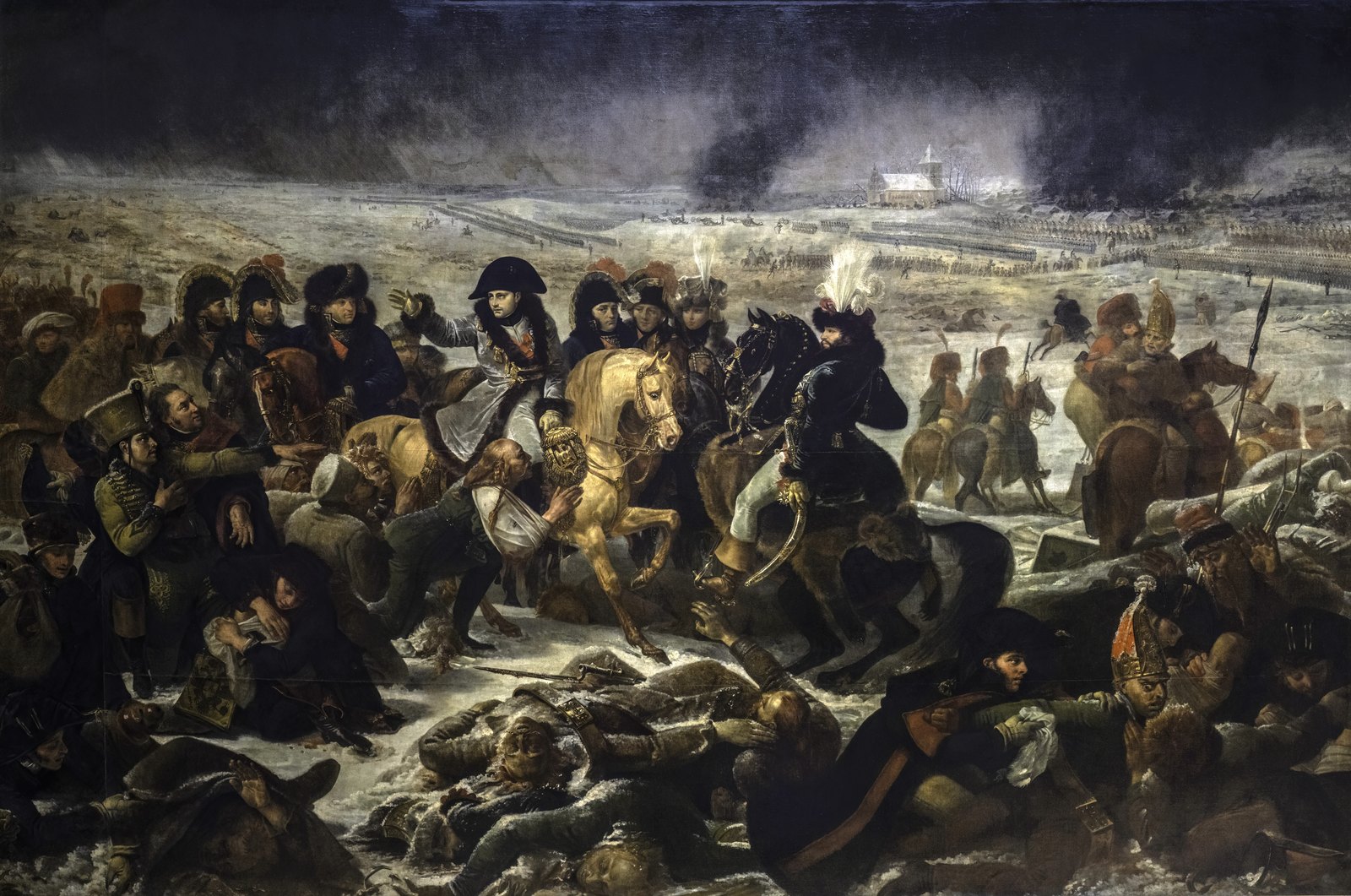
Eylau is the one battle of this war that was not won, and it is easy to misread. The method had not aged, and the enemy had not suddenly improved. The premises the method needed were missing, on that day only.
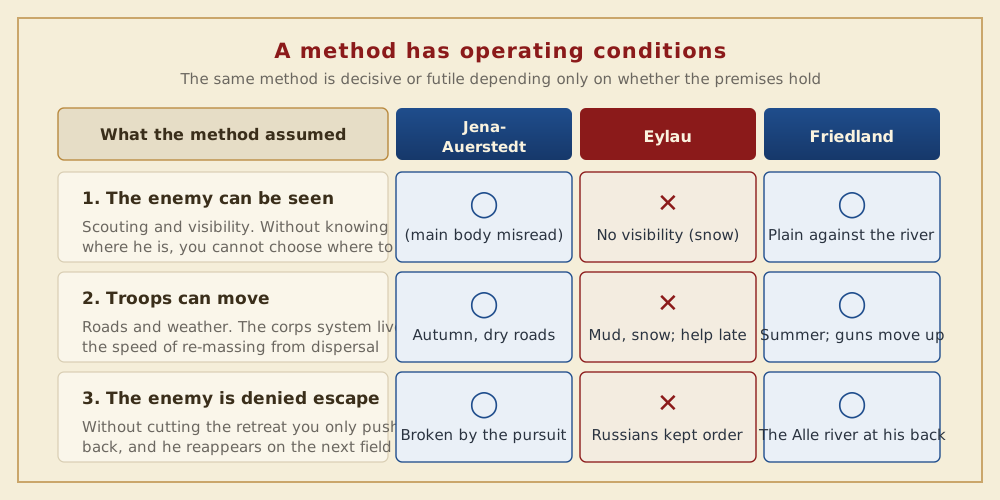
The blizzard took visibility away, the roads were buried in mud and snow, reinforcements were late. No envelopment could be assembled and no pursuit was possible. The two armies simply hit each other frontally, both suffered enormous losses, and neither could claim to have won[6].
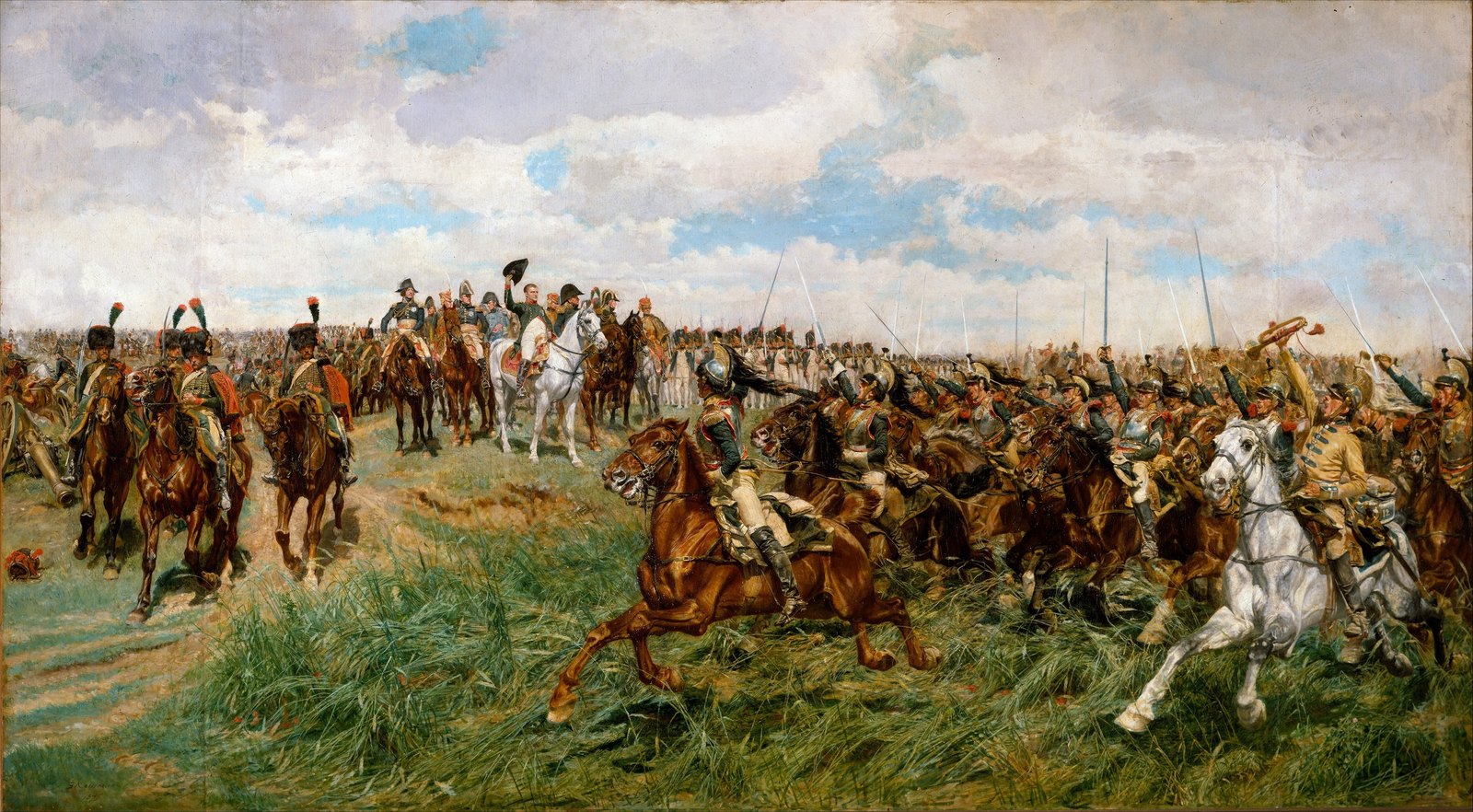
Four months later, at Friedland, the three conditions came back together: an enemy with the Alle river at his back, dry summer roads, artillery that could be pushed forward. Sénarmont ran his guns up to close range and fired into the line until it broke[7]. The same method, the same army — and this time it worked.
5. Four things that made the corps system work
Reasoning backwards from the three battles, French strength in this period breaks into four elements. None of them works alone.
A corps can fight on its own
Each corps had infantry, cavalry and artillery and could hold for days unaided[1]. That is what allows dispersal on the march and re-massing at the point that matters. Auerstedt is impossible without this premise.
The man on the spot decides
On a field the Emperor's orders cannot reach, the corps commander reads the situation and chooses. The decision to stand while outnumbered was made locally, not handed down. Redundancy is also redundancy of judgement.
The pursuit never stops
What turned a battlefield win into a state's submission was a pursuit that did not rest[5]. Wars are ended not by the battle but by what follows it. This element is entirely absent at Eylau.
Artillery as the decisive blow
At Friedland the guns were used not to support but to decide[7]. Movement makes the opening; fire finishes it. That pairing is what swaps roles in the War of the Fifth Coalition.
6. If the conditions had held at Eylau
What follows is a thought experiment based on the sources. The outcomes cannot be demonstrated; the point is to make the dependencies visible.
| Condition changed | Immediate effect | Effect on the war |
|---|---|---|
| A: no blizzard in February; visibility holds | An envelopment can be assembled and the Russian line of retreat is within reach | The decision comes six months earlier. But Russia itself is far away, and even a Friedland-scale victory still needs negotiation |
| B: dry roads and reinforcements on time | No frontal slogging match; the loss ratio stays at the usual level | The memory of "a bloodbath that settled nothing" never forms, and the method's limits stay hidden going into the next war |
| C: same conditions, but the pursuit arrives | Tactically still a draw, but the retreating enemy might be caught | Even so, destroying the Russian main body remains far off. The three conditions do not substitute for one another |
C makes the important point. The three conditions combine by multiplication, not addition: lose any one and the product — a decisive victory — goes towards zero. At Eylau all three were missing.
7. Consequence: Tilsit
At Tilsit on 7 July 1807 Russia turned from enemy into ally, and Prussia accepted heavy territorial losses. The French Empire reached its greatest extent.
But a flaw was built into this peace that would tell five years later. The condition imposed on Russia — joining the Continental System — went on damaging the Russian economy. Submission had been obtained; a common interest had not. The invasion of Russia begins as an attempt to enforce this treaty by force.
8. What it suggests today
(1) Delegation pays off in a breakdown, not in normal running. What Auerstedt proved is that an organisation whose people can decide for themselves does not stop when the chain of command is cut. While the centre is healthy, that design shows up in no metric. It shows up on the day the centre becomes unreachable. Put the other way round: judge an organisation only on peacetime efficiency and redundancy will always look like waste.
(2) Record a successful method together with its operating conditions. The lesson of Eylau is not "the method was bad" but "the method has premises". Lift out the part that worked, apply it where the premises differ, and it spins. If you want it reproduced, write down the conditions, not the steps. These two lessons belong to different domains, and both are only legible because this war lined up three battles.
9. Closing
The three battles of this war run win, draw, win. Read as a heroic tale, the middle one is an inconvenience. Read structurally, the middle one says the most. Eylau is what tells you why Jena and Friedland were won.
The strength was not one general's brilliance but a mechanism that fires reliably once the conditions are met, plus redundancy enough to survive the Emperor's absence. What happens when the second of those is gone is answered nine years later at Waterloo: the defeat of 1815 was not an error of conception but a failure of execution in several places at once, all of it dependent on one man.
Before this: the War of the Third Coalition. After it: Wagram and the campaign of 1809.
Sources
- David G. Chandler, The Campaigns of Napoleon, Macmillan, 1966.
- Encyclopædia Britannica, Battle of Jena.
- J. Rickard, Battle of Auerstädt, 14 October 1806, History of War.
- The Napoleon Series, Bernadotte 1806: Is There a Case for the Defence?
- Wikipedia contributors, War of the Fourth Coalition.
- Encyclopædia Britannica, Battle of Eylau.
- Encyclopædia Britannica, Battle of Friedland.