France · I Corps Commander
Jean-Baptiste Bernadotte
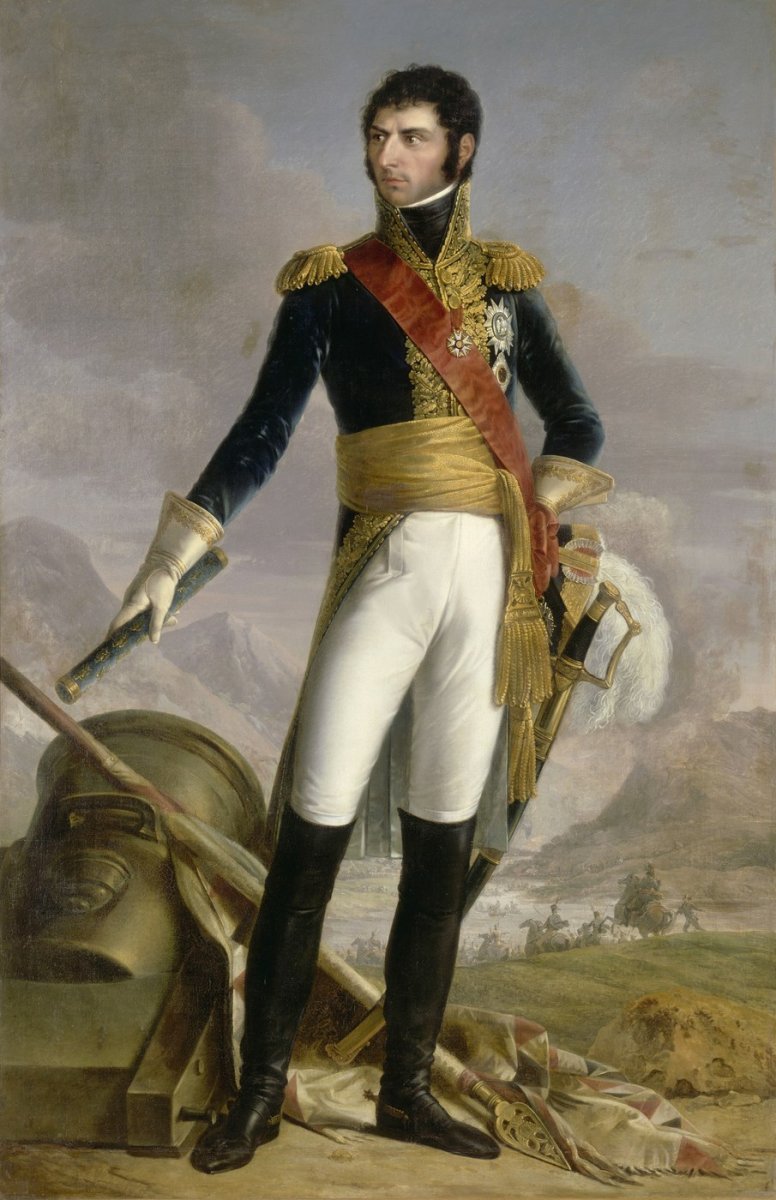
A marshal of France who became King of Sweden. In 1813 it was he who drafted most of the Trachenberg Plan, the allied policy for the war. The man who knew the method best stopped it most exactly - and on that one point he stands at the centre of this site's subject.
The years inside
Made a marshal in 1804, he served at Austerlitz and at Jena-Auerstedt. His relations with the Emperor were cold from the start, and on 14 October 1806 he was within earshot of the guns of Auerstedt and did not march to support Davout. Ambiguous orders and his own passive reading of them combined; no court martial followed, but the reprimand was severe[1].
The episode is not enough to file him away as a traitor. What matters more is that he knew from the inside a structure in which the interpretation of an order is left to the commander receiving it. Inducement and concentration both assume that orders are read as intended.
The decisive moment: writing the rule
In 1810 he was elected heir to the Swedish throne, and from the following year he acted as a northern power in his own right. Between 9 and 12 July 1813, at the conference at Trachenberg, it was Bernadotte who drafted most of the resulting plan[2].
It reduces to one line. Never fight the army Napoleon commands in person. Fight the armies his marshals command. Not a tactical device but a rule about whether to meet. As set out under the War of the Sixth Coalition, that rule produced four results in the fifteen days from 23 August to 6 September.
Why it worked rests on a kind of understanding only someone from the inside could write down. Inducement works only against an enemy who moves. The place and hour of a decisive battle can be chosen only by the side holding the initiative. Remove those conditions and the skill itself is neutralised.
The man who wrote the rule kept to it
In the autumn of 1813 Bernadotte commanded the Army of the North covering Berlin. He turned back Oudinot at Grossbeeren on 23 August and Ney at Dennewitz on 6 September. In both battles, however, the fighting in front was done mainly by Bulow's Prussians, and Bernadotte himself never abandoned his reluctance to accept a decisive action[2].
That caution was criticised, but it was also behaviour faithful to the rule he had written. Do not fight the army he leads in person; pile up attrition and tighten the ring - he held his own army to that policy too.
Limits, or how it ended
He was crowned Charles XIV John, King of Sweden and Norway, in 1818 and reigned until 1844[3]. The dynasty he founded continues to this day. Of all Napoleon's marshals, he alone left a dynasty.
Set beside the outcome of the Hundred Days, the meaning of that career becomes clear. On one side, a layer of executants growing thinner; on the other, a man who put the method's weakness into words and used it from outside. The same experience became the opposite kind of asset simply by changing sides.
Sources
- The Napoleon Series, Bernadotte 1806: Is There a Case for the Defence?
- J. Rickard, Trachenberg Plan, 12 July 1813, History of War.
- Encyclopaedia Britannica, Charles XIV John.
Aparece en las batallas
-
1805-12-02
La batalla de Austerlitz (1805) — la obra maestra de Napoleón: vencer al enemigo diseñando la situaciónRol: I Corps (central reserve)
-
1806-10-14
La doble batalla de Jena-Auerstedt (1806) — La batalla decisiva fue aquella en la que Napoleón no estuvoRol: I Corps (supported neither battle)
-
1809-07-06
Batalla de Wagram (1809) — El día en que el método de Napoleón pasó del arte al desgasteRol: IX Corps, the Saxons (gave up Aderklaa; relieved of command)
-
1813-10-18
Batalla de Leipzig (1813) — la batalla de las Naciones, donde el maestro del centro fue envueltoRol: Army of the North (former French marshal; a drafter of the Trachenberg Plan)