France · Cavalry Commander
Joachim Murat
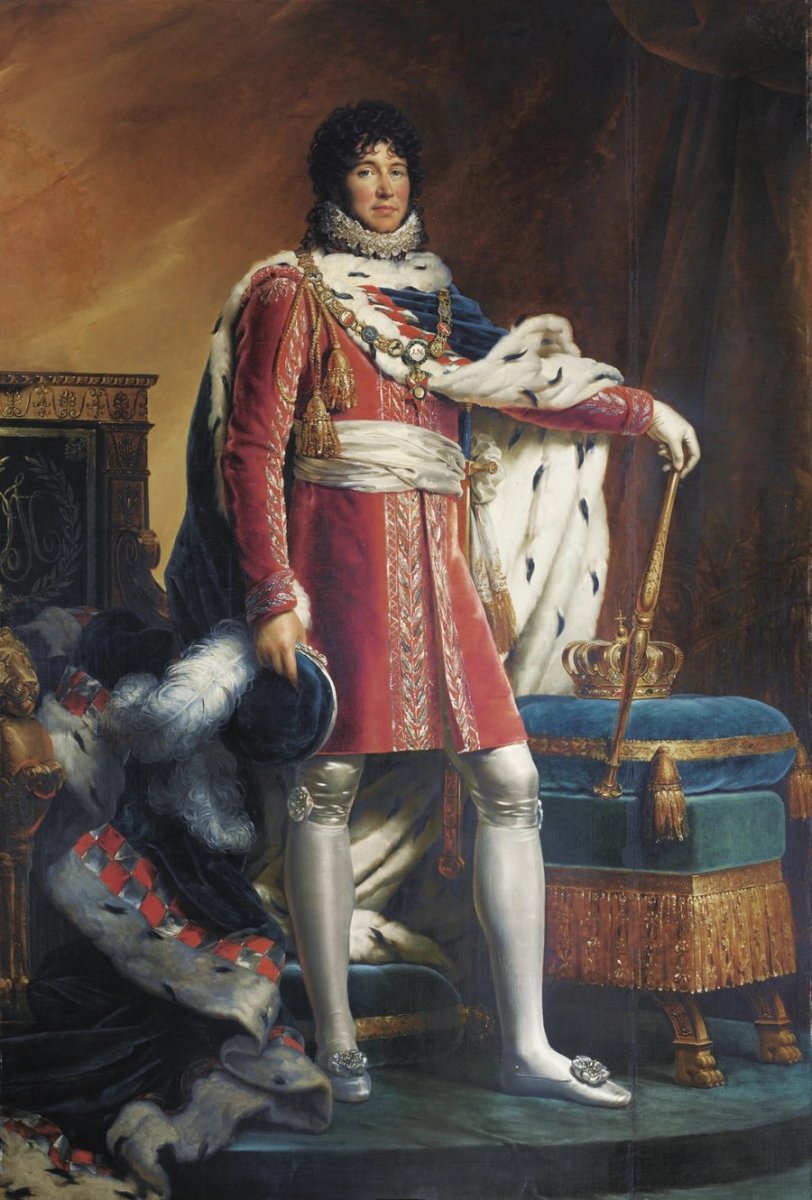
The face of the cavalry of Napoleon's army, and King of Naples. Known for his showy uniforms and his charges, what he held structurally was the function of turning a victory into a decision. Finishing off an enemy already giving way is not a matter of tactics but of speed.
What he actually did: pursuit
A battle is often not settled at the moment the enemy begins to withdraw. If the withdrawing army reforms and comes back in a few days, the victory moves nothing in the war. What turns a win into a decision is the legs of the pursuit.
Cavalry existed for that. That enemy armies ceased to exist as armies in the War of the Third Coalition and the War of the Fourth Coalition was not only a matter of how the battles were handled, but of having troops who kept following for days afterwards. Murat did that work faster and farther than anyone.
He was valued for drive rather than judgement. But having drive built into the institution was itself an advantage no other army of the period had.
The decisive moment: the great charge at Eylau
At Eylau on 8 February 1807, Augereau's corps was destroyed in a blizzard and a hole opened in the centre. With Russian infantry closing on headquarters, Murat led some 10,700 to 11,000 horsemen across about 2.5 km of snow, went through the Russian guns and two lines of infantry, and came back[1]. It is one of the largest cavalry charges on record.
What is worth noting is that the charge was used not to win but to stop a collapse. The function that creates decisions was spent that day on survival. Part of why Eylau is called the first day the method turned over without biting is that this kind of repurposing happened.
After the function was lost
In the Russian campaign of 1812 the French army lost about 175,000 horses. That loss bears directly on why, in 1813, victories at Lutzen and at Bautzen could not destroy the enemy army[2]. An army that cannot pursue cannot improve its position by winning.
What was lost was not Murat's personal skill but the function he represented - a distinction needed when reading the defeats from 1813 on.
A king with separate interests
In 1808 Murat became King of Naples, and from then his position was double. Situations calling for a marshal of the Emperor and situations calling for the defender of his own kingdom did not always coincide.
In December 1812, after the Emperor returned to Paris, command of what was left of the army fell to Murat. In January 1813 he handed that command to Eugene and went back to Naples[3]. The position he had been given also gave him an interest competing with his loyalty. A system that distributes crowns as rewards turns over in exactly this way.
Limits, or how it ended
In 1814, to keep his position as King of Naples, Murat negotiated with the allies and left the Emperor. He offered to return during the Hundred Days and was refused. On 13 October 1815, having attempted to recover Naples, he was captured, tried by a summary court martial at Pizzo in Calabria, and shot the same day[3].
The fastest man on the battlefield was the slowest in political choice. Speed does not select its object - and Murat's career shows both sides of that with equal force.
Sources
- Wikipedia contributors, Battle of Eylau.
- The Napoleon Series, Napoleon's Equine Strategy in 1813.
- Fondation Napoleon, Murat, Joachim.
Apparaît dans les batailles
- 1800-06-14
-
1806-10-14
La double bataille d'Iéna-Auerstedt (1806) — La bataille décisive fut celle où Napoléon n'était pasRôle : Cavalry reserve (directed the pursuit)
-
1807-02-08
La bataille d'Eylau (1807) — Le jour où la méthode de Napoléon échoua à produire une décisionRôle : Cavalry reserve (led the great charge)
-
1812-09-07
Bataille de la Moskova (1812) — pourquoi le jour le plus sanglant ne décida de rienRôle : Cavalry reserve (urged the Guard be committed)
-
1813-10-18
Bataille de Leipzig (1813) — la bataille des Nations, où le maître du centre fut enveloppéRôle : Cavalry (the great charge at Wachau in the south)