France · Chief of Staff
Louis-Alexandre Berthier
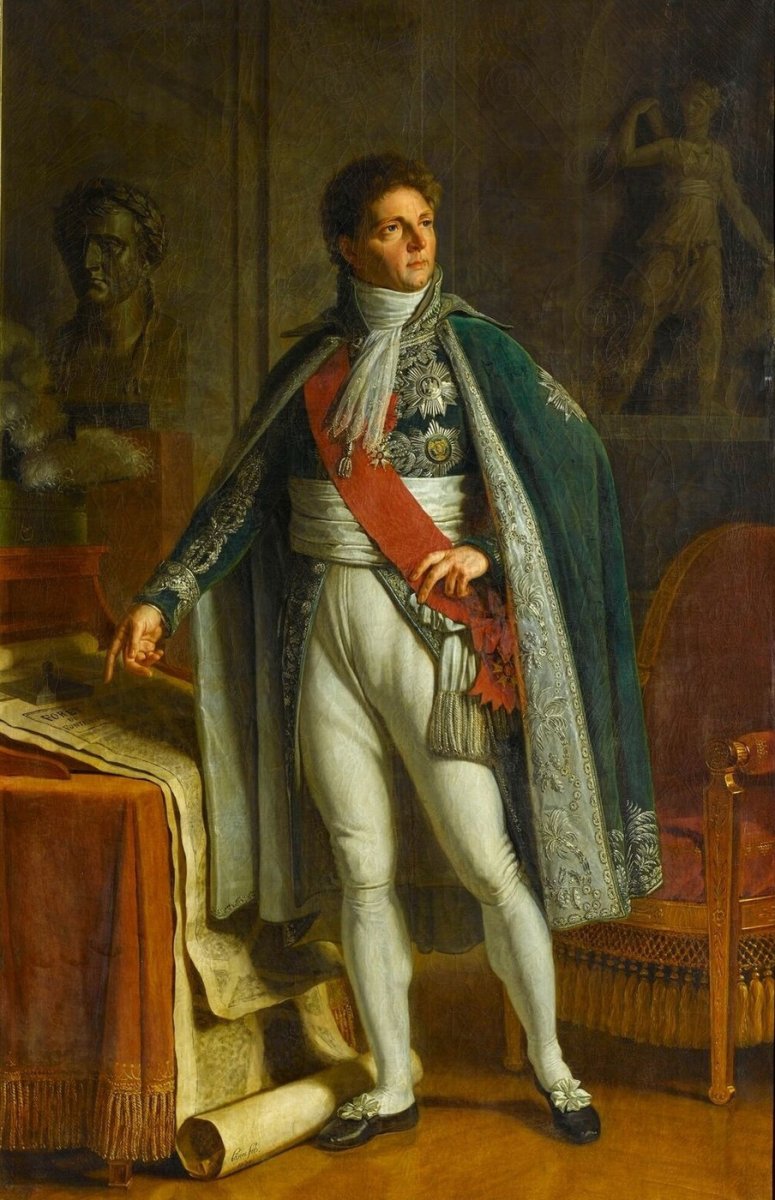
Chief of staff in every one of Napoleon's campaigns from 1796 to 1814[1]. He translated the Emperor's conceptions into precise written orders and worked as the nervous system of an enormous army. What he held was not a talent but a post - and in the year that post stood empty, the method itself stopped moving.
What he actually did: distribute the orders
An operation existing in the Emperor's head does not move by itself. Who is told, when, what, in what order. How the reports coming back are sorted and handed up again as material for the next decision. If that traffic stalls, no conception however good reaches the ground.
Berthier sustained that traffic for about twenty years. A system in which corps march hundreds of kilometres apart only works if transmission is exact. March divided, fight united sounds heroic; in substance most of it is accuracy in paperwork. He took fragmentary instructions given aloud, wrote them out for each addressee with nothing missing and nothing added, kept copies, and confirmed arrival.
The nature of that work makes it hard to value. While it goes well, nobody records that the orders arrived correctly again today. Invisible work becomes visible only when it stops.
The other face: he was not suited to independent command
In April 1809, entrusted with the army in Germany before the Emperor arrived, Berthier struggled. He applied the fragmentary and sometimes contradictory instructions from Paris to the letter, left the corps dispersed and did not move on his own account. Until the Emperor reached the theatre on the 17th and ordered a concentration, the French army was in a dangerous posture[2].
The episode marks not so much a defect as the outline of the post. Distributing orders accurately and deciding what the orders should contain are different abilities. He committed himself to the first, and with it kept the whole army functioning.
The decisive moment: the year he was not there
On 1 June 1815 Berthier died after a fall from a window at Bamberg. Accident, suicide and murder have all been suggested and none is established[1]. The Hundred Days campaign opened a fortnight later.
His successor as chief of staff was Soult, able as a corps commander but new to the work. The result appeared on 16 June. Some 20,000 men of d'Erlon's I Corps marched back and forth between an order from the Emperor and a counter-order from Ney, and finished the day having joined neither Quatre Bras nor Ligny[3].
Preventing a state in which two men can order the same corps takes neither courage nor imagination; it is the work of a post. What was missing at Waterloo was someone to sort out who each order was for and which came first.
Limits, or how it ended
The general staff survived as an organisation, but the skill that made it work stayed attached to one man. The failures that run from the War of the Sixth Coalition into 1815 all have the same shape: the structure was handed over, the handling of it was not.
Twenty years of invisible work became visible the one time it stopped. The assessment of Berthier is concentrated in that one time.
Sources
- Encyclopaedia Britannica, Louis-Alexandre Berthier, prince de Wagram.
- J. Rickard, Engagement at Landshut, 16 April 1809, History of War.
- The Napoleon Series, The Key to Victory: General d'Erlon's I Corps, 16 June 1815.
Appears in battles
-
1796-05-10
Battle of Lodi (1796) — Storming the Bridge and the Birth of the Little Corporal LegendRole: Chief of staff (led the second wave of the assault)
-
1800-06-14
Battle of Marengo (1800) — How a Near-Defeat Was Rewritten into a Planned TrapRole: Nominal commander-in-chief (chief of staff)
-
1805-12-02
Battle of Austerlitz (1805) — Napoleon's Masterpiece of Situation DesignRole: Chief of staff
- 1806-10-14
-
1809-07-06
Battle of Wagram (1809) — The Day Napoleon's Method Turned from Art to AttritionRole: Chief of staff (later Prince of Wagram)