Frankreich · Kaiser und Oberbefehlshaber
Napoleon Bonaparte
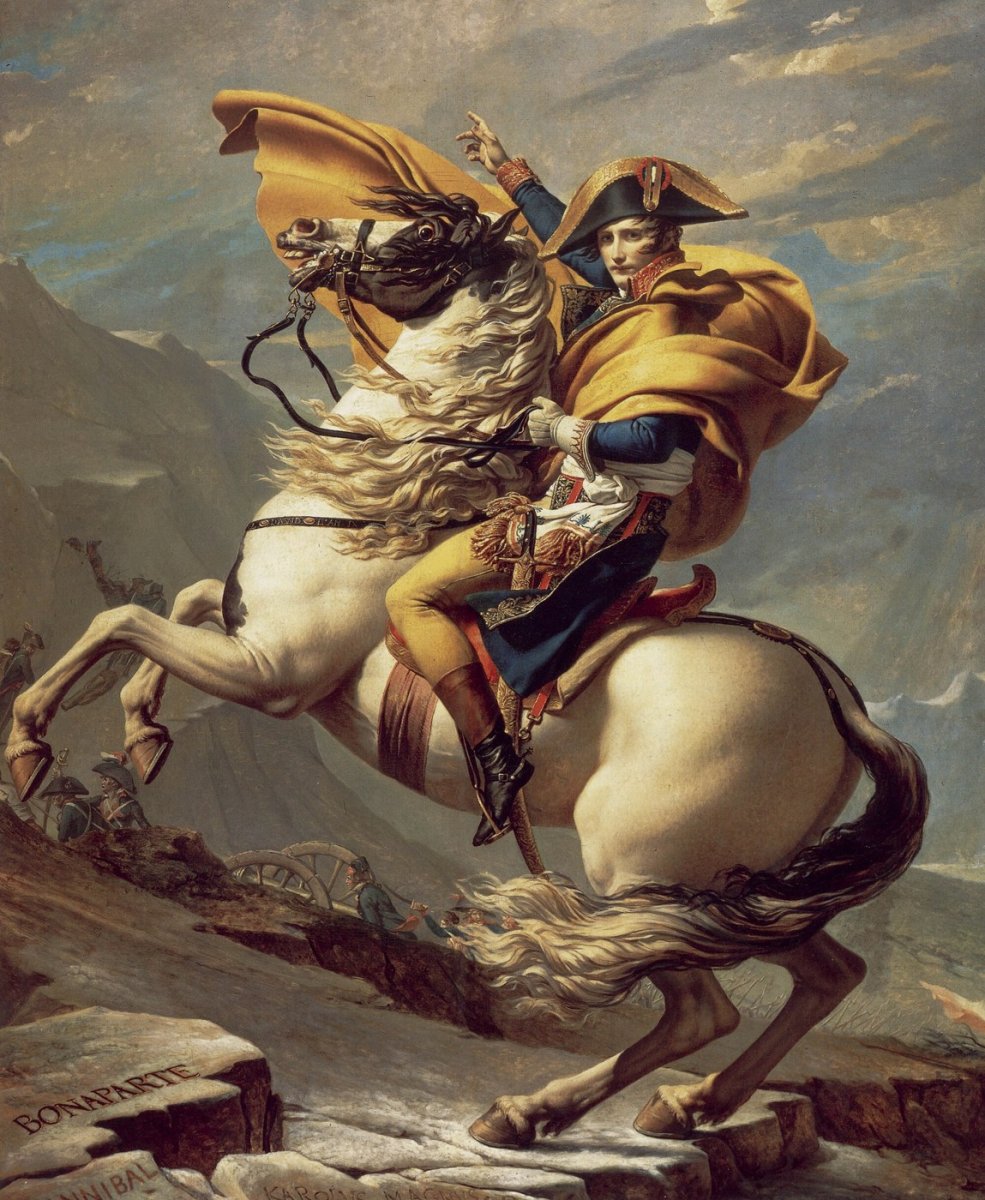
Der Mann im Zentrum jedes Krieges, den diese Seite behandelt. Er wird hier nicht als Lebensbild dargestellt, sondern als eine Methode und der Zeitraum, über den sie gültig blieb. Seine Art zu kämpfen war kein Geistesblitz, sondern eine Handvoll Bestandteile samt den Bedingungen, unter denen sie wirkten. Der Vorgang, in dem diese Bedingungen eine nach der anderen wegfielen, ist die Geschichte von zwanzig Jahren Krieg.
1. Der Aufstieg: 1769 bis 1796
Im niederen korsischen Adel geboren, kam er über eine Militärschule auf dem Festland an die Akademie in Paris. Im September 1785 schloss er ab und wurde als sechzehnjähriger Unterleutnant der Artillerie in das Regiment La Fère eingestellt[1]. Ohne Revolution ist das die Laufbahn eines Provinzartilleristen.
Die Wende kam bei der Belagerung von Toulon 1793. Nimmt man die Höhen über dem Hafen, müssen die britische und die spanische Flotte abziehen — er entwarf und führte die Artillerieaufstellung aus, die genau diesen einen Punkt traf, und wurde mit vierundzwanzig Jahren Brigadegeneral[1]. Am 5. Oktober 1795, dem 13. Vendémiaire, schlug er den royalistischen Aufstand in Paris nieder und sicherte sich bei der Regierung den Ruf eines brauchbaren Soldaten.
Im März 1796 übernahm er dann mit sechsundzwanzig die Italienarmee: ohne Ausrüstung, ohne Sold, der am geringsten geachtete Verband, den Frankreich damals hatte. Von dort führte er neunzehn Monate lang den ersten Italienfeldzug und zwang Österreich an den Verhandlungstisch.
2. Vier Bestandteile der Methode
Innere Linien und Zentralstellung
Zwischen getrennt anrückende Gegner rücken und sie nacheinander schlagen, sodass man nur im Augenblick der Berührung die Mehrheit bildet. 1796 in Oberitalien begründet; derselbe Entwurf war 1815 noch in Gebrauch.
Das Korpssystem
Verbände, die mehrere Tage allein bestehen können. Getrennt marschieren, zur Entscheidungsschlacht zusammentreten. Eine Struktur, in der ein Mann nicht alles sehen muss — sofern es Führer gibt, die sie bedienen können.
Schnelligkeit
Das Leben aus dem Land kappt die Abhängigkeit von Magazinen und erkauft Marschgeschwindigkeit. Am Vorabend von Austerlitz legte Davouts Korps rund 110 km in 48 Stunden zurück.
Die Erzählung gestalten
Bulletins und Zeitungen setzten die Ereignisse für das Publikum daheim zusammen. Der amtliche Bericht über Marengo wurde mit jeder Fassung planvoller. Der Weg, auf dem ein Ergebnis zu politischem Kapital wurde.
Alle vier sind ausführlich im Leitfaden Napoleonische Taktik dargelegt.
3. Außerhalb des Schlachtfelds
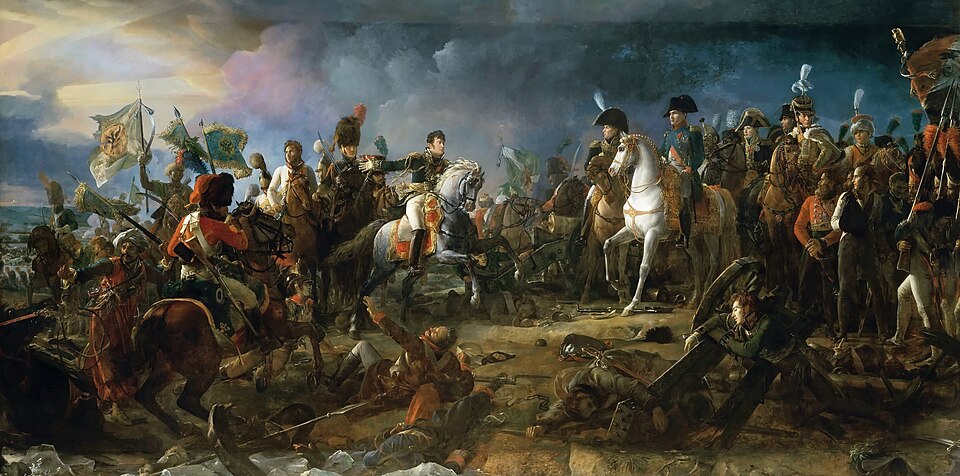
Er wird als Soldat besprochen, doch die Arbeit des Regierens gehörte ebenso zur Methode. Der im März 1804 verkündete Code civil setzte Gleichheit vor dem Gesetz, Eigentum und Vertragsfreiheit fest und beeinflusste das Zivilrecht vieler Staaten des 19. Jahrhunderts[2]. Verwaltungsgliederung, Steuerwesen und Schulwesen wurden in denselben Jahren neu geordnet.
Die beiden Seiten hängen zusammen. Dass sich in erobertem Gebiet Einrichtungen schaffen ließen, brachte die Männer und das Geld für den nächsten Krieg hervor. Zugleich wuchs mit jeder eingerichteten Ordnung der örtliche Widerstand. Auf der Halbinsel wie in Russland bildete sich der Widerstand um die Tatsache, besetzt zu sein.
4. Mythos und Protokoll
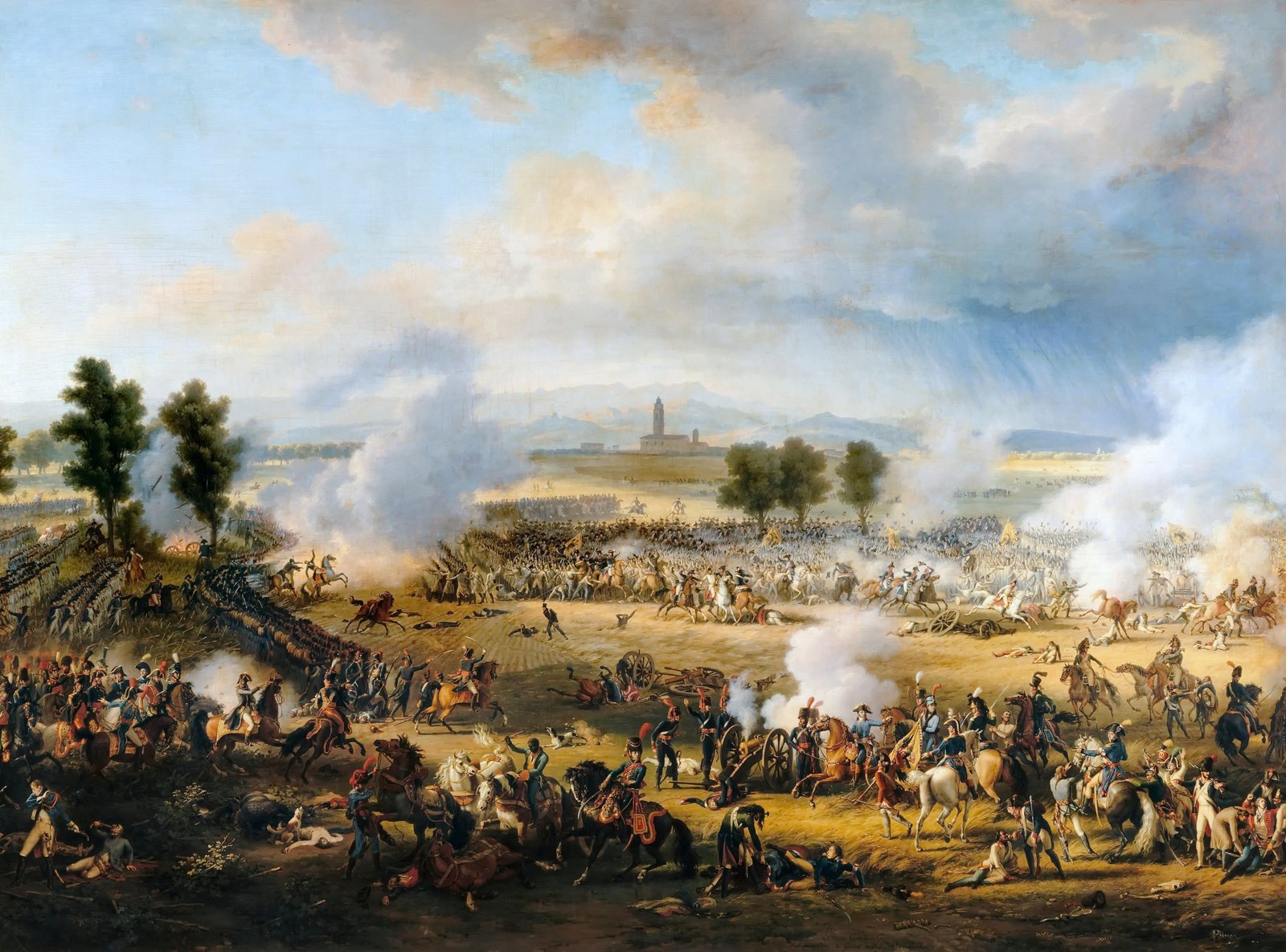
Marengo am 14. Juni 1800 war ein knapper, vom Rand der Niederlage zurückgeholter Sieg. Die Linie retteten der Gegenangriff Desaix', der auf den Geschützdonner hin aus eigenem Entschluss umkehrte, und der darauf folgende Reiterangriff Kellermanns. Doch mit jeder Fassung des amtlichen Berichts schrumpfte der Anteil des Zufalls, und die Darstellung rückte auf einen von Anfang an geplanten Sieg zu[4].
Dieses Umschreiben eine Lüge zu nennen ist leicht; strukturell liegt es verwickelter. Eine durch Staatsstreich erlangte Stellung lässt sich nur durch Sieg beglaubigen, und der Sieg eines anderen taugt dafür nicht. Die Erzählung zu gestalten war auch eine Arbeit, die die Form dieser Macht verlangte. Ausführlich behandelt ist das unter dem Zweiten Koalitionskrieg.
5. Vier Voraussetzungen, die die Methode brauchte
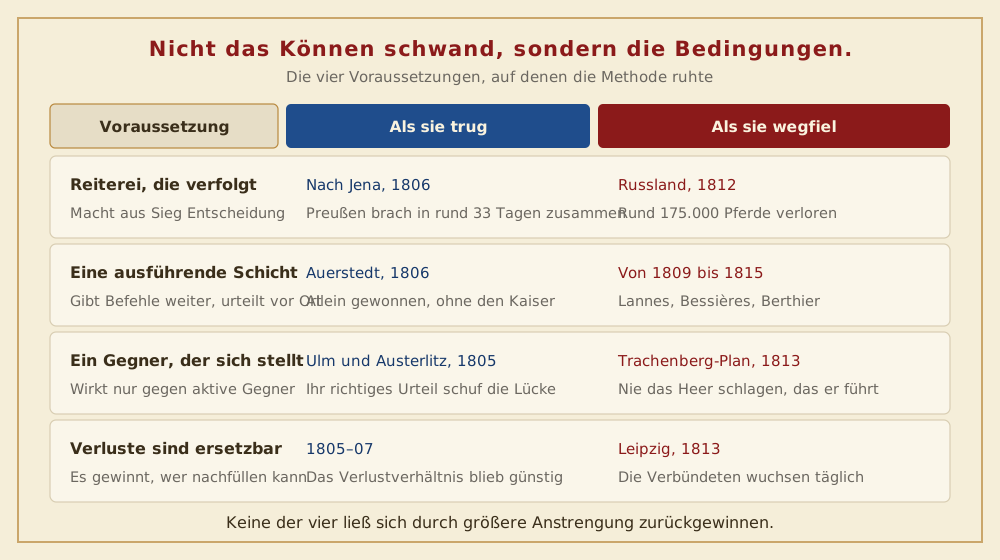
Die Voraussetzungen wiegen schwerer als die Bestandteile. Die Methode wirkte, solange die folgenden vier hielten.
Erstens die Fähigkeit zu verfolgen. Was einen Sieg in eine Entscheidung verwandelt, sind die Beine der Reiterei. Nachdem im Russlandfeldzug rund 175.000 Pferde verloren gegangen waren, zerbrachen Siege keine feindlichen Heere mehr[3].
Zweitens eine ausführende Schicht von Männern: jene, die eine Absicht in Befehle übersetzen und im Feld selbst urteilen. Lannes fiel 1809, Bessières 1813, und Berthier starb am 1. Juni 1815. Zur Zeit der Hundert Tage war diese Schicht nahezu leer.
Drittens ein Gegner, der zum Kampf herauskommt. Ködern wie Bündeln setzen einen handelnden Gegner voraus. Der Trachenberg-Plan vom Juli 1813 beseitigte diese Voraussetzung mit einer Zeile: nie das Heer schlagen, das er in Person führt[5].
Viertens ersetzbare Verluste. Bei Leipzig wuchsen die Verbündeten Tag um Tag, während französischer Ersatz kaum kam. Eine Abnutzungsschlacht gewinnt, wer nachfüllen kann.
6. Was das Protokoll der Schlachten zeigt
| Jahr | Schlacht | Ergebnis | Was der Tag zeigt |
|---|---|---|---|
| 1796 | Lodi | Sieg | Der Keim, Handeln und Erzählung zugleich zu entwerfen |
| 1800 | Marengo | Knapper Sieg | Ein zufälliger Sieg wird als Plan umgeschrieben |
| 1805 | Austerlitz | Entscheidender Sieg | Der beste Fall aller vier Bestandteile zugleich |
| 1806 | Jena–Auerstedt | Entscheidender Sieg | Das Korpssystem trug, obwohl er das Feld falsch las |
| 1807 | Eylau | Unentschieden | Der erste Tag ohne Entscheidung aus der Methode |
| 1807 | Friedland | Entscheidender Sieg | Die Wende zum Feuer als Hauptsache |
| 1809 | Wagram | Sieg | Von der Kunst des Manövers zum Wettstreit der Masse |
| 1812 | Borodino | Feld behauptet | Siegen, ohne dass die andere Seite verliert |
| 1813 | Leipzig | Niederlage | Der Tag, an dem die Zahl die Methode schlug |
| 1815 | Waterloo | Niederlage | Der Entwurf hielt, die Ausführung nicht |
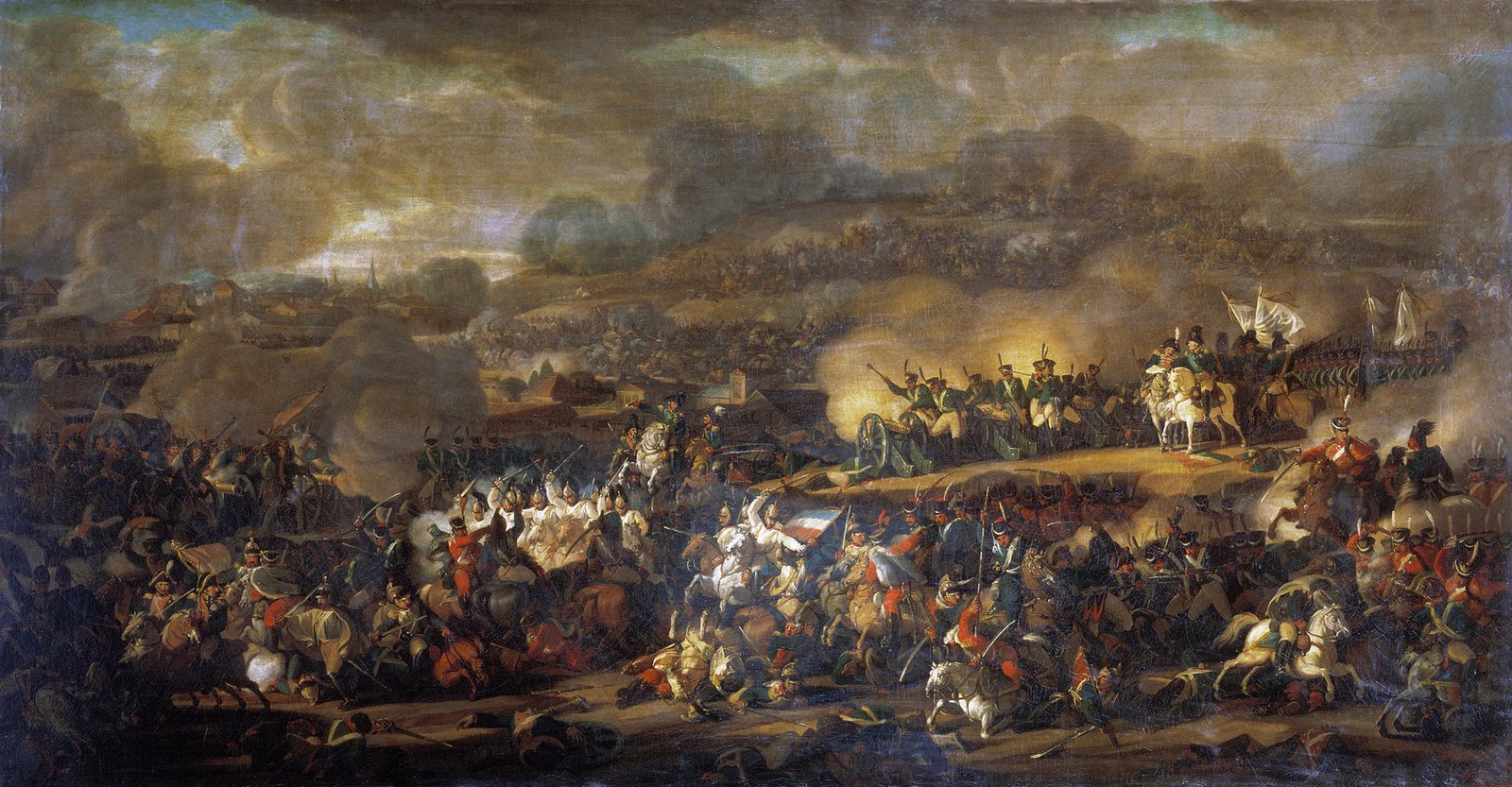
In dieser Reihenfolge gelesen, ändert sich der Charakter des Siegens, bevor das Verlieren beginnt. Bei Eylau 1807 hörten Entscheidungen auf zu entstehen; bei Wagram 1809 wurde das Verlustverhältnis ausgeglichen; bei Borodino 1812 entschied das Behaupten des Feldes nichts mehr. Die Niederlagen kommen danach.
7. Wie es endete
Paris fiel am 31. März 1814; am 6. April dankte er ab und wurde nach Elba geschickt. Im März 1815 verließ er die Insel und wurde wieder eingesetzt, und nach Waterloo am 18. Juni dankte er am 22. erneut ab[2]. Nach St. Helena im Südatlantik verbannt, starb er dort am 5. Mai 1821 im Alter von 51 Jahren.
Die über sechs Jahre auf der Insel diktierten Erinnerungen waren selbst ein letztes Stück Erzählungsgestaltung. Der berühmte Ausspruch, er habe bei Lodi sein Schicksal erkannt, entbehrt zeitgenössischer Belege. Die Arbeit auf dem Schlachtfeld war beendet, die Arbeit am Protokoll nicht.
8. Wie man ihn liest
Was die Bewertung dieses Mannes schwer macht, ist, dass der Entwerfer der Methode und der Urheber ihrer Grenzen dieselbe Person sind. Er entwarf die Redundanz des Korpssystems und übergab das Urteil selbst nie. Er verteilte Kronen als Belohnung, und diese Kronen schufen Interessen, die mit der Treue in Wettbewerb traten. Er stützte Macht mit einer Erzählung, und diese Macht ließ sich danach nur noch durch weitere Siege halten.
Diese Seite liest ihn nicht als Geschichte eines Genies, sondern als eine wiederholbare Struktur und ihre Bedingungen. Schreibt man die Bedingungen auf, lässt sich fragen, ob dieselbe Methode anderswo wirken würde. Die acht Kriege von 1796 bis 1815 lassen sich als die Reihenfolge ordnen, in der diese Bedingungen eine nach der anderen wegfielen.
Quellen
- Wikipedia contributors, Napoleon.
- Encyclopædia Britannica, Napoleon I, Emperor of France.
- The Napoleon Series, Napoleon's Equine Strategy in 1813.
- The Napoleon Series, Marengo 1800: A Lost Account.
- J. Rickard, Trachenberg Plan, 12 July 1813, History of War.
- David G. Chandler, The Campaigns of Napoleon, Macmillan, 1966.
- Andrew Roberts, Napoleon: A Life, Allen Lane / Penguin, 2014.
Erscheint in Schlachten
-
1796-05-10
Die Schlacht bei Lodi (1796) — Der Brückensturm und die Geburt des „kleinen Korporals"Rolle: Oberbefehlshaber (leitete die Artillerieaufstellung selbst)
-
1800-06-14
Schlacht von Marengo (1800) — Wie eine Beinahe-Niederlage zur geplanten Falle umgeschrieben wurdeRolle: Erster Konsul; faktisch Oberbefehlshaber
-
1805-12-02
Die Schlacht bei Austerlitz (1805) — Napoleons Meisterwerk der SituationsgestaltungRolle: Kaiser und Oberbefehlshaber
-
1806-10-14
Die Doppelschlacht von Jena und Auerstedt (1806) — Die entscheidende Schlacht war die, bei der Napoleon nicht warRolle: Kaiser; führte bei Jena
-
1807-02-08
Die Schlacht bei Preußisch Eylau (1807) — Der Tag, an dem Napoleons Methode keine Entscheidung lieferteRolle: Kaiser und Oberbefehlshaber
-
1807-06-14
Schlacht von Friedland (1807) — Als die Bedingungen zurückkehrten, kehrte Napoleons Methode in voller Form zurückRolle: Kaiser und Oberbefehlshaber
-
1809-07-06
Schlacht bei Wagram (1809) — Der Tag, an dem Napoleons Methode von der Kunst zur Abnutzung wurdeRolle: Kaiser und Oberbefehlshaber
-
1812-09-07
Schlacht an der Moskwa (1812) — warum der blutigste Tag keine Entscheidung brachteRolle: Kaiser und Oberbefehlshaber (setzte die Garde nie ein)
-
1813-10-18
Schlacht bei Leipzig (1813) — die Völkerschlacht, in der der Meister des Zentrums umschlossen wurdeRolle: Kaiser und Oberbefehlshaber (hielt die Zentralstellung und wurde eingeschlossen)
-
1815-06-18
Schlacht bei Waterloo (1815) — Der Tag, an dem ein Ein-Mann-System mangels Redundanz versagteRolle: Kaiser und Oberbefehlshaber (Entwerfer der Zentralstellung)